
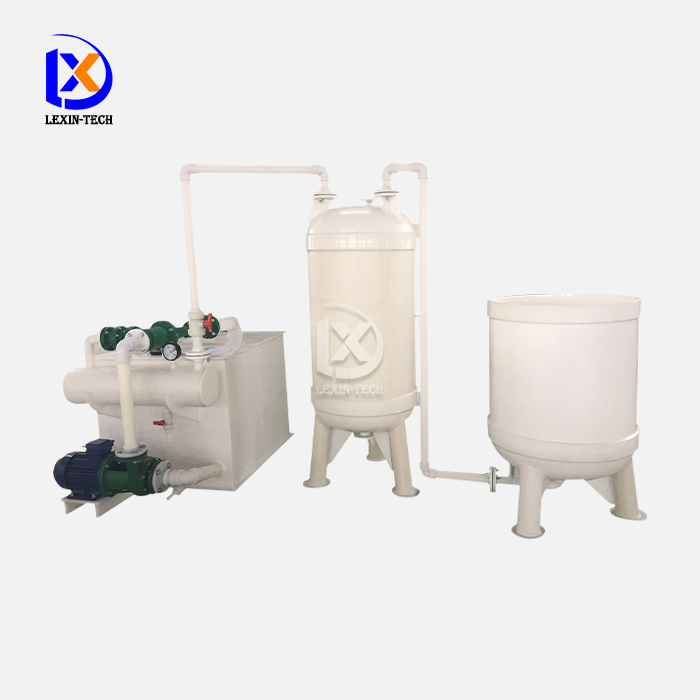
Pilot-Scale Vacuum Filtration Unit


Material of the filter tank: PP
Material of the buffer tank: PP
Filtration area(㎡): 0.12;0.19;0.38;0.5;0.78;1.13
Filter Tank Inner Diameter (mm):500;630;700;800;1000;1200
Capacity of the Filter Tank (L): 100;200;300;400;500/600;800/1000
Operating Vacuum Pressure (MPa): ≤ -0.098
Operating Temperature Range (°C): -10 to 90
Notes: Customized configurations are available to meet specific requirements.
- Product Description
Pilot-Scale Vacuum Filtration Unit: Professional Solid-Liquid Separation Solution
Our Pilot-Scale Vacuum Filtration Unit delivers extraordinary execution for your handle improvement needs. This specialized gear works on negative weight differential standards, making it idealize for approving filtration productivity and optimizing your forms some time recently scaling up to commercial generation. You'll discover this unit priceless for testing different parameters whereas guaranteeing reliable bunch quality and minimizing scale-up dangers in your operations.
What Makes Our Vacuum Filtration System Stand Out?
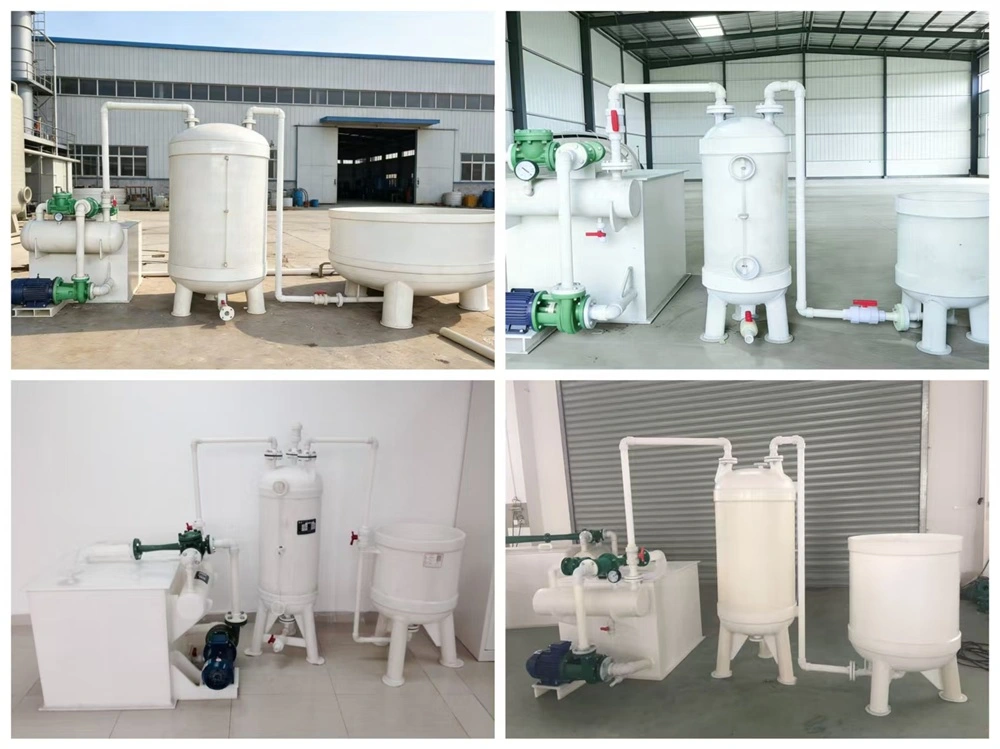
Our filtration hardware comprises of three absolutely built components working in culminate agreement. The channel tank serves as the essential partition chamber where your solid-liquid blends experience effective filtration. The buffer tank gives steady vacuum conditions and avoids fluid suckback into your vacuum framework. The water-jet vacuum framework produces reliable negative weight for ideal partition execution.
Key Technical Specifications
| Parameter | Specification |
|---|---|
| Material (Filter Tank) | PP (Polypropylene) |
| Material (Buffer Tank) | PP (Polypropylene) |
| Filtration Area | 0.12, 0.19, 0.38, 0.5, 0.78, 1.13 m² |
| Filter Tank Inner Diameter | 500, 630, 700, 800, 1000, 1200 mm |
| Filter Tank Capacity | 100, 200, 300, 400, 500/600, 800/1000 L |
| Operating Vacuum Pressure | ≤ -0.098 MPa |
| Operating Temperature Range | -10°C to 90°C |
| Customization | Available for specific requirements |
Superior Design Features
Surprising Chemical Resistance: The all-plastic advancement utilizing reinforced polypropylene gives uncommon resistance to acids and solvent bases. You can obviously plan dangerous materials without focusing around equipment corruption or contamination.
Lightweight In any case Strong: In show disdain toward of its overwhelming execution capabilities, the unit keeps up a lightweight arrange. This makes foundation and upkeep much less requesting though ensuring long-lasting operation underneath asking conditions.
Simple Operation: The common arrange grants your directors to quickly expert the equipment. Insignificant planning necessities unfeeling speedier utilization in your facility.
Modular Advancement: The three-component arrange offers flexibility for integration into your existing handle lines. You can easily alter the system to meet your specific operational prerequisites.
Applications Across Industries
Chemical Processing:
Handle strong acids, alkalis, and oxidizing agents safely. The corrosion-resistant materials make this Pilot-Scale Vacuum Filtration Unit ideal for electroplating wastewater treatment and acid-alkali cleaning solutions.
Hydrometallurgy:
Prepare non-ferrous metal leachates effectively. The hardware handles the requesting conditions of metal extraction forms whereas keeping up steady division performance.
Environmental Protection:
Treat perilous squander filtrates containing profoundly destructive materials. Your natural compliance gets to be less demanding with dependable, secure handling capabilities.
Pharmaceutical Industry:
Filter and decontaminate destructive intermediates containing fluorine or chlorine compounds. The hardware meets the rigid necessities of pharmaceutical fabricating forms.
Why Choose Xi'an Lexin Technology?
Significant Industry Association:
Our center specialized gather brings over a decade of authority in non-ferrous metal hydrometallurgy. This inclusion deciphers direct into way superior equipment arrange and execution for your applications.
Comprehensive Get ready Courses of action:
Past filtration, we deliver add up to hydrometallurgical get ready adapt tallying sifting, liquid-liquid division, and vanishing crystallization systems.
Custom Building Capability:
Each thing can be customized to meet your specific prerequisites. We get it that no two shapes are vague, and we arrange in like manner.
Technical Advantages Over Laboratory Equipment
The capacity extend from 100L to 1000L gives significant scale-up information that research facility hardware cannot provide. You get practical prepare approval that specifically deciphers to industrial-scale operations.
Integrated vacuum buffer frameworks anticipate defilement and guarantee reliable working conditions. This level of handle control is fundamental for dependable scale-up predictions.
The secluded outline structure offers predominant soundness compared to research facility units. Your administrators work with hardware that carries on typically beneath different working conditions.
Process Optimization Benefits
Diminished Scale-Up Chance: Favor your shapes at vital scales a few time as of late committing to full era equipment. This inside and out reduces the specialized and budgetary threats related with handle scale-up.
Parameter Optimization: Test distinctive filtration conditions checking vacuum levels, temperature, and domestic times. You make perfect working parameters that decode particularly to production.
Material Testing: Evaluate assorted channel media and working conditions with commonsense volumes. This ensures you select the best course of action for your specific applications.
FAQ
1. What is the main difference between a pilot-scale vacuum filtration unit and a lab-scale vacuum filter?
The primary difference lies in processing capacity. Pilot-scale units are designed for tens to hundreds of liters, supporting small-batch production and scale-up verification, while lab-scale filters typically handle only a few to a dozen liters for experimental use.
2. How do the materials and structure differ between pilot-scale and lab-scale vacuum filters?
Pilot-scale units are usually made of PP or PPH with integrated modular frame structures, offering superior stability and sealing performance. In contrast, lab-scale filters are commonly constructed from glass or 304 stainless steel and are more suitable for light-duty laboratory work.
3. What level of automation can be expected from a pilot-scale vacuum filtration unit?
Pilot-scale units feature higher automation levels, including independent vacuum buffer tanks, anti-suckback protection, corrosion-resistant pumps, and optional pressure or liquid-level monitoring. These functions allow continuous feeding and discharge, whereas lab-scale units rely mainly on manual operation.
4. What industries are best suited for all-plastic (PP/PPH) vacuum filtration units?
All-plastic units are ideal for highly corrosive environments, such as chemical processing, electroplating wastewater treatment, acid-alkali solutions, pesticide intermediates, and hydrometallurgical solid-liquid separation of non-ferrous metal leachates.
Getting Started
Contact our technical team to discuss your specific filtration requirements. We'll work with you to configure the optimal Pilot-Scale Vacuum Filtration Unit for your applications.
Contact us today: xalexin-tech@outlook.com/ 279821010@qq.com

 Vacuum Filter_1770109649692.webp)