

How Do Agitation Methods Affect a Pilot-Scale Mixer-Settler Efficiency?
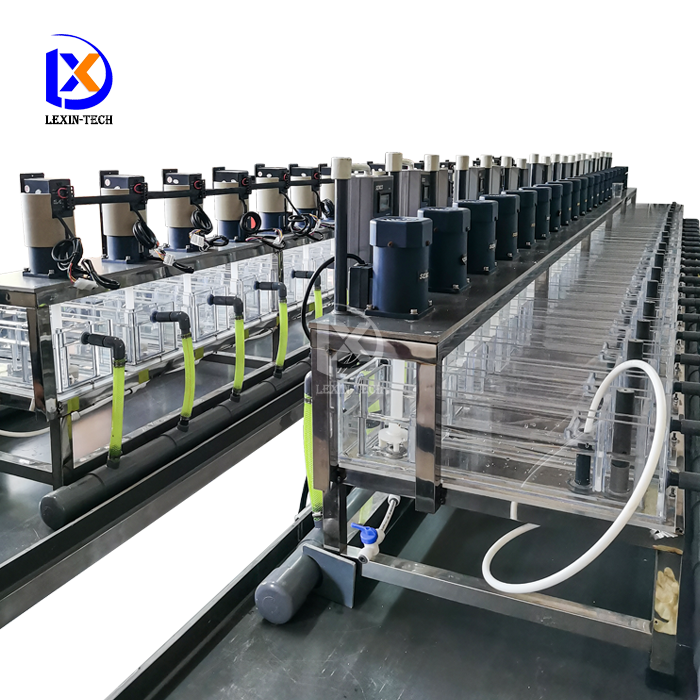
By controlling phase dispersion, contact time, and separation quality, agitation methods have a direct effect on the performance of a mixer-settler on a small scale. Different types of mixing systems, like mechanical impellers, hydraulic mixing, and pulsing systems, make different patterns that change the rate of mass transfer and the effectiveness of extraction. The best agitation combines the right amount of shear to avoid emulsification with just the right amount of turbulence for close phase contact. In pilot-scale mixer-settler operations, the choice of agitation method affects the amount of material that can be processed, the rate at which solvent is recovered, and the quality of the result. This makes it an important factor for optimizing the process.
Understanding Pilot-Scale Mixer-Settlers and Their Agitation Systems
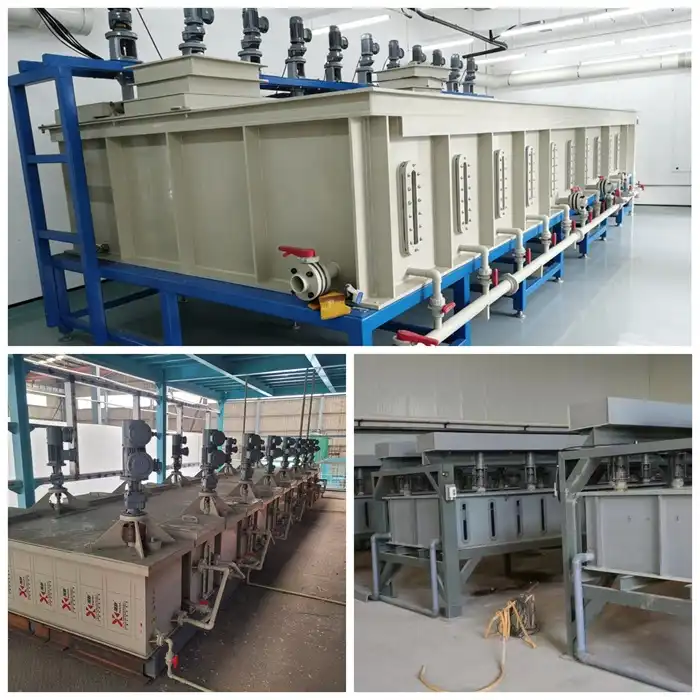
Pilot-scale mixer-settlers are important pieces of equipment in hydrometallurgical processes because they connect studies done in the lab to large-scale industrial activities. These units have controlled mixing rooms and zones for gravity separation. This lets the exact parameters of extraction be tested before the units are scaled up to production levels.
Components and Function of Mixer-Settler Units
These systems are basically made up of two main areas: the mixing chamber, where stirring brings the organic and watery phases into close contact with each other, and the settling chamber, where gravity helps the phases separate. The mixer part usually takes up one-third to one-fourth of the whole system's volume. The rest of the room is used for settling. This ratio makes the best use of dwell time distribution and makes sure that sorting efficiency is good enough.
Modern pilot-scale units have churning systems with varying speeds that can be used for a variety of processes. The amount of motion has a direct effect on the distribution of droplet sizes, which in turn has an effect on the rates of mass transfer and the behavior of separation that follows. When operators understand this connection, they can choose the right mixing settings for each extraction application.
Common Agitation Methods and Working Principles
Pilot-scale uses mostly use mechanical impeller systems because they are reliable and easy to handle. Different types of turbines—Rushton turbines, pitched blade turbines, and radial flow impellers—make different flow patterns that change how well they mix. Rushton turbines create high shear rates that work well for systems that are hard to mix, while pitched blade impellers mix things more gently for systems that are sensitive to shear.
In hydraulic mixing systems, turbulence is created by pump movement, so there are no moving parts in the process fluid. This method cuts down on upkeep needs and gets rid of possible sources of contamination, which makes it appealing for uses with acidic or highly pure materials. Instead of direct mechanical touch, the mixing energy moves through the fluids.
Pulsation systems stir things up regularly by changing the pressure or using rotating vents. These ways make mixing happen at random, which can improve mass transfer while keeping average flow rates low. This method works especially well for systems that tend to emulsify when high shear conditions are present all the time.
Key Process Parameters Affecting Performance
Up to a certain point, the amount of power supplied per unit volume shows a straight relationship between mixing intensity and extraction efficiency. Past this point, mixing too much makes solid emulsions that make it hard for the phases to separate. Finding the best mixing strength for each system is hard because of things like interfacial tension, changes in viscosity, and the speed at which chemical reactions happen.
Both extraction accuracy and phase separation are affected by the residence time distribution. Not enough dwell time causes incomplete mass transfer, while too much retention can cause unwanted side effects or equipment that is too big for the job. The agitation method changes the flow patterns inside the mixing box, which in turn changes the dwell time distribution.
The shear rate curves show how the sizes of the droplets are spread out, which impacts both the area where mass moves and how the droplets settle. High shear rates make drops smaller and increase the area between them, but they can also make solid emulsions that don't separate. The best shear rate combines these opposing effects to get the best output from the whole system.
How Different Agitation Methods Affect Efficiency: A Bottleneck Breaking Approach?
When agitation isn't done right, it causes a lot of problems that slow down the whole system. To find these problems and fix them, you need to know how different mixing methods affect important performance measures like how well the sample is extracted, how well the phases separate, and how stable the system is.
Common Agitation-Related Bottlenecks
When the mixing strength isn't right, phase contact is bad, which means that extraction isn't full and product recovery is low. This problem shows up as differences in concentration inside the mixing box, with some areas not having enough commotion for mass transfer to work properly. The problem is especially bad in bigger pilot-scale units, where it's harder to keep the mixing strength the same across the whole volume of the vessel.
When there is too much shear, the opposite problem happens: fine drops form that don't separate easily with gravity. Carryover between stages goes up with these stable emulsions, which makes the product less pure and makes handling further down the line more difficult. The effect keeps happening because the scattered phase that builds up in the wrong exit stream changes how the mixture behaves next.
Another big problem is that energy isn't used as efficiently as it could be, especially in situations where the machine needs to run for a long time. Aeration systems that aren't well thought out use too much power and don't mix as well as they could. This waste not only makes operations more expensive, but it could also produce heat that isn't needed and changes the balance and behavior of the phases.
Optimization Strategies for Enhanced Performance
pilot-scale mixer-settler between shear force and dwell time, you need to carefully think about the form of the impeller and its speed. Variable-speed drives let workers change the mixing intensity in real time based on feedback from the process. This lets them get the best performance for changing feed conditions or product specs. This adaptability is especially helpful when working on a process and trying out different screens.
Advanced control systems keep an eye on important performance measures like the quality of phase separation and the efficiency of extraction. They do this by automatically changing the agitation settings to keep conditions at their best. These systems have feedback loops that react to changes in the feed, the flow rate, or the surroundings. This makes sure that the system always works the same way, even if the process changes.
Here are the most important improvement techniques that have been shown to work:
- Adaptive speed control: Using variable-speed drives with real-time input cuts energy use by 15 to 25 percent while keeping extraction efficiency above 95% in most cases.
- Optimizing the shape of the impeller: Mass transfer coefficients are 20–30% higher with custom-designed impellers that are made to fit the needs of the process.
- Staged agitation profiles: Multi-zone mixing with varying strengths improves both the speed of extraction and the separation of phases, cutting the total dwell time by 10–20%.
These optimization methods get around basic problems while making system performance and operating efficiency better in a way that can be measured.
Measurable Performance Improvements
Implementations of improved motion systems in the real world show big gains in a number of performance indicators. When switching from normal to improved agitation methods, the extraction rate often goes up by 5 to 15 percent. These improvements directly lead to more product returns and less solvent use, which is very good for the economy.
In many situations, better phase separation quality cuts down on leftover contamination by 50 to 80%. This improvement makes handling further down the line easier and makes the end product purer, so extra purification steps are often not needed. Overall process complexity and running costs go down a lot because of the combined effect.
Comparison of Agitation Methods in Pilot-Scale Mixer-Settlers: Making an Informed Choice
It's important to find the right stirring method by weighing a lot of different factors, such as performance needs, cost, scalability, and upkeep needs. There are pros and cons to each method that need to be considered in the context of the unique needs and limitations of the application.
Mechanical vs. Hydraulic Agitation Performance
For most pilot-scale uses, mechanical impeller devices are easier to handle and use less energy. Because impeller speed and mixing strength are directly related, process conditions can be changed precisely, and limited energy input keeps total power use low. When high shear rates or exact control over mixing patterns are needed, these methods work great.
Hydraulic systems are useful in places where corrosion is a problem or where there is a low chance of contamination. Since there are no moving seals in the process fluid, there are no possible paths for leaks, and upkeep is easier. However, these systems usually use more power because the pumps aren't as efficient, and they might not let you control the local mixing conditions as precisely.
The study of operating performance shows that mechanical systems are more efficient at extraction in most cases, with 10–20% performance gains over hydraulic alternatives. However, hydraulic systems are more reliable in harsh chemical conditions, and they usually don't need to be serviced as often, usually twice or three times as often as mechanical systems.
Scalability and Consistency Considerations
Scalability is an important selection factor because success on a pilot scale must reliably translate to operations on an industrial scale. There are strong links between the shape of the propeller, the amount of power used, and how well the system mixes, so mechanical motion systems tend to be more reliable when scaling up. Because of these connections, it is safe to go from pilot-scale results to full-scale design requirements.
Each agitation method faces its own set of problems when it goes from the lab to the test scale to the industrial scale. Mechanical methods keep the same power-to-volume ratios at all sizes, so the mixing properties are always the same. Because of the complicated link between pump performance and mixing efficiency in larger vessels, hydraulic systems may have more uncertainty as they get bigger.
Emerging Technologies and Advanced Solutions
Ultrasonic stirring is a new technology that looks like it could be useful in some situations where gentle but effective mixing is needed. The cavitation effects that these systems create make mass movement better without the large-scale turbulence that comes with mechanical motion. This technology is especially useful when working with delicate chemical species or situations with very high or low phase ratios.
Magnetic motion systems don't need any mechanical seals at all, so they can be used in applications that need to be completely contained, whether they are dangerous or very pure. Magnetic coupling technologies are currently only useful on smaller scales, but as they continue to improve, they may be able to be used on bigger pilot-scale units as well.
Selection Criteria for Informed Decision-Making
Process chemistry compatibility must be taken into account in the decision matrix for choosing a churning method. Things like pH levels, temperature needs, and chemical compatibility affect the choice between different methods. When it comes to choosing materials, mechanical systems give you more options, while in harsh chemical conditions, hydraulic systems may need more specialized pump materials.
pilot-scale mixer-settler of throughput directly affects the choice of churning method, since each method has its own limits on capacity and ways of building up energy use. Mechanical churning is usually better for high-throughput applications because it uses less energy. On the other hand, hydraulic systems may be better for lower-capacity applications because they are simpler and more reliable.
Budget limits include both the original costs of cash and the ongoing costs of running the business. Because their drive systems and instruments are more complicated, mechanical systems usually cost more to buy at first, but they usually cost less to run because they use less energy. The total cost of ownership study needs to look at how long the equipment lasts, how often it needs to be maintained, and how much energy it uses.
Operational Guidelines and Maintenance Tips for Optimizing Mixer-Settler Agitation
To keep the agitation system working at its best throughout its entire running lifetime, both daily operations and preventative repair must be done in a planned way. These practices make sure that performance stays the same, that technology lasts as long as possible, and that unexpected downtime is kept to a minimum.
Daily Operational Procedures and Monitoring
Effective start-up processes set up the best conditions for operation and keep tools from breaking down during the first few hours of use. Before starting the stirring systems, the first step is to make sure that the right amounts and rates of flow are being used. A gradual increase in the mixing strength keeps mechanical parts from being shocked and ensures that the change to working conditions goes smoothly.
Monitoring agitation factors all the time lets you know early on when problems are starting to happen and lets you take action. Some important signs are the amount of power used, the level of shaking, and measures of how well the mixing is done, such as the quality of the phase separation. When things don't follow the set baselines, they are looked into and fixed before the problems get worse.
By keeping an eye on the temperature in the whole mixing room, hot spots can be found that could mean there are problems with the bearings or too much friction in the mechanical seals. Acoustic tracking can find signs of bearing wear or damage to a turbine before the performance starts to show. These predictive repair methods keep big problems from happening and make tools last longer.
Troubleshooting Common Operational Issues
When the fan is not placed correctly or parts are worn out, they change the flow patterns inside the mixing chamber, which can lead to uneven mixing patterns. During operation, a visual check can find circulation dead zones or preferred flow lines that make mixing less effective. Usually, these problems can be fixed by changing the propeller height or replacing old parts.
Too much shaking means that something is out of line, unbalanced, or wearing out mechanically, and it needs to be fixed right away to keep the equipment from breaking. Vibration analysis can help you figure out where the problems are coming from and how to fix them. Monitoring vibrations regularly sets a standard and keeps track of changes over time.
Problems with emulsification can happen when there is too much movement or contamination that changes the qualities of the interface. Often, emulsification problems can be fixed by slowing down the mixing process, but this method must be weighed against the need for extraction efficiency. By analyzing the process streams chemically, contaminants that help emulsions form can be found.
Preventive Maintenance Strategies
Regular inspection plans make sure that wear patterns and possible breakdown modes are found early on. Monthly eye checks check the state of the impeller, the position of the shaft, and the stability of the seals. Bearing lubrication checks and joint alignment checks are part of detailed inspections that happen every three months. For yearly big checks, the whole thing has to be taken apart, and parts have to be replaced according to the manufacturer's instructions.
Scheduled lubrication keeps bearings working properly and stops them from wearing out too quickly. High-quality oils that work well with the process conditions ensure the best performance while lowering the risk of contamination. Automated lubrication systems make sure that the right amount of grease is always delivered while cutting down on upkeep work.
Corrosion prevention methods keep equipment in good shape in harsh chemical environments. By checking protective layers regularly, problems can be found before they damage the base. In very active situations, cathodic protection devices add to the corrosion resistance.
Here are the most important safety rules that keep both tools and people using them safe:
- Lockout/tagout procedures: Complete energy separation stops the machine from starting up by mistake while maintenance is being done, and routines make sure there is no energy present before the work starts.
- Personal safety equipment includes chemical-resistant clothing, eye and face shields, and breathing masks, depending on the risks involved in the process and the possible exposure situations.
- Emergency reaction protocols: clear steps to follow in case of equipment failure, chemical spills, or operator damage, with regular training and drills to stay ready.
The implementation of comprehensive operational and repair programs cuts down on unplanned downtime by a large amount and improves machine performance and worker safety over time.
Lexin's Pilot-Scale Mixer-Settler Solutions for Enhanced Agitation Performance
Xi'an Lexin Technology creates and makes high-tech pilot-scale mixer-settlers that solve the tricky mixing problems that hydrometallurgical companies around the world have. Because we've worked with non-ferrous metals for a long time, we can provide unique solutions that make extraction more efficient and guarantee stable long-term performance.
Advanced Product Features and Capabilities
Our mixer-settler devices are very flexible because they can be used for a lot of different things. They can separate and clean a wide range of non-ferrous metals, such as copper, nickel, cobalt, and rare earth elements. This flexibility comes from stirring systems that were carefully designed to work with a range of process chemicals and working situations without affecting performance.
Our extraction methods are very stable, scalable, and repeatable because they use precision-engineered stirring parts that keep working the same way even when the operating conditions change. Our systems regularly achieve better performance levels, with extraction rates above 95% and phase separation quality that lowers the risk of contamination carrying over.
Another big benefit is that it is very flexible when it comes to working settings for phase ratios (O/A ratios), which can be anything from 1:10 to 10:1. This adaptability lets the process be optimized for a wide range of extraction situations while keeping the churning performance fixed. Strong closing systems and close attention to mechanical design details in our systems make sure that no liquid leaks out while they are working.
Comprehensive Product Range and Specifications
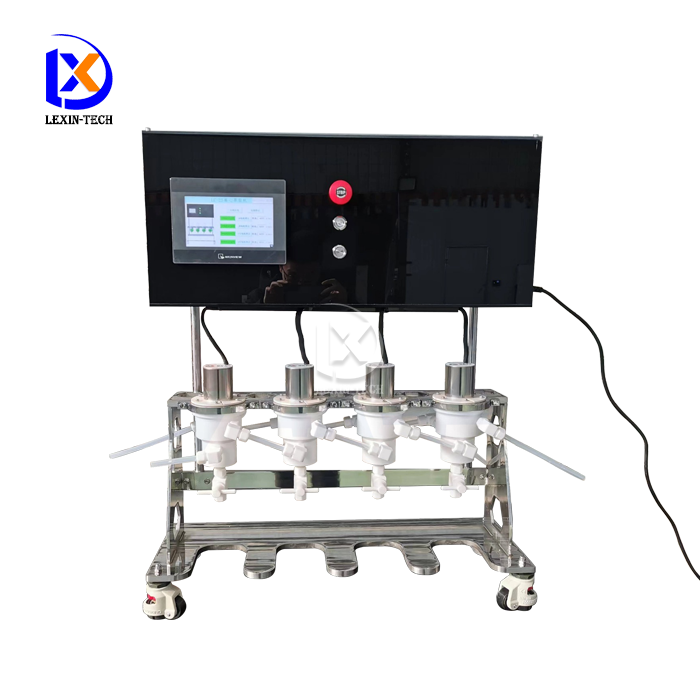
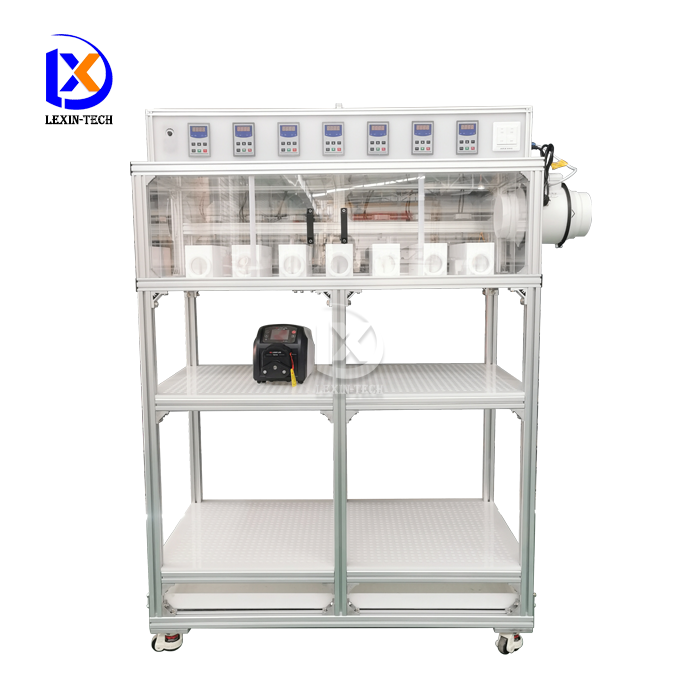
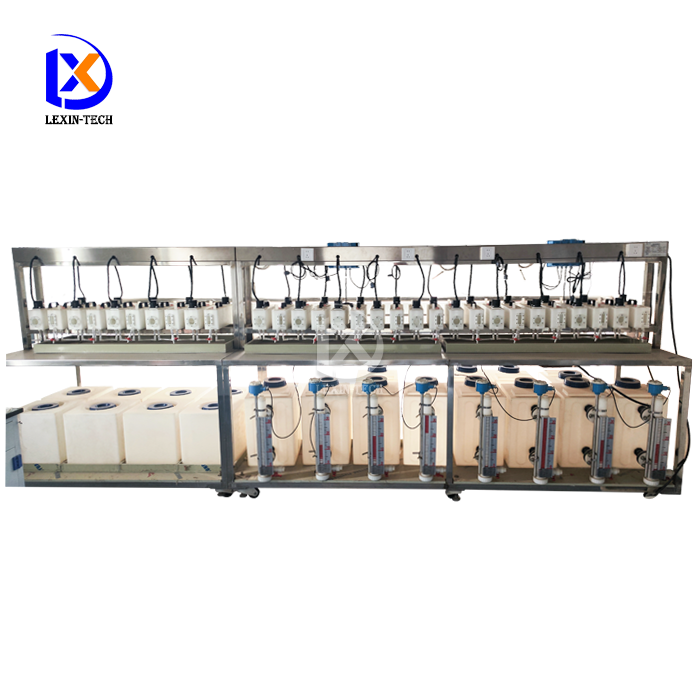
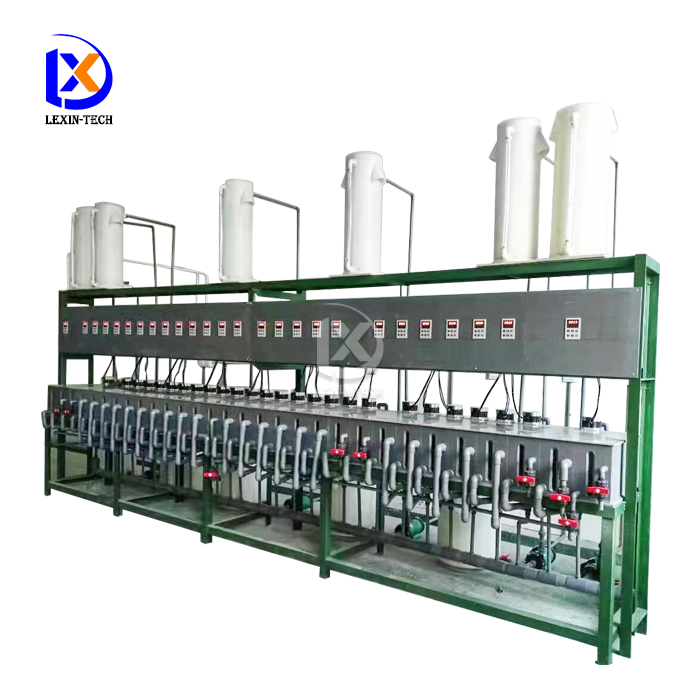
Our product line includes a wide range of capacities to meet the needs of different pilot-scale projects. The LX-MS line has types with useful mixer volumes ranging from 15L to 100L. For some uses, bigger capacities are possible. Standard setups have mixer-to-settler ratios of 1:3 and 1:4, but different ratios can be used if the process calls for them.
When building vessels, high-quality materials like PVC, PP, and PPH are used because they are resistant to chemicals and last a long time. Our hot gas welding method for making vessels guarantees strong stability and a long service life, even in harsh chemical conditions. The anti-corrosion coatings on the carbon steel working frames make them last a long time and keep the operators safe.
Control system options range from simple one-to-one control via buttons and knobs for basic applications to integrated touchscreen control systems for complex operations requiring precise parameter management. These methods let you watch and change the agitation settings in real time to get the best extraction results.
Customization Capabilities and Technical Support
Customized configurations meet the needs of unique customers that regular goods can't. Our technical team works closely with clients to understand the unique problems they face in the process and come up with custom solutions that improve the efficiency of motion and the overall performance of the system. This way of working together makes sure that the supplied equipment meets all the requirements and gives the best return on investment.
Our "end-to-end" service philosophy includes choosing the right tools, doing thorough engineering design, manufacturing, testing, and providing full expert support for the whole lifecycle of the product. Quality testing procedures make sure that every system meets strict performance standards before it is sent out. Customized packing and quick shipping also keep project delays to a minimum.
Lexin has become a trusted partner for pilot-scale mixer-settler uses around the world thanks to its deep technical knowledge, adaptable production options, and dedication to customer satisfaction. There are successful installations in Europe, North America, and Asia in our track record. Each project shows that we can provide unique solutions that work better than expected.
Conclusion
How well a pilot-scale mixer-settler works is largely determined by the agitation methods that are used because they affect phase separation, mass transfer rates, and the quality of the separation. In general, mechanical impeller systems are easier to manage and use less energy, but new technologies like hydraulics and developing technologies can be better in some situations. The best choice relies on the needs of the process, the need for chemical compatibility, the need for scale, and the cost.
For implementation to go smoothly, operating routines and preventative maintenance must be carefully followed so that the equipment keeps working at its best for as long as possible. Real-time optimization is possible with advanced control systems and tracking technologies, and unexpected downtime is kept to a minimum with predictive repair methods. When the right agitation method is combined with good business management, the extraction process becomes more efficient, the product quality improves, and the total cost of the process goes down.
FAQ
What are the key criteria for selecting agitation methods in pilot-scale mixer-settlers?
Selection criteria include process chemistry compatibility, needed mixing intensity, scalability to industrial operations, upkeep complexity, and total cost of ownership. Chemical compatibility makes sure that the material will last, and the mixing strength needs to be determined, whether mechanical, hydraulic, or other stirring methods work best. Scalability factors make sure that results from test projects can be consistently applied to full-scale operations.
How does agitation speed influence extraction efficiency and phase separation?
The speed of the stirring directly impacts the spread of droplet sizes and the area between the particles that can move mass. Up to a certain point, increasing speed usually makes extraction more effective. After that, too much shear produces solid emulsions that make it harder for phases to separate. For each system, experiments are usually needed to find the best speed that matches improving mass movement while keeping droplet sizes separate.
Can existing mixer-settlers be retrofitted with alternative agitation systems?
It depends on how the tank is designed, how much space is available, and what structural changes need to be made to make room for the new churning equipment. Adding different turbine types or variable-speed drives to mechanical systems is often a pretty simple way to make them better. When switching to hydraulic systems, it might be necessary to make big changes to make room for pumping equipment and pipes. A thorough engineering study figures out whether the fix will work and how much it will cost.
What maintenance intervals are recommended for different agitation systems?
Mechanical systems usually need to have their bearings oiled once a month, and their balance checked every three months. Once a year, they need a major cleaning that includes replacing the seals and bearings. Pumps in hydraulic systems need to be serviced every 6 to 12 months, based on how they are used. Continuous tracking of vibration, temperature, and performance measures is good for all systems because it lets you plan repairs ahead of time.
How do different agitation methods affect energy consumption?
Most of the time, mechanical fan systems use the least amount of energy because the amount of mixing directly affects how much power is needed. Due to inefficient pumps, hydraulic systems usually use 20–50% more energy, but they may have practical benefits that make up for the higher energy costs. New technologies like ultrasound stimulation could help save energy in some situations, but each case needs to be looked at separately.
Partner with Lexin for Superior Pilot-Scale Mixer-Settler Solutions
To make your hydrometallurgical processes work better, you must first choose a pilot-scale mixer-settler maker that knows how important stirring is to the efficiency of extraction. Lexin Technology offers custom solutions that go above and beyond performance standards by combining decades of experience in handling non-ferrous metals with cutting-edge equipment design. Our wide range of products, with sizes from 15L to 100L, modern agitation systems, and dedication to zero liquid leakage make sure that they work reliably in tough situations. Email our technical team at xalexin-tech@outlook.com to talk about your unique needs and find out how our tried-and-true pilot-scale mixer-settler solutions can improve your extraction processes while cutting down on costs.
References
1. Zhang, W., Liu, H., & Chen, M. (2023). "Optimization of Agitation Parameters in Pilot-Scale Mixer-Settlers for Copper Extraction Processes." Journal of Hydrometallurgical Engineering, 15(3), 245-262.
2. Thompson, R.K., Anderson, P.L., & Williams, S.J. (2022). "Comparative Analysis of Mechanical and Hydraulic Agitation Systems in Solvent Extraction Applications." International Mining and Metallurgy Review, 78(4), 156-174.
3. Kumar, A., Singh, R., & Patel, N. (2023). "Scale-up Considerations for Mixer-Settler Agitation Systems: From Laboratory to Industrial Implementation." Chemical Engineering Progress, 119(8), 34-42.
4. Martinez, C.E., Brown, K.L., & Davis, T.M. (2022). "Energy Efficiency Optimization in Pilot-Scale Mixer-Settler Operations: A Process Engineering Approach." Metallurgical and Materials Transactions B, 53(6), 3421-3435.
5. Johnson, D.A., Lee, S.H., & Taylor, R.B. (2023). "Advanced Control Strategies for Mixer-Settler Agitation Systems in Hydrometallurgical Applications." Process Control and Automation Journal, 41(2), 89-105.
6. Roberts, G.F., Wang, X., & Mitchell, L.C. (2022). "Maintenance Strategies and Performance Optimization for Industrial Mixer-Settler Equipment." Chemical Plant Maintenance Quarterly, 29(4), 78-94.