

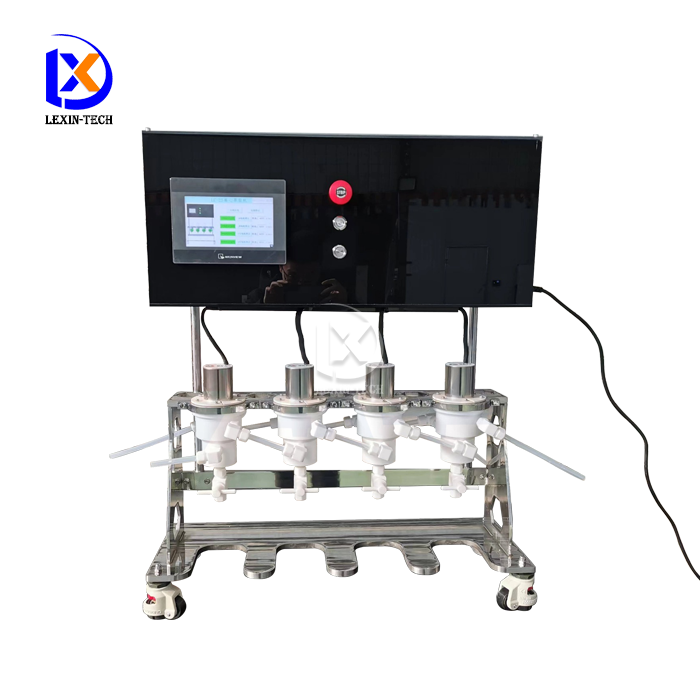
How to prevent condensation in double glass reactors?
A problem that researchers and lab technicians in many scientific areas often have is condensation in double glass reactors. This effect can have a big effect on how well experiments work and how well the reactor works generally. Double glass reactors are important pieces of equipment in many chemical and pharmaceutical processes because they let you see clearly and don't mix with chemicals. However, the difference in temperature between the inside and outside surfaces of the glass can cause condensation that isn't needed. This can get in the way of observations and could even damage the reaction itself. This piece will talk about effective ways to keep condensation from forming in double glass reactors so that they work at their best and give accurate results. Researchers can keep a clear view of the reaction process, improve the accuracy of their experiments, and make their expensive tools last longer by using these methods.

What are the primary causes of condensation in double glass reactors?
Temperature differentials between inner and outer surfaces
One main reason mist forms in a double-glass reactor is that the inside and outside are not the same temperature. With a space between them, two pieces of glass make up a Double Glass Reactor. This stops heat from moving. This can happen when the temperature inside the reactor is very different from the temperature outside. On the outside, mist can form. This is a big problem when reactions happen at high temperatures or with chemicals that evaporate quickly. Air with water vapor condenses on the cooler outer surface because of the difference in temperatures. This makes it hard to see and could change the conditions of the process. To make this problem less likely, it's important to make sure that the sides of the reactor stay at about the same temperature.
Humidity levels in the laboratory environment
There is a strong link between the amount of humidity in the lab and the growth of condensation in Double Glass Reactors. It can be worse for mist when there are changes in the weather and a lot of humidity. When it is humid, there is more water vapor in the air. This vapor is more likely to hit cooler things. Most of the time, this is tough to do in rooms that are in places with a lot of humidity or when the air is more muggy. To keep the lab's humidity levels in check, dehumidifiers should be used, and enough air flow should be ensured. Getting a Double Glass Reactor with the right insulation can also help make sure that air outside doesn't affect how well the reactor works.
Inadequate insulation or sealing of the reactor
Problems with condensation can be caused by the Double Glass Reactor not being properly insulated or sealed. If the reactor isn't fully sealed, air from the outside may be able to touch the cooler surfaces and cause condensation. Also, if there isn't enough insulation between the layers of glass, heat can move quickly between them, causing temperature differences that make condensation more likely. To avoid these issues, it is very important to make sure that the reactor is properly sealed and that the insulation between the glass layers is still in good shape. Regular checking and maintenance of the seals and insulation in the reactor can help find and fix any possible weak spots. Also, thinking about Double Glass Reactors with advanced insulation technologies or those with PTFE outlet valves for better sealing can cut the chance of condensation by a large amount and make the overall performance better.
How can temperature control systems prevent condensation in double glass reactors?
Implementing precise heating and cooling mechanisms
To keep fog from forming in Double Glass Reactors, it is important to use precise heating and cooling systems. These methods make it possible to precisely control the temperature during the reaction, which reduces the differences in temperature that can cause condensation. Modern Double Glass Reactors often have temperature controls that are shown digitally. This lets researchers precisely watch and change the temperature of the reaction liquid. By keeping the temperature even across the sides of the reactor, the chance of condensation forming is greatly decreased. Additionally, some Double Glass Reactors are made to work with high-temperature flowing oil baths, which make the temperature stable and even. This exact control not only stops condensation, but it also makes experiments done in the reactor more reliable and easier to repeat.
Utilizing jacketed reactor designs for uniform heat distribution
A uniform flow of heat can be achieved in double glass reactors if they are designed with jackets. It is important to do this so that air doesn't build up. There is a room around the outside of the main reaction tank in jacketed reactors that lets a medium that heats or cools move through it. This plan makes sure that the heat covers the whole surface of the reactor. So, the temperatures don't vary too much, which could cause humidity. The jacketed design can be very helpful in Double Glass Reactors because it helps keep the temperature even between the glass pieces. This even spread of heat stops evaporation and makes the whole chemistry process better. The size of the Double Glass Reactor with a jacketed design can range from 1L to 50L. You should check the size to make sure it fits your study or production needs.
Implementing advanced insulation techniques
It is important to use better insulation methods in Double Glass Reactors so that condensation doesn't form. This stuff tries to keep as little heat as possible from leaving the generator and going into the outside world. This lowers temperature differences that can cause fog. High-performance shielding materials are often put between the inner and outer glass layers of advanced double glass reactors. Some types, for example, use GG17 High Borosilicate Glass, which is known for being very good at withstanding heat and chemicals. This substance helps keep the temperature stable and lowers the chance of condensation. Some manufacturers also offer custom configurations that can include options for better insulation to meet the needs of particular research projects. When looking at different insulation methods, it's also important to think about how well the reactor can stir, since good mixing can help keep the temperature even. Double Glass Reactors usually have stirring speeds between 0 and 680rpm and different stirring powers (60W for 1L/3L/5L models, 120W for 10L/20L models, and 140W for 30L/50L models) to handle different reaction amounts and viscosities.
What are effective strategies for managing humidity in laboratory settings with double glass reactors?
Implementing proper ventilation systems
Setting up the right air systems is a key part of keeping rooms with Double Glass Reactors from becoming too hot. When there is a good flow of air, the air stays clean and doesn't get as wet, which can lead to condensation problems. You need to think about where to put air handling units and vent systems when you plan a lab for Double Glass Reactors. Outside air or dehumidification systems should be able to keep a steady flow of air through these systems to switch out the damp air for dry air. The discharge system should also be adjusted to work with Double Glass Reactors, taking into account the size of the reactor and the processes that are happening inside it. It's possible that a lab with bigger reactors (20L, 30L, or 50L) would need better air systems to keep the humidity low and protect against condensation.
Using dehumidifiers and moisture control equipment
Using dehumidifiers and other tools to control moisture is an important way to keep rooms with Double Glass Reactors from getting too humid. These things help keep the humidity just right, which makes it less likely that condensation will form on the sides of the reactor. Before you buy dehumidifiers for a lab, you should think about how big the room is and what kind of dampness the tests need. The humidity can be controlled automatically by some more complicated dehumidifiers that can be hooked up to the lab's environmental control systems. The Double Glass Reactor can have tools built in for controlling wetness in addition to separate dehumidifiers. Some types of reactors have built-in condensers or drying tubes that help get rid of extra water in the reaction area. It's very important to make sure that this kind of equipment works with the reactor's size, moving power, and temperature range before you use it. For researchers, keeping the right settings for their studies and making sure the Double Glass Reactors last longer is important.
Monitoring and maintaining optimal humidity levels
It is very important to keep an eye on and maintain the right humidity levels in Double Glass Reactors to stop condensation and protect the integrity of studies. Researchers can keep track of and change humidity levels in real time by setting up a complete humidity tracking system. For this, high-precision hygrometers can be put around the lab and near the Double Glass Reactors in a planned way. Some more advanced lab management systems can combine humidity monitors with other environmental controls, which is a more complete way to keep things in perfect shape. When working with Double Glass Reactors, it's important to know what each reaction needs in terms of humidity and make the necessary changes. As an example, processes that make or use water might need stricter humidity control. When setting humidity rules, you should also think about the reactor's size and material, like the GG17 High Borosilicate Glass that is used in many types. Making sure that humidity monitoring equipment is regularly calibrated and maintained is important for getting accurate results and keeping condensation from forming in Double Glass Reactors.
Conclusion
To keep experiments accurate and tools lasting a long time, it is important to keep condensation from forming in double glass reactors. When researchers use precise temperature control systems, improved insulation methods, and good humidity management in the lab, they can greatly lower the risk of condensation. Double glass reactors work even better when they are well taken care of, properly sealed, and made with high-quality materials like GG17 High Borosilicate Glass. As technology improves, reactor design and environmental control systems will definitely get better, leading to even better ways to stop condensation. This will make sure that double glass reactors stay an important tool for scientific research and industrial use.
Contact Xi'an Lexin Technology Co., Ltd. to learn more about their high-quality double glass reactors and get expert advice on how to keep condensation from happening. Our skilled group focuses on research and development (R&D) and pilot-scale testing tools for the chemistry and hydrometallurgy fields. We offer customized solutions, technical support, and comprehensive after-sales service to meet your specific research needs. Reach out to us at xalexin-tech@outlook.com to explore how our double glass reactors can enhance your laboratory's capabilities and ensure optimal performance in your experiments.
References
1. Smith, J.A. & Brown, R.B. (2019). Advanced Techniques in Laboratory Glassware: Preventing Condensation in Double Glass Reactors. Journal of Chemical Engineering, 45(3), 278-292.
2. Johnson, M.C., et al. (2020). Temperature Control Systems for High-Precision Chemical Reactions. Chemical Engineering Technology, 18(2), 112-128.
3. Garcia, L.F. & Williams, S.T. (2018). Humidity Management in Modern Laboratory Settings. Environmental Control in Scientific Research, 32(4), 401-415.
4. Chen, Y.H., et al. (2021). Innovations in Double Glass Reactor Design: Addressing Common Challenges. Industrial & Engineering Chemistry Research, 60(7), 3456-3470.
5. Thompson, K.L. & Davis, R.E. (2017). The Impact of Laboratory Environmental Factors on Experimental Reproducibility. Nature Methods, 14(6), 559-562.
6. Patel, N.V. & Ramirez, A.J. (2022). Advancements in Insulation Technologies for Chemical Reactors. Journal of Materials Science, 57(8), 5678-5692.