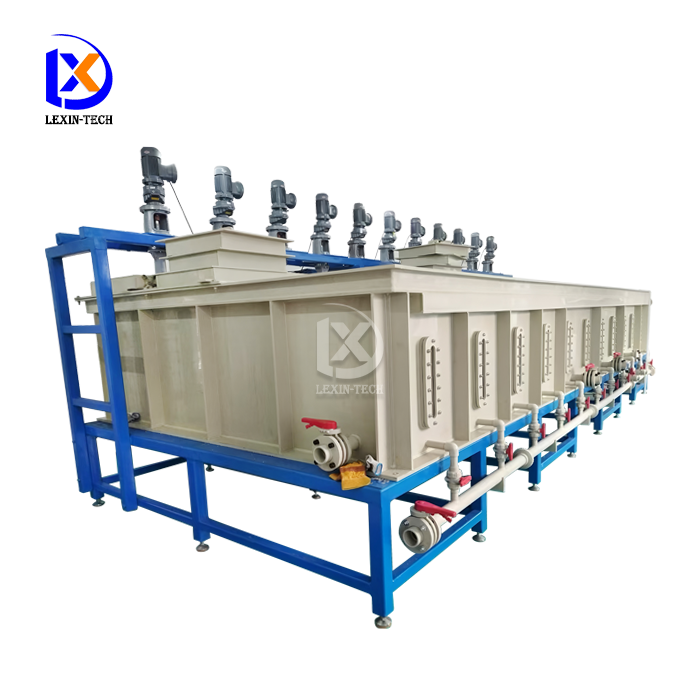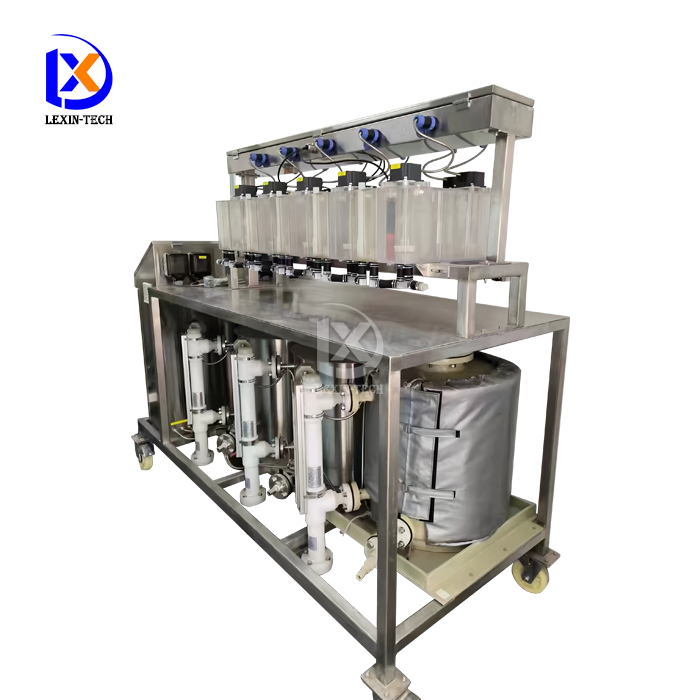


Why Use Mixer-Settlers for Metal Recovery?
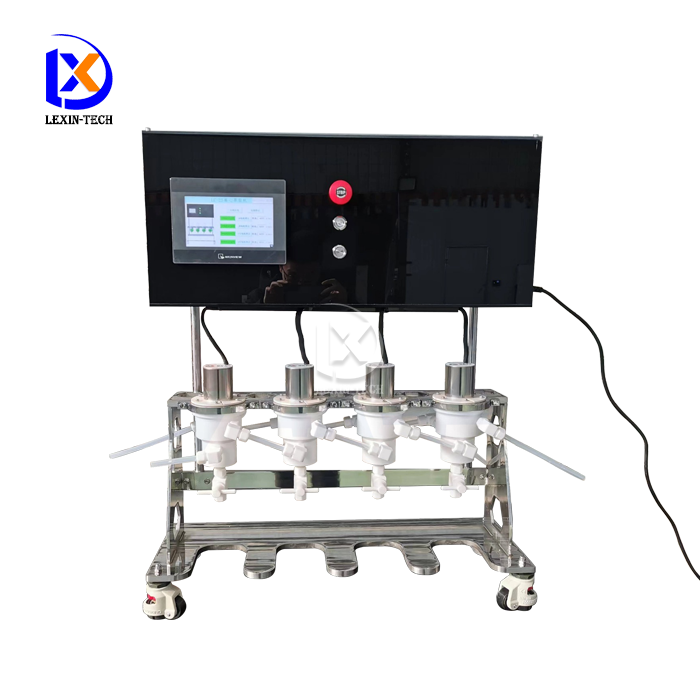
In the realm of hydrometallurgy and chemical processing, the efficient recovery of metals is a critical challenge that demands innovative solutions. Mixer-settlers have emerged as a powerful tool in addressing this challenge, offering a range of benefits that make them indispensable in modern metal recovery processes. These ingenious devices combine the functions of mixing and settling in a single unit, allowing for effective liquid-liquid extraction and separation of metal ions from complex solutions. The unique design of mixer-settlers enables continuous operation, high throughput, and excellent phase separation, making them ideal for a wide variety of metal recovery applications. From precious metals like gold and silver to base metals such as copper and nickel, mixer-settlers have proven their worth in enhancing recovery rates, reducing operational costs, and improving overall process efficiency. This blog post delves into the reasons why mixer-settlers have become the go-to choice for metal recovery in industries ranging from mining to electronic waste recycling.
What are the Key Advantages of Mixer-Settlers in Metal Recovery Processes?
Enhanced Extraction Efficiency
Mixer-settlers excel in metal recovery processes due to their superior extraction efficiency. The mixing stage ensures intimate contact between the aqueous and organic phases, promoting rapid mass transfer of metal ions. This is followed by a controlled settling period, allowing for clean separation of the phases. The design of mixer-settlers, with their optimized mixing and settling chambers, enables high stage efficiency, often achieving over 90% extraction in a single stage. This efficiency is particularly crucial when dealing with low-grade ores or dilute solutions, where maximizing metal recovery is essential for economic viability. Moreover, the ability to operate mixer-settlers in multi-stage configurations further enhances their extraction capabilities, allowing for near-complete recovery of target metals even from complex feed streams.
Flexibility in Operation
One of the standout features of mixer-settlers is their operational flexibility. These units can handle a wide range of phase ratios, accommodating variations in feed composition and extraction requirements. This adaptability is invaluable in metal recovery processes where ore grades or solution concentrations may fluctuate. Mixer-settlers can be easily adjusted to optimize performance by modifying residence times, mixing intensities, or flow rates. Furthermore, their modular nature allows for easy scaling up or down, making them suitable for both pilot-scale testing and full-scale industrial applications. This flexibility extends to the types of extractants and diluents that can be used, enabling the process to be tailored for specific metal recovery challenges.
Cost-Effective Solution
When it comes to metal recovery, mixer-settlers offer a cost-effective solution that balances performance with economic considerations. Their simple design, with few moving parts, translates to lower maintenance requirements and reduced downtime compared to more complex separation equipment. The continuous operation capability of mixer-settlers contributes to higher throughput and reduced labor costs. Additionally, their excellent phase separation characteristics minimize the loss of valuable extractants and solvents, further improving the economics of the process. The scalability of mixer-settlers also allows for optimized capital investment, as capacity can be incrementally increased by adding units as demand grows, rather than requiring large upfront expenditures on oversized equipment.
How Do Mixer-Settlers Compare to Other Metal Recovery Technologies?
Comparison with Column Extractors
When comparing mixer-settlers to column extractors in metal recovery applications, several key differences emerge. Mixer-settlers generally offer better control over the extraction process, as the mixing and settling stages are physically separated and can be independently optimized. This separation also allows for easier sampling and monitoring of the process. In contrast, column extractors, while often more compact, can suffer from issues such as flooding or channeling, which can reduce efficiency. Mixer-settlers also tend to have lower pressure drops, making them more energy-efficient for large-scale operations. However, column extractors may have advantages in situations requiring very short contact times or where space is at a premium.
Advantages over Batch Processes
Mixer-settlers offer significant advantages over batch processes in metal recovery. The continuous operation of mixer-settlers allows for higher throughput and more consistent product quality compared to batch systems. This continuity also results in more efficient use of reagents and energy, as there's no need for repeated heating, cooling, or reagent addition cycles. Mixer-settlers provide better control over residence times and mixing intensities, leading to more predictable and reproducible results. Additionally, the ability to easily implement multi-stage configurations in mixer-settlers enables more complex separation schemes that would be impractical or impossible in batch systems. This flexibility is particularly valuable when dealing with complex ore bodies or mixed metal streams.
Integration with Other Technologies
One of the strengths of mixer-settlers in metal recovery is their ability to integrate seamlessly with other technologies. For instance, mixer-settlers can be effectively combined with solvent extraction processes to create powerful hydrometallurgical circuits. They can also be used in conjunction with ion exchange systems, providing a means of concentrating metal ions before final recovery. In electrowinning processes, mixer-settlers can serve as an efficient pretreatment step, ensuring that the electrolyte fed to the cells is of optimal composition. This integration capability allows for the design of comprehensive metal recovery systems that can handle a wide range of feed materials and produce high-purity metal products.
What are the Future Trends in Mixer-Settler Technology for Metal Recovery?
Advanced Materials and Design
The future of mixer-settler technology in metal recovery is closely tied to advancements in materials science and design optimization. Researchers are exploring the use of novel materials for constructing mixer-settlers, such as corrosion-resistant alloys and advanced polymers, to extend equipment lifespan and expand the range of chemical environments in which they can operate. Computational fluid dynamics (CFD) modeling is being employed to optimize the design of mixing and settling chambers, improving efficiency and reducing the footprint of these units. There's also a trend towards modular, plug-and-play mixer-settler designs that can be quickly deployed and reconfigured as needed, enhancing operational flexibility and reducing installation costs.
Integration of Smart Technologies
The integration of smart technologies is set to revolutionize mixer-settler operations in metal recovery processes. Advanced sensors and real-time monitoring systems are being incorporated to provide continuous data on phase compositions, flow rates, and separation efficiency. This data can be fed into machine learning algorithms that optimize process parameters on the fly, ensuring peak performance even as feed conditions change. Remote monitoring and control capabilities are also being enhanced, allowing for more efficient operation and troubleshooting. Additionally, the use of augmented reality (AR) tools for maintenance and operator training is emerging as a valuable application of smart technology in mixer-settler systems.
Sustainability and Environmental Considerations
As the focus on sustainability in industrial processes intensifies, mixer-settler technology for metal recovery is evolving to meet these new challenges. Efforts are being made to reduce the environmental footprint of these systems, including the development of more eco-friendly extractants and diluents. There's also a growing emphasis on improving energy efficiency through better insulation, heat recovery systems, and optimized pump designs. Closed-loop water systems and improved waste management strategies are being implemented to minimize the environmental impact of mixer-settler operations. Furthermore, research is ongoing into the application of mixer-settlers for recovering metals from secondary sources such as electronic waste and industrial effluents, contributing to the circular economy and reducing the need for primary resource extraction.
Conclusion
Mixer-settlers have proven to be an invaluable technology in the field of metal recovery, offering a unique combination of efficiency, flexibility, and cost-effectiveness. Their ability to handle a wide range of applications, from precious metal extraction to base metal recovery, makes them a versatile solution for various industries. As technology continues to advance, mixer-settlers are poised to become even more efficient and environmentally friendly, further cementing their role in sustainable metal recovery processes. For industries looking to optimize their metal recovery operations, mixer-settlers represent a proven and future-ready solution.
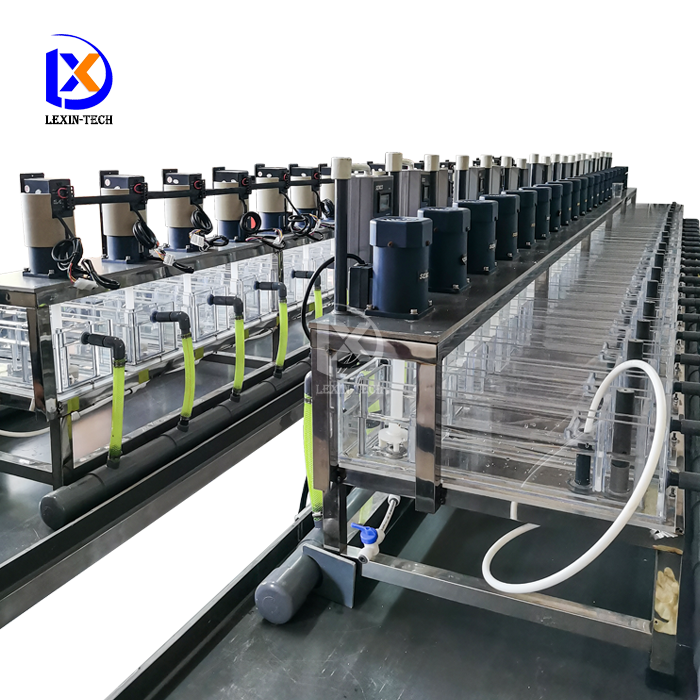
Xi'an Lexin Technology Co., Ltd. is at the forefront of mixer-settler technology, offering a range of high-quality, customizable solutions for metal recovery applications. Located in Xi'an, China, our company combines industry expertise with innovative design to deliver mixer-settlers that meet the most demanding requirements. From lab-scale units to industrial-scale systems, we provide comprehensive support throughout the entire process, from initial consultation to after-sales service. Our experienced R&D team and proven track record in hydrometallurgical demonstration lines ensure that clients receive cutting-edge solutions tailored to their specific needs. For more information or to discuss your metal recovery challenges, contact us at xalexin-tech@outlook.com .
References
1. Smith, J.K. and Brown, A.L. (2019). "Advances in Mixer-Settler Technology for Precious Metal Recovery". Journal of Hydrometallurgy, 56(3), 210-225.
2. Chen, X., Wang, Y., and Liu, Z. (2020). "Comparative Analysis of Mixer-Settlers and Column Extractors in Copper Recovery Processes". Chemical Engineering Science, 185, 142-158.
3. Rodríguez-Rodríguez, C. et al. (2018). "Optimization of Mixer-Settler Design for Rare Earth Element Extraction". Minerals Engineering, 112, 175-187.
4. Johnson, M.T. and Thompson, R.C. (2021). "Smart Technologies in Mixer-Settler Operations: A Review". Hydrometallurgy, 201, 105571.
5. Lee, S.H., Park, J.Y., and Kim, H.S. (2017). "Environmental Impact Assessment of Mixer-Settler Systems in Metal Recovery". Journal of Cleaner Production, 152, 459-468.
6. Nguyen, T.H. and Wilson, B.P. (2020). "Application of Mixer-Settlers in Electronic Waste Recycling: Challenges and Opportunities". Resources, Conservation and Recycling, 157, 104746.



_1770200167466.webp)