


Science Popularization of Hydrometallurgy
Hydrometallurgy is a process that extracts and purifies metal elements from ores, concentrates, or secondary resources (such as scrap metal) through chemical reactions in aqueous solutions. Unlike traditional pyrometallurgy (high-temperature smelting), hydrometallurgy is typically conducted at room temperature or moderately low temperatures, offering advantages such as environmental friendliness, energy efficiency, and suitability for low-grade ores.

Flow Chart of Copper Leaching-Solvent Extraction-Electrowinning (L-SX-EW) Process
1. Core Stages of the Hydrometallurgical Process
1.1 Leaching
- The target metal elements in solid raw materials are converted into ionic form and dissolved in the leaching solution using acidic (e.g., H₂SO₄, HCl) or alkaline (e.g., NH₄OH) leaching agents.
- Example: Copper is leached from copper ore with dilute sulfuric acid solution.(CuO + H₂SO₄ → CuSO₄ + H₂O)

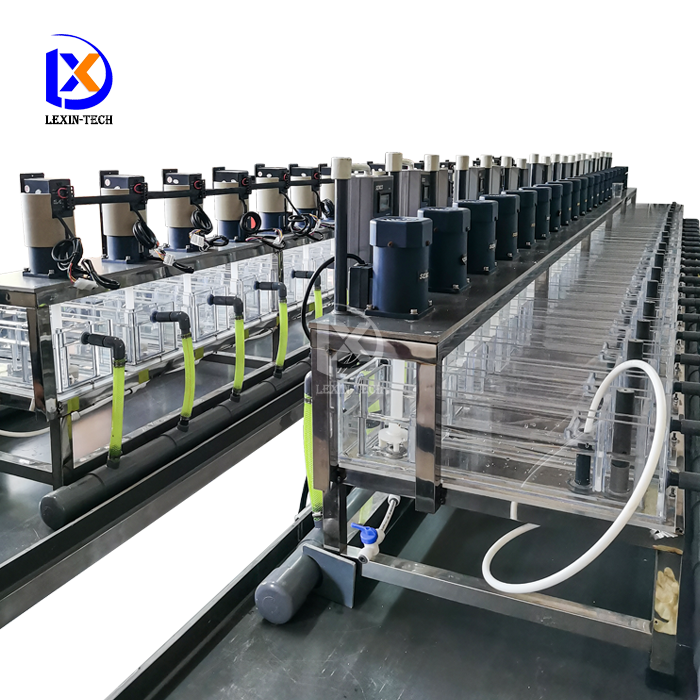
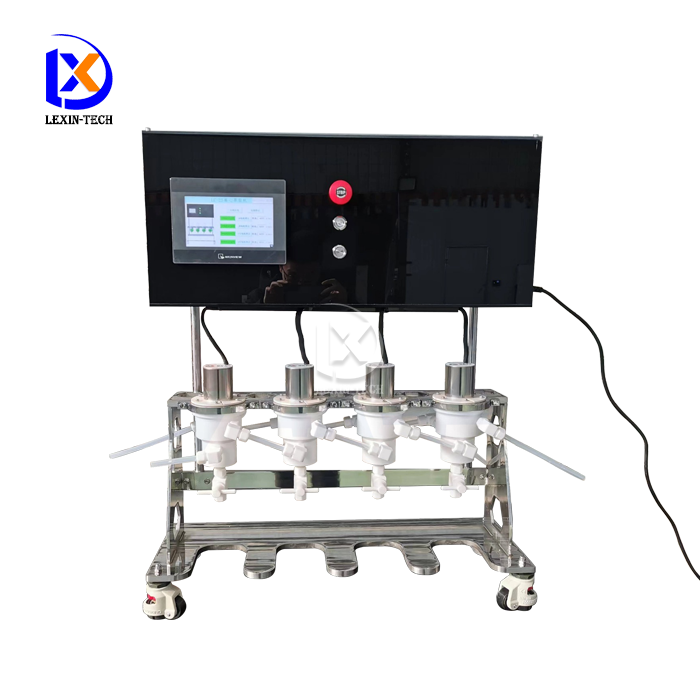
Leaching Equipment (Reactor)
1.2 Solid-liquid Separation
- The solid-liquid mixture after leaching is separated using suitable solid-liquid separation equipment (such as plate-and-frame filter presses, cartridge filters, or bag filters) to produce a clarified filtrate containing concentrated target metal ions.
- Example: Solid-liquid separation of leached slurry (residue and pregnant leach solution) after copper ore acid leaching, and separation of iron precipitate from solution in the goethite iron removal process.

Solid-liquid Separation Equipment (Plate-and-Frame Filter Presses)
1.3 Liquid-liquid Separation
- The clarified filtrate from solid-liquid separation is further processed via liquid-liquid separation techniques (e.g., chemical precipitation, solvent extraction, or ion exchange) to eliminate impurities, yielding a purified solution concentrated with the desired metals.
- Example: The black mass leach solution is first treated by precipitation for initial removal of Fe, Al and Cu impurities, followed by solvent extraction for thorough impurity elimination, with subsequent selective recovery of Ni, Co, Mn and Li through extraction steps.
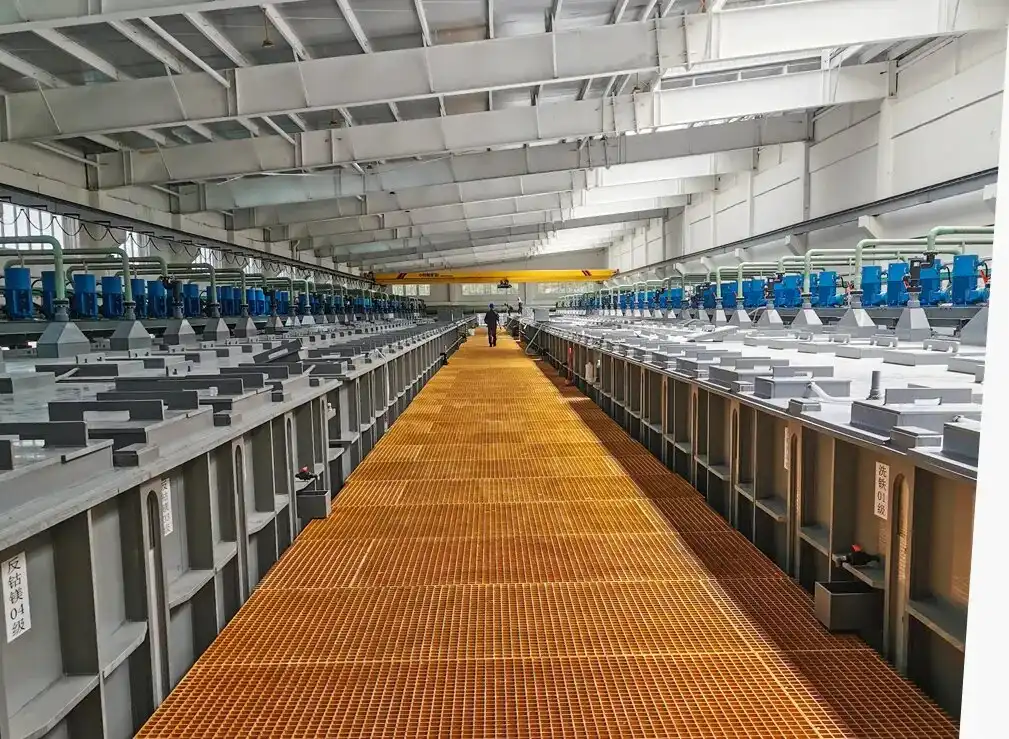
Solid-liquid Separation Equipment(Mixer-Settler)
1.4 Metal recovery
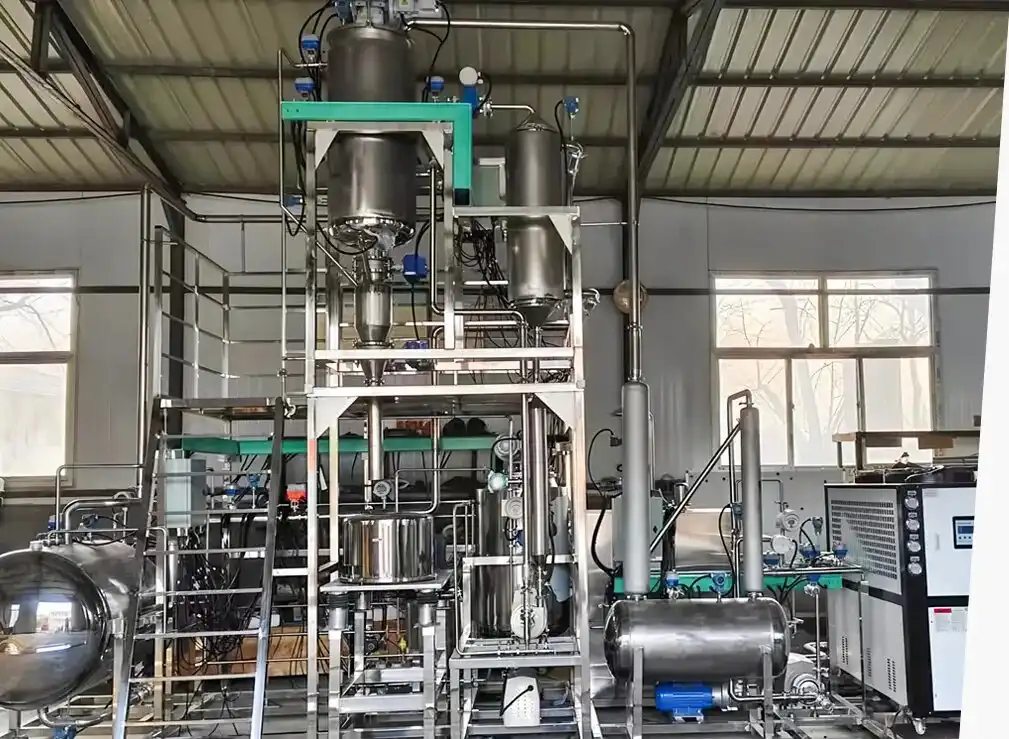
- Metal recovery is achieved either: (1) In elemental/metallic form (of different purity grades) through electrolytic refining or electrowinning. (2) As crystalline salt compounds (with varying purity) by evaporation crystallization processes.
- Example: Copper cathodes are produced by electrolysis of copper sulfate solution(Cu²⁺ + 2e⁻ → Cu). After extraction separation, the purified nickel sulfate and cobalt sulfate solutions undergo evaporation crystallization to yield high-purity battery-grade nickel sulfate (NiSO₄·6H₂O) and cobalt sulfate (CoSO₄·7H₂O).
2. Advantages of Hydrometallurgy
- Environmental Benefits: Significantly reduced gaseous emissions and 30-50% lower energy usage than smelting processes.
- Material Flexibility: Effective for refractory ores, multi-metal concentrates, and urban mining (battery recycling applications).
- Product Quality: Direct production of high-purity metals (e.g., electrowon copper with 99.99% purity).
3. Typical Applications of Hydrometallurgy
3.1 For Copper
The SX-EW (solvent extraction-electrowinning) route accounts for ~20% of worldwide refined copper output, with Chile's Escondida being the largest operation (1.2Mt/a cathode copper).
3.2 For Battery Metals
HPAL projects (e.g., Goro in New Caledonia) typically achieve 90-94% Ni/Co recovery rates, while black mass recycling processes can yield battery-grade sulfates (≥20.2% Co, ≤0.05% Fe).
3.3 For Gold
Modern cyanide leaching achieves >95% Au extraction, with <0.01ppm residual cyanide through INCO SO₂/Air treatment.
4. Comparison Between Hydrometallurgy and Pyrometallurgy
| Criteria | Hydrometallurgy | Pyrometallurgy |
|---|---|---|
| Temperature | Ambient ~200 ℃ | High temperature (500 ℃ ~ 1600 ℃) |
| Feedstock | Low-grade ores, complex minerals | High-grade ores, concentrates |
| Energy Consumption | Relatively low | High |
| Environmental Impact | Minimal gas emissions, wastewater treatment required | Generates significant CO₂/SO₂ emissions |
5. Future Development of Hydrometallurgy
Hydrometallurgy demonstrates significant potential in lithium battery recycling (for Li, Co, Ni, and Mn), comprehensive utilization of rare/precious/scattered metals, and carbon footprint reduction, making it a pivotal direction for green metallurgy.