


What Materials Are Recovered Through Li-Ion Battery Recycling?
As long as our batteries last (Paleblue products’ cycle rating is 1000 charges), they still don't last forever. They should be recycled at end of life rather than being thrown in the trash. Why? Because there are valuable materials that recyclers can recover from spent batteries.
Four Valuable Recyclable Materials
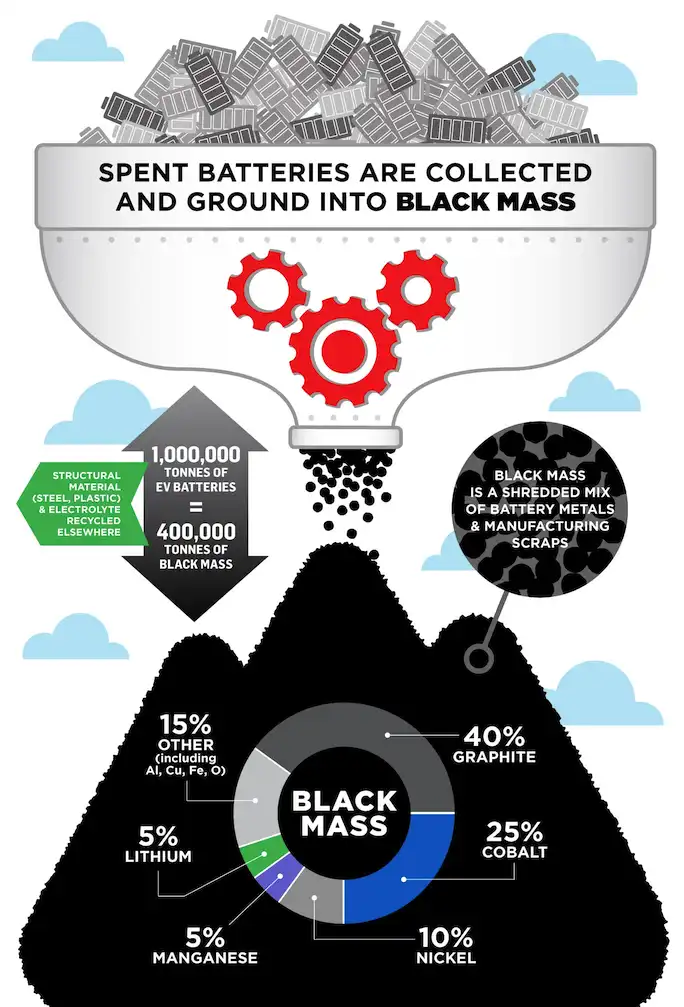
Getting back to material recovery, recyclers are after four key materials. Different levels of each are recoverable depending on a battery's makeup and design. Keep in mind that not every lithium-ion battery contains the same materials. The four mentioned below represent only the most common options for recyclers.
1. Lithium
Lithium is a chemical element and alkali metal. Many recyclers recover it from used batteries. Others do not for the simple fact that used lithium has to be reprocessed before it can be used again. That means the market for it is not as big as it could be. Recyclers will not bother recovering it if they cannot find anyone willing to buy it from them.
On the other hand, lithium is difficult and expensive to extract from the ground. Recyclers and battery manufacturers alike know that the more they can recover from old batteries, the better.
2. Cobalt
Cobalt is also a chemical element. Interestingly enough, it's only found in pure form in a limited number of small deposits. Most of the cobalt that goes into USB-C rechargeable batteries is found in alloy form – which is to say it is combined with other metals. The pure cobalt product can only be obtained through hydrometallurgical separation and purification processes.
3. Nickel
Nickel is a silvery white metal with a slightly golden luster. And yes, it is yet another chemical element. It is especially important to battery manufacturing because it is highly active. Among all the chemical elements, it has been one of the most widely used throughout human history. Similarly, pure nickel products can only be recovered from spent batteries through hydrometallurgical recycling processes.
4. Manganese
Finally, we have manganese. This chemical element is found naturally as a hard metal with a shiny silver surface. It is quite brittle in its natural form. It's also commonly found alongside iron deposits. It is one of the easier metals to recover through hydrometallurgical recovery process.
Why Recycling Is Important
Recycling these four chemical elements is important for a number of reasons.
First and foremost is limited supply. The world isn't going to offer up lithium, cobalt, nickel, and manganese forever.
Second, despite strict regulations in most countries, mining is naturally harmful to the environment. We are doing the Earth a big favor whenever we can reduce the need to mine these elements. Every amount we can recycle reduces the need to mine more.
Along those same lines, mining uses additional resources. Every piece of mining equipment consumes energy. Resources are required to build that equipment. Even transporting mined metals consumes resources. Recycling reduces resource consumption.
Part of our message is to encourage you to replace single-use batteries with USB-C lithium-ion batteries. Doing that much helps by keeping alkaline batteries out of landfills and reducing the resources needed to make more. Recycling is just as important to long term sustainability.
From: https://paleblueearth.com/