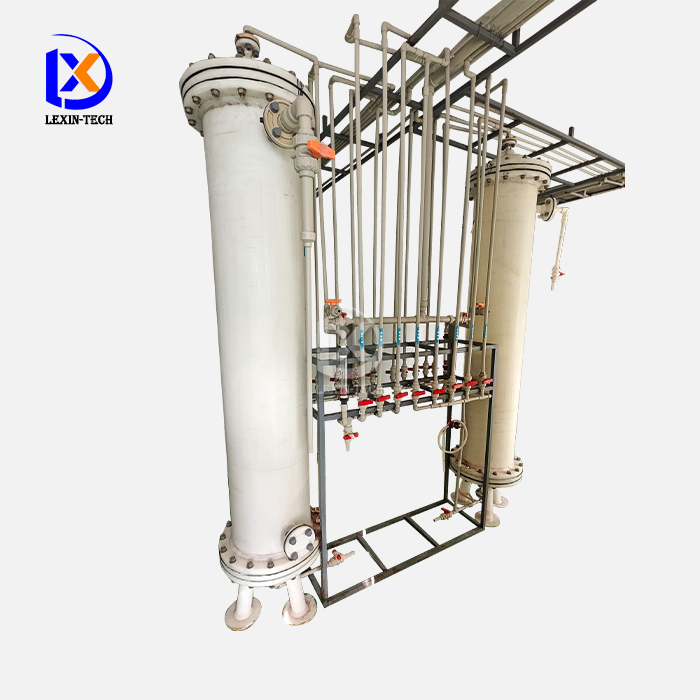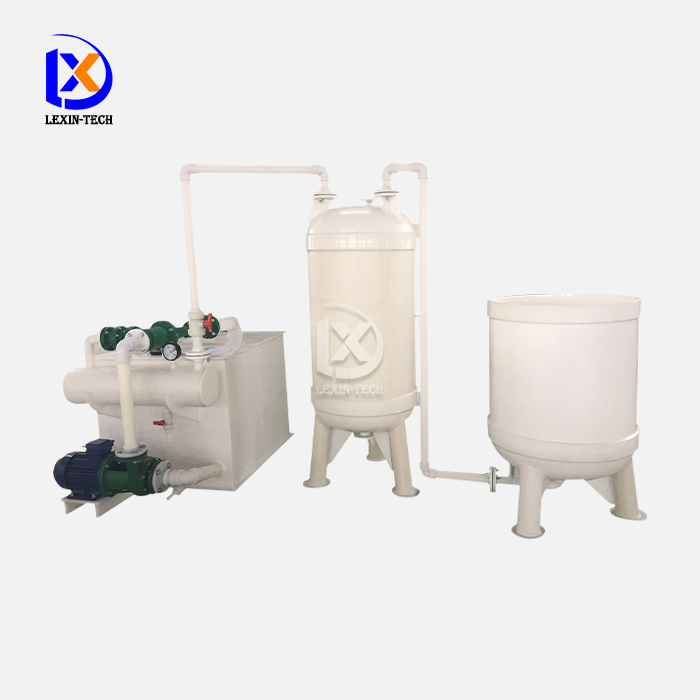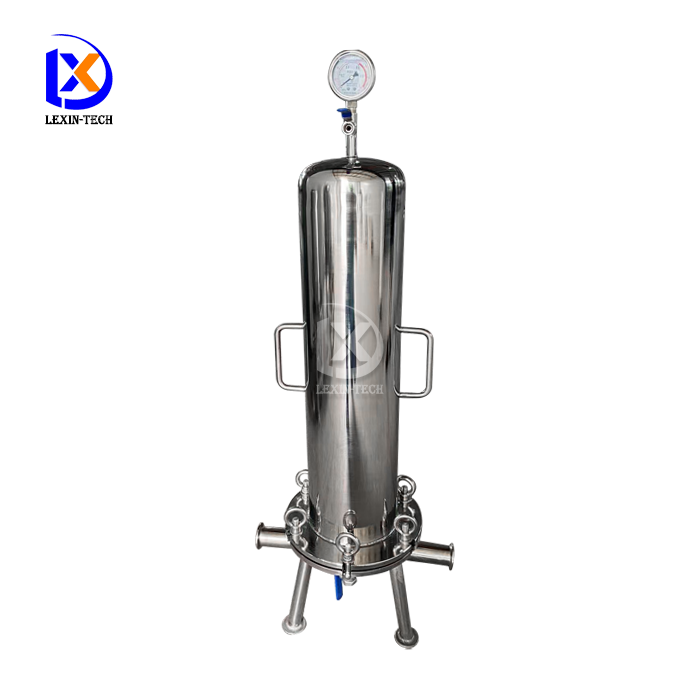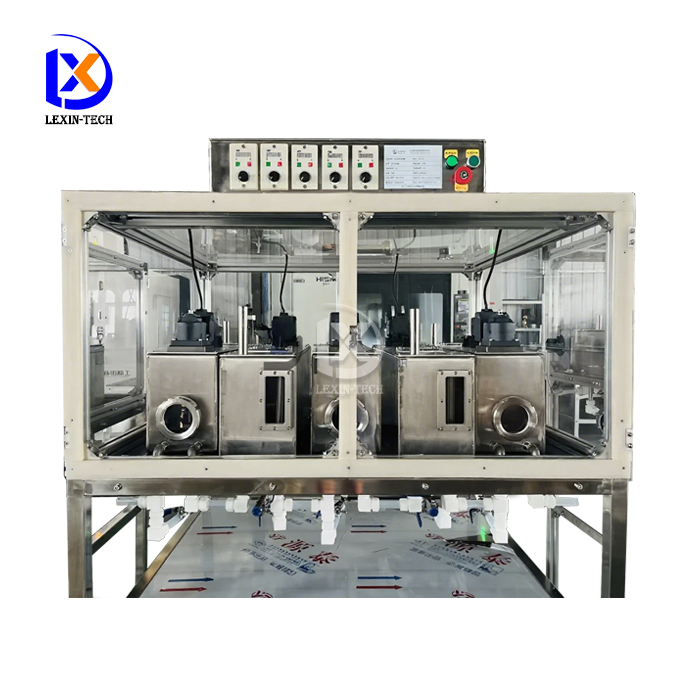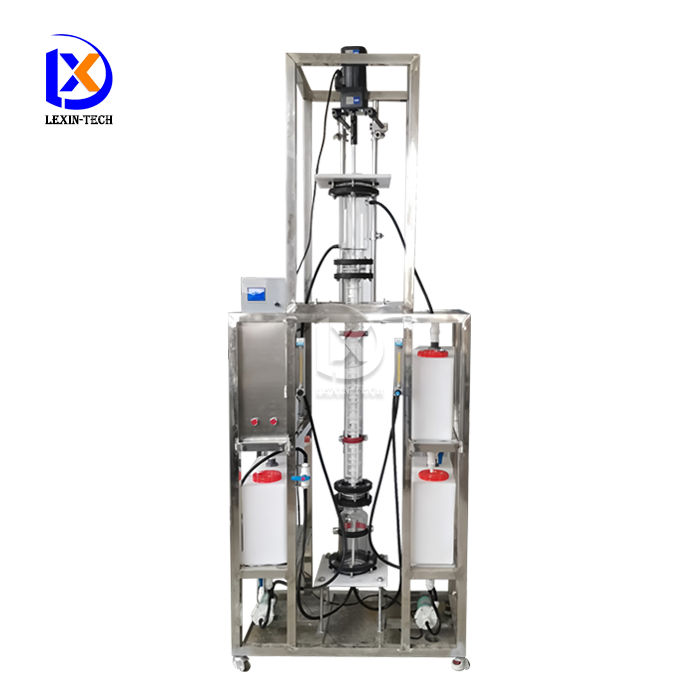

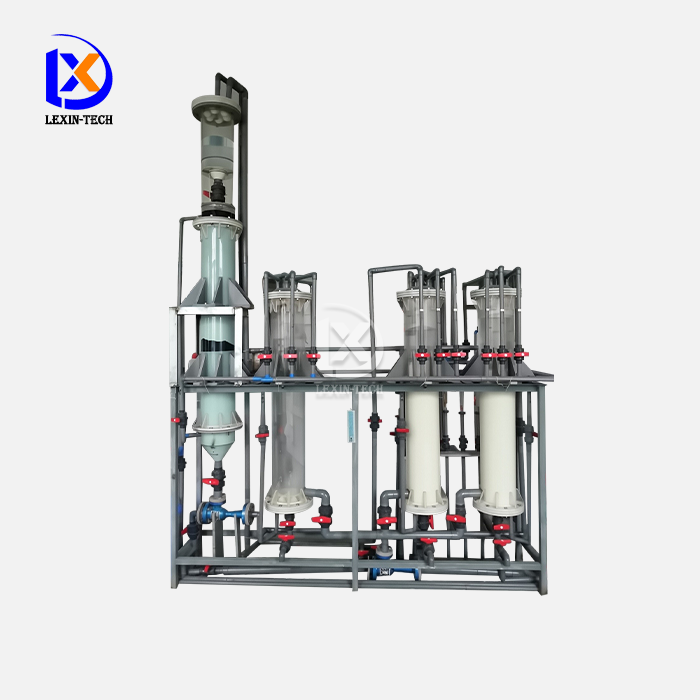
PMMA Ion Exchange Unit


Exchange Column Material: Acrylic(PMMA)
Exchange Column Diameter (mm): 100, 150, 200, 300, 350, 400, 500, 600
Type of Infusion Pump: Metering Pump / Gear Pump
Type of Flowmeter: Electromagnetic Flowmeter / Turbine or Vortex Flowmeter / Float Flowmeter
Equipment Frame Material: Carbon steel with anti-corrosion coating / SUS 304
Control System: One-to-one control via buttons or knobs / Integrated Touchscreen Control
Notes: According to actual customer requirements, customized skid-mounted packages are available. The package primarily consists of an ion exchange system, equipment frame, liquid infusion and flow metering system, control system, storage tanks, and other components.
- Product Description
PMMA Ion Exchange Unit - An Efficient Method For Separation And Purification
As an efficient method for separation and purification,Our PMMA Ion Exchange Unit has become a core device in deep liquid-liquid separation and purification processes. This is due not only to its strong selectivity, high separation precision, and recyclability but also to its unique characteristics such as transparency, corrosion resistance, lightweight design, and ease of processing. It is widely applied in scenarios including the removal of trace impurities, enrichment of target ions, and deep purification of water quality.
Key Features & Specifications
Our particle trade framework exceeds expectations at evacuating low-concentration ionic pollutions from complex arrangements. You advantage from tall selectivity capabilities that target particular cations and anions. The regenerable tar innovation guarantees cost-effective operation with basic upkeep methods.
| Specification | Options Available |
|---|---|
| Exchange Column Material | Acrylic (PMMA) |
| Column Diameter (mm) | 100, 150, 200, 300, 350, 400, 500, 600 |
| Infusion Pump Type | Metering Pump / Gear Pump |
| Flowmeter Options | Electromagnetic Flowmeter / Turbine or Vortex Flowmeter / Float Flowmeter |
| Frame Material | Carbon Steel (Anti-corrosion) / SUS 304 |
| Control System | Button/Knob Control / Touchscreen Interface |
| Customization | Customized skid-mounted packages are available. The package primarily consists of an ion exchange system, equipment frame, liquid infusion and flow metering system, control system, storage tanks, and other components. |
Why Choose PMMA Construction?
Precious stone Clear Visibility:
You can screen your whole handle in real-time. The straightforward acrylic columns let you watch tar development, fluid stream designs, and potential issues like channeling or blockages. This perceivability advantage makes a difference you keep up ideal execution and capture issues early.
Superior Chemical Resistance:
Your framework withstands powerless acids, bases, and salt arrangements commonly utilized in particle trade forms. PMMA stands up to erosion way better than numerous options whereas maintaining a strategic distance from metal defilement dangers. You get solid execution without compromising item purity.
Cost-Effective Processing:
The lightweight, easy-to-machine properties diminish establishment and support costs. You advantage from conservative operation without relinquishing quality or unwavering quality.
Application Areas
Water Treatment Field:
In the field of water treatment,PMMA Ion Exchange Units are primarily used for deep purification of drinking water, industrial wastewater treatment, and the preparation of pure and ultrapure water. For instance, in advanced drinking water purification, they can remove trace impurities such as fluoride ions, arsenic ions, and heavy metal ions (e.g., lead, cadmium, copper), addressing issues of excessive trace contaminants in drinking water and ensuring its safety. In industrial wastewater treatment, they are employed to treat electroplating and smelting wastewater, adsorbing and recovering heavy metal ions (e.g., chromium, nickel, zinc) from the wastewater. This not only enables resource recovery but also ensures the treated wastewater meets discharge standards, thereby reducing environmental pollution. In small-scale pure water preparation scenarios, PMMA ion exchange units, with their advantages of transparency, visibility, and low cost, serve as core equipment in laboratories, small-scale electronic factories, and pharmaceutical plants. They can be combined with electrodialysis devices to form a pretreatment-electrodialysis-ion exchange purification system, replacing traditional mixed-bed ion exchange equipment. This enhances the efficiency and purity of pure water production. For example, in the production of drinking purified water, raw water is first treated by electrodialysis and then passed through PMMA cation exchangers, anion exchangers, and mixed-bed units to ultimately obtain purified water that meets the required standards.
Pharmaceutical Industry:
The pharmaceutical industry demands extremely high product purity, as trace impurities in solutions (such as metal ions, harmful anions, and intermediate impurities) can affect the efficacy and safety of drugs. Therefore, deep separation and purification are critical steps in pharmaceutical production. PMMA ion exchange units, with their advantages of no metal leaching, corrosion resistance, transparency, visibility, and compliance with GMP hygiene standards, are widely used in scenarios such as purification of pharmaceutical intermediates, refinement of finished drugs, and purification of pharmaceutical water. For example, in the production of antibiotics and vitamins, PMMA ion exchange units can remove trace metal ions and impurity anions from solutions to enhance drug purity. In the capture and purification of monoclonal antibodies, specially designed PMMA chromatography columns can increase antibody capture rates from 82% to 95%. In the production of formulations such as injections and large-volume infusions, these units are used for deep purification of pharmaceutical water, removing trace impurities to ensure compliance with pharmacopoeial standards and guarantee the safety and stability of the formulations.
Food Industry:
In the food industry, PMMA ion exchange units are primarily used for the purification of food raw materials, refinement of food additives, and treatment of food wastewater. They are particularly suitable for small-scale production scenarios that require equipment hygiene and visibility. For example, in the production of food raw materials such as gluconic acid and xylitol oligomers, PMMA ion exchange units can remove impurities like chloride ions and sodium salts from solutions, preventing these impurities from affecting product crystallization and taste. In chloride removal tests for gluconic acid, the D315 resin inside the PMMA exchange column effectively removes chloride ions from the feed liquid, resulting in undetectable chloride levels after treatment. The resin can be regenerated and reused, demonstrating high processing capacity and excellent repeatability. In the purification of xylitol oligomer fermentation broth, treatment with PMMA ion exchange units (filled with D001FD cation resin and D354FD anion resin) for desalination and decolorization increases the transmittance of the fermentation broth from 67.2% to over 99%, significantly reduces conductivity, and yields a colorless, transparent refined liquid that meets food production requirements. Additionally, these units are used for the purification of food additives (e.g., citric acid, monosodium glutamate) to remove trace impurities and improve product quality. They are also employed in the treatment of food wastewater to recover valuable components and reduce environmental pollution.
Chemical Industry:
In the chemical industry, PMMA ion exchange units are used for the refinement of chemical raw materials, catalyst recovery, and separation of organic compounds. For example, in the production of chemical raw materials such as ethylene glycol and propylene glycol, ion exchange units can remove trace impurities from solutions to enhance raw material purity, ensuring the efficiency of subsequent reactions and product quality. In catalyst recovery, they can adsorb and recover catalyst ions after reactions, enabling catalyst recycling, reducing production costs, and minimizing environmental pollution caused by catalysts.
Three-Stage Working Principle
Adsorption Stage:
Target particles trade with utilitarian bunches on the gum surface. Contaminants tie to the tar whereas clean fluid streams through. You accomplish particular evacuation of undesirable ionic species.
Elution Stage:
Concentrated eluent arrangement desorbs captured particles from soaked tar. This concentrated stream contains your recuperated materials or squander for transfer. You maximize asset recuperation whereas minimizing squander volume.
Regeneration Arrange:
Fresh regenerant restores the resin to its original exchangeable state. The system prepares for the next cycle automatically. You maintain consistent performance with minimal downtime.
Custom Solutions for Your Needs
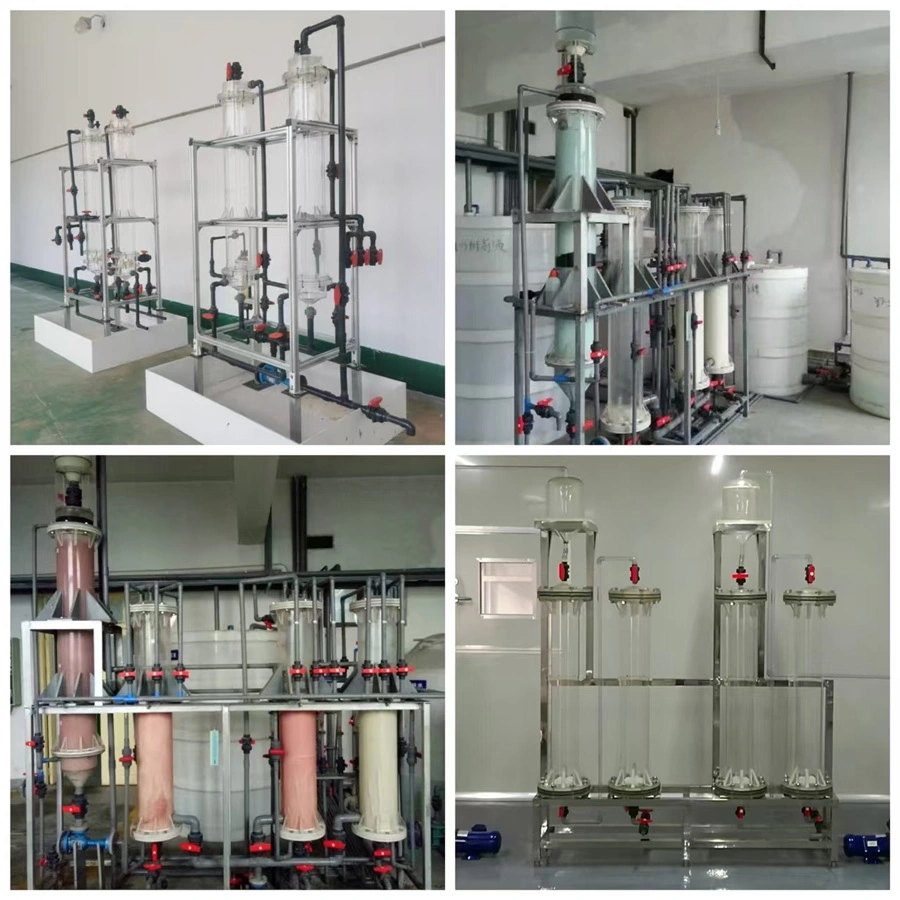
Every application presents interesting challenges. Our building group plans skid-mounted bundles that coordinated consistently with your existing forms. You get total frameworks counting capacity tanks, pumping hardware, and control interfaces.
The measured plan permits simple development as your capacity develops. Standard gear outlines oblige different location conditions and establishment prerequisites.
FAQ
Q1: How does the ion exchange process work in our units?
A: The process operates through three distinct stages:
Adsorption Stage: Target ions in your feed liquid exchange with functional groups on the resin. Metal cations or acid anions are captured while other ions pass through.
Elution Stage: Once saturated, an eluent solution desorbs captured ions from the resin. This concentrates and recovers your target ions.
Regeneration Stage: A regenerant restores resin functional groups to their original state, preparing for the next cycle.
Q2. Why is polymethyl methacrylate (PMMA) chosen as the main material for this ion exchange unit?
Visibility advantage: PMMA has extremely high transparency, allowing direct observation of resin expansion, uniformity of feed liquid flow, and resin stratification inside the column. This enables real-time monitoring of the entire process of adsorption, elution, and regeneration, and timely detection of abnormalities such as channeling and blockage.
Corrosion resistance compatibility: It exhibits excellent corrosion resistance to most weak acids, weak bases, and salt solutions (except strong oxidizing media such as concentrated nitric acid, chromic acid, and strong polar solvents such as ketones), making it suitable for the mild medium systems commonly used in ion exchange processes.
Processability and economy: PMMA is easy to process into complex-shaped exchange columns and pipelines. It is also lightweight, low-cost, and convenient for installation and maintenance, making it ideal for laboratory or small-to-medium industrial scenarios under non-extreme operating conditions.
Insulation and purity assurance: As an insulating material, it avoids the risk of electrochemical corrosion associated with metal materials and does not introduce metal ion contamination into the feed liquid, ensuring product purity.
Get Started Today
Ready to improve your product quality with our PMMA Ion Exchange Unit? Contact us at xalexin-tech@outlook.com/279821010@qq.com to discuss your specific requirements.