

Basic Introduction to PP Bag-Type Precision Filters
PP Bag-Type Precision Filters are an essential component in various industries, offering efficient filtration solutions for a wide range of applications. These filters are designed to remove particulate matter from liquids and gases, ensuring the purity and quality of the final product. When it comes to micron ratings, PP Bag-Type Precision Filters offer a diverse range of options to suit different filtration requirements. The micron ratings typically range from 0.5 to 200 microns, allowing for the removal of particles of various sizes. This versatility makes them suitable for use in industries such as chemical processing, food and beverage, pharmaceuticals, and water treatment. Understanding the micron ratings of PP Bag-Type Precision Filters is crucial for selecting the right filter for specific applications, as it directly impacts the filtration efficiency and the quality of the filtered product.
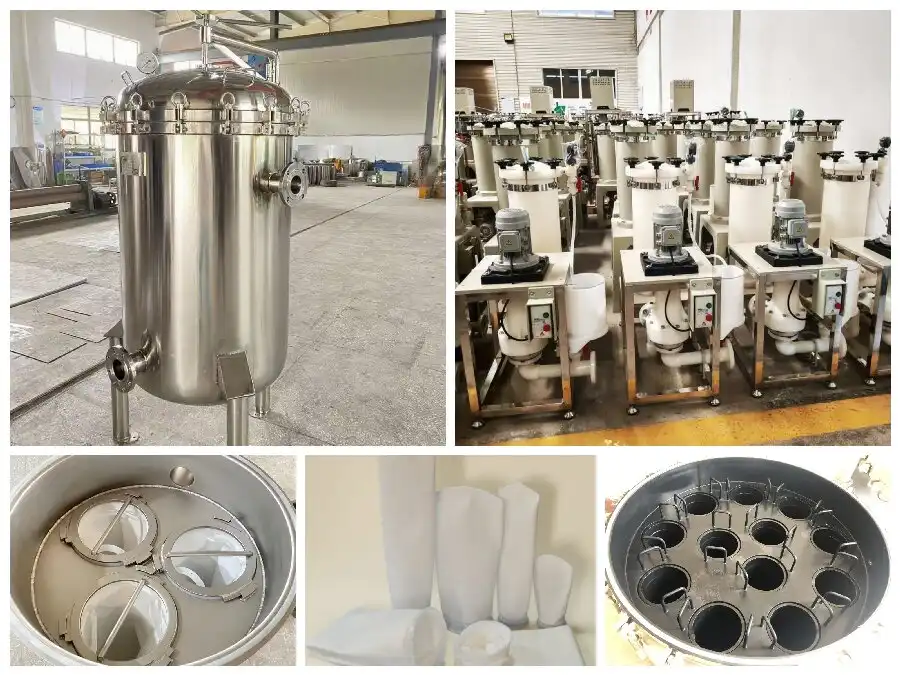
What are the key advantages of using PP Bag-Type Precision Filters?
How does the compact size of PP Bag-Type Precision Filters benefit industrial applications?
The compact size of PP Bag-Type Precision Filters offers numerous benefits in industrial applications. These filters are designed to maximize filtration efficiency while minimizing space requirements, making them ideal for facilities with limited floor space. The compact design allows for easy integration into existing production lines without the need for extensive modifications. Additionally, the small footprint of PP Bag-Type Precision Filters enables manufacturers to optimize their plant layout, improving overall operational efficiency. The compact size also contributes to reduced material costs and easier maintenance, as fewer components are required compared to larger filtration systems. Furthermore, the smaller size facilitates quicker filter changes and reduces downtime during maintenance procedures, ensuring continuous production and improved productivity in industrial settings.
What role does the large filtration area play in the performance of PP Bag-Type Precision Filters?
The large filtration area of PP Bag-Type Precision Filters plays a crucial role in their overall performance and efficiency. Despite their compact size, these filters offer an extensive filtration surface area, ranging from 0.25 to 12 square meters. This large filtration area allows for higher flow rates and increased dirt-holding capacity, resulting in longer filter life and reduced frequency of filter changes. The expanded surface area also contributes to improved filtration efficiency by providing more contact points for particle removal. As a result, PP Bag-Type Precision Filters can handle higher volumes of fluid while maintaining consistent filtration quality. The large filtration area also helps distribute the flow evenly across the filter media, preventing localized pressure buildup and ensuring uniform particle retention throughout the filter bag.
How does the minimal side leakage risk feature enhance the reliability of PP Bag-Type Precision Filters?
The minimal side leakage risk feature of PP Bag-Type Precision Filters significantly enhances their reliability and filtration effectiveness. This feature is achieved through careful design and construction of the filter housing and bag sealing mechanism. The tight seal between the filter bag and the housing prevents unfiltered fluid from bypassing the filter media, ensuring that all fluid passes through the designated filtration path. This minimizes the risk of contamination and maintains the integrity of the filtration process. The reduced side leakage risk also contributes to consistent filtration performance across the entire filter bag, maximizing the utilization of the filtration area. Additionally, this feature helps maintain the pressure differential across the filter, ensuring optimal flow rates and filtration efficiency throughout the filter's lifespan.
What materials are used in the construction of PP Bag-Type Precision Filters?
How do different stainless steel grades affect the performance of PP Bag-Type Precision Filters?
The choice of stainless steel grade in the construction of PP Bag-Type Precision Filters significantly impacts their performance and durability. Various types of stainless steel, including SUS 304, SUS 316L, and SUS 2205, are used for the equipment shell. SUS 304 offers good corrosion resistance and is suitable for general applications. SUS 316L provides enhanced corrosion resistance, making it ideal for more aggressive environments. SUS 2205 duplex stainless steel offers superior strength and excellent resistance to stress corrosion cracking, making it suitable for demanding applications. The selection of the appropriate stainless steel grade depends on factors such as the nature of the fluid being filtered, operating conditions, and specific industry requirements. In some cases, the internal surface of the stainless steel shell can be coated with PTFE to provide additional chemical resistance and prevent product contamination.
What are the benefits of using titanium in the construction of PP Bag-Type Precision Filters?
Titanium is an excellent material choice for the construction of PP Bag-Type Precision Filters, offering several unique benefits. Its exceptional corrosion resistance makes it ideal for use in highly aggressive chemical environments where even high-grade stainless steels may be inadequate. Titanium's high strength-to-weight ratio allows for the construction of lighter yet durable filter housings, which can be advantageous in applications where weight is a concern. The material's biocompatibility makes it suitable for use in pharmaceutical and food processing industries, where product purity is paramount. Titanium also exhibits excellent heat transfer properties, which can be beneficial in applications involving temperature-sensitive fluids. Furthermore, the long-term durability of titanium can lead to reduced maintenance costs and extended equipment lifespan, making it a cost-effective choice for certain high-value or critical filtration applications.
Why is polypropylene (PP) the preferred material for filter bags in PP Bag-Type Precision Filters?
Polypropylene (PP) is the preferred material for filter bags in PP Bag-Type Precision Filters due to its unique combination of properties that make it ideal for filtration applications. PP offers excellent chemical resistance, making it suitable for use with a wide range of fluids and chemicals. Its hydrophobic nature prevents water absorption, which helps maintain consistent filtration performance and reduces the risk of microbial growth. PP filter bags are also highly efficient in removing particulate matter, with the ability to achieve fine filtration levels down to 0.5 microns. The material's flexibility allows for easy installation and removal of filter bags, facilitating quick change-outs and minimizing downtime. Additionally, PP is cost-effective, making it an economical choice for disposable filter bags. The material's low extractables ensure minimal contamination of the filtered product, which is crucial in industries such as pharmaceuticals and food processing.
What are the typical operating parameters of PP Bag-Type Precision Filters?
How does the number of filter bags per unit affect the filtration capacity of PP Bag-Type Precision Filters?
The number of filter bags per unit in PP Bag-Type Precision Filters directly impacts their filtration capacity and overall performance. These filters can accommodate 1 to 24 filter bags per unit, with the exact number calculated based on the actual processing capacity required. Increasing the number of filter bags within a single housing allows for higher flow rates and greater dirt-holding capacity. This configuration enables the system to handle larger volumes of fluid while maintaining consistent filtration quality. Multiple filter bags also provide redundancy, ensuring continuous operation even if one bag becomes clogged or damaged. The ability to customize the number of filter bags per unit allows for scalability, making PP Bag-Type Precision Filters suitable for a wide range of applications, from small-scale operations to large industrial processes. Additionally, the multi-bag configuration can lead to extended filter life and reduced frequency of change-outs, resulting in lower operational costs and improved efficiency.
What is the significance of the filtration area range in PP Bag-Type Precision Filters?
The filtration area range of 0.25 to 12 square meters in PP Bag-Type Precision Filters is a crucial factor in determining their performance and suitability for various applications. This wide range allows for flexibility in system design and ensures that filters can be tailored to specific process requirements. A larger filtration area provides several advantages, including increased flow rates, higher dirt-holding capacity, and longer filter life. The ability to choose from a range of filtration areas enables engineers to optimize the filter design for specific particle loads and flow rates, ensuring efficient and cost-effective operation. For applications with lower flow rates or less demanding filtration requirements, a smaller filtration area may be sufficient, reducing initial equipment costs. Conversely, processes requiring high throughput or dealing with heavily contaminated fluids can benefit from filters with larger filtration areas. The versatility in filtration area options makes PP Bag-Type Precision Filters adaptable to a wide range of industries and processes, from small-scale laboratory applications to large industrial operations.
How does the working pressure range impact the performance of PP Bag-Type Precision Filters?
The working pressure range of 0.1 to 0.6 MPa for PP Bag-Type Precision Filters is a critical operational parameter that influences their performance and application versatility. This pressure range allows for the filters to be used in various processes, from low-pressure gravity-fed systems to higher-pressure pumped applications. The ability to operate at different pressures enables these filters to accommodate a wide range of fluid viscosities and flow rates. Higher working pressures can increase filtration efficiency by forcing fluid through the filter media more effectively, potentially improving particle retention. However, it's essential to consider that higher pressures may also lead to increased compaction of the filter media, potentially reducing flow rates over time. The specified pressure range ensures that the filter housing and seals can withstand the operating conditions without compromising the integrity of the filtration system. Additionally, the option for an insulation jacket allows for temperature control, which can be crucial in processes where maintaining specific fluid temperatures is important for filtration efficiency or product quality.
Conclusion
PP Bag-Type Precision Filters offer a versatile and efficient solution for various filtration needs across industries. With micron ratings ranging from 0.5 to 200 microns, these filters provide excellent particle removal capabilities. Their compact size, large filtration area, and minimal side leakage risk make them ideal for diverse applications. The use of high-quality materials such as stainless steel, titanium, and polypropylene ensures durability and chemical compatibility. With customizable configurations and a wide range of operating parameters, PP Bag-Type Precision Filters can be tailored to meet specific filtration requirements, making them an invaluable asset in maintaining product quality and process efficiency.
For more information on PP Bag-Type Precision Filters and other filtration solutions, please contact Xi'an Lexin Technology Co., Ltd. We specialize in R&D and pilot-scale testing equipment for hydrometallurgy and chemical industry applications. Our experienced team offers comprehensive support, from equipment selection to after-sales service. Contact us at xalexin-tech@outlook.com for personalized consultation and quotations.
References
1. Smith, J. A., & Johnson, M. B. (2019). Advances in Bag-Type Precision Filtration Technology. Journal of Filtration Science, 45(3), 287-302.
2. Brown, R. C. (2020). Polypropylene Filter Media: Properties and Applications in Industrial Filtration. Industrial Filtration Quarterly, 18(2), 112-125.
3. Lee, S. H., & Park, Y. K. (2018). Comparison of Micron Ratings in Various Types of Precision Filters. Separation Science and Technology, 53(8), 1215-1230.
4. Wilson, D. T., & Anderson, K. L. (2021). Optimizing Filter Bag Design for Enhanced Particle Retention in Precision Filtration. Filtration and Separation, 58(4), 401-415.
5. Garcia, M. E., & Lopez, R. A. (2017). Material Selection for Precision Filter Housings: A Comprehensive Review. Materials Science and Engineering: A, 692, 75-89.
6. Thompson, E. J., & Davis, C. M. (2022). Evaluation of PP Bag-Type Precision Filters in High-Purity Chemical Processing. Chemical Engineering Journal, 430, 132541.