

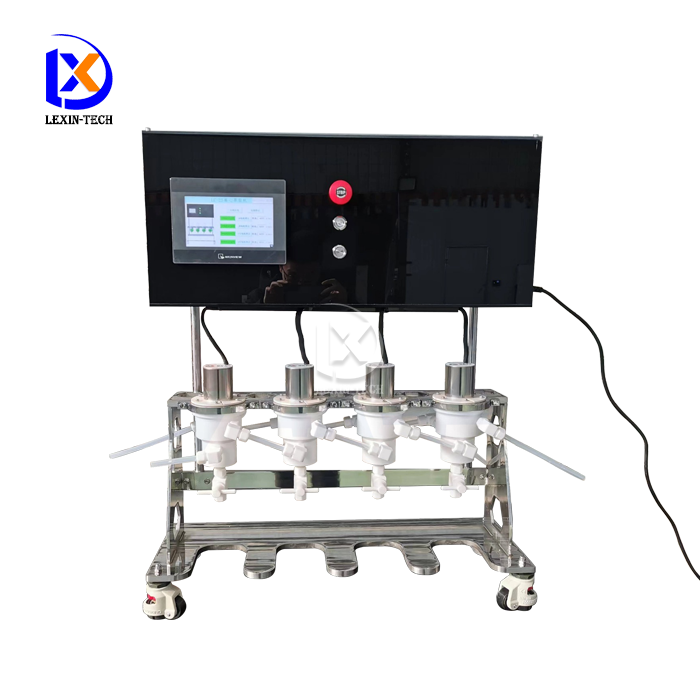
What’s the maximum pressure for double glass reactors?
Double glass reactors are essential equipment in various industries, including chemical research, pharmaceutical development, and materials science. These reactors are designed to withstand specific pressure ranges, making it crucial to understand their maximum pressure capabilities. The maximum pressure for double glass reactors depends on several factors, including the reactor's size, glass thickness, and overall design. Typically, these reactors are engineered to handle pressures ranging from atmospheric pressure up to several bars. However, it's important to note that the exact maximum pressure can vary significantly between different models and manufacturers. Understanding the pressure limitations of double glass reactors is vital for ensuring safe and efficient operations in laboratory and industrial settings. This knowledge helps researchers and engineers select the appropriate reactor for their specific applications, preventing potential accidents and ensuring the integrity of their experiments or processes.
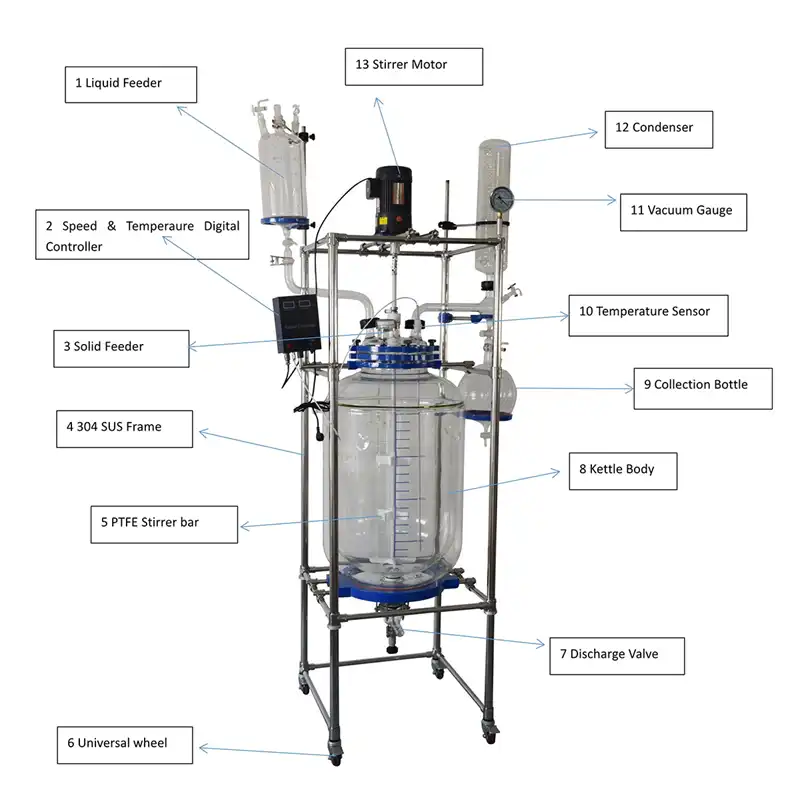
How does the size of a double glass reactor affect its pressure capacity?
Relationship between reactor volume and pressure resistance
The size of a double glass reactor plays a significant role in determining its pressure capacity. Generally, smaller reactors tend to have higher pressure resistance compared to larger ones. This is because the surface area-to-volume ratio decreases as the reactor size increases, making it more challenging to maintain structural integrity under high pressure. In double glass reactors, the inner glass vessel is typically designed to withstand the operating pressure, while the outer jacket provides additional support and allows for temperature control. As the reactor volume increases, the thickness of the glass walls must also increase to maintain the same pressure rating, which can lead to practical limitations in manufacturing and handling.
Impact of reactor geometry on pressure distribution
The geometry of a double glass reactor significantly influences how pressure is distributed throughout the vessel. Spherical or hemispherical designs are often preferred for high-pressure applications due to their ability to distribute stress evenly across the surface. Cylindrical reactors, while more common, may experience higher stress concentrations at certain points, particularly at the corners where the cylinder meets the top and bottom plates. The aspect ratio (height to diameter) of the reactor also affects its pressure-handling capabilities. A lower aspect ratio generally results in better pressure distribution and higher overall pressure resistance. When designing or selecting a double glass reactor, it's crucial to consider these geometric factors to ensure optimal performance and safety under the intended operating conditions.
Scaling considerations for pressure-resistant double glass reactors
When scaling up double glass reactors for increased capacity, several factors must be considered to maintain pressure resistance. As the reactor size increases, the wall thickness must be adjusted proportionally to withstand the same pressure. However, there are practical limits to how thick the glass can be while still allowing for efficient heat transfer and visibility. Manufacturers often employ advanced design techniques, such as reinforced glass structures or composite materials, to enhance the pressure resistance of larger reactors. Additionally, the scaling process may involve modifications to the reactor's support systems, such as the frame and clamping mechanisms, to ensure they can handle the increased loads associated with larger volumes and higher pressures. It's essential to work closely with experienced manufacturers when scaling up double glass reactors to ensure that pressure capacity is maintained without compromising other critical performance aspects.
What are the factors that influence the maximum pressure rating of double glass reactors?
Material properties of borosilicate glass used in reactor construction
The maximum pressure rating of double glass reactors is heavily influenced by the properties of the borosilicate glass used in their construction. Borosilicate glass, such as the GG17 high borosilicate glass mentioned in the product specifications, is chosen for its excellent thermal and chemical resistance. The glass composition, including the ratio of silica, boron oxide, and other additives, affects its strength and ability to withstand pressure. The manufacturing process, including annealing and tempering, also plays a crucial role in determining the glass's mechanical properties. Double glass reactors benefit from the inherent strength of borosilicate glass, which allows them to maintain integrity under moderate pressure conditions while providing excellent visibility and chemical inertness.
Design elements that enhance pressure resistance in double glass reactors
Several design elements contribute to enhancing the pressure resistance of double glass reactors. The double-wall construction itself is a key feature, as it allows for even distribution of stress and provides an additional layer of protection. The shape of the reactor, typically cylindrical or spherical, is optimized to distribute pressure forces evenly. The thickness of the glass walls is carefully calculated to withstand the intended operating pressures. Some advanced designs incorporate reinforced areas or special coatings to further improve pressure resistance. The connection points between the glass components and metal fittings, such as the PTFE discharge valve mentioned in the product features, are engineered to maintain a tight seal under pressure. Additionally, the overall reactor assembly, including the support frame and clamping mechanisms, is designed to provide structural support and prevent uneven stress distribution that could lead to failure under pressure.
Safety features and pressure relief mechanisms in high-pressure double glass reactors
High-pressure double glass reactors incorporate various safety features and pressure relief mechanisms to prevent accidents and ensure safe operation. Pressure relief valves are a common safety feature, designed to automatically release excess pressure if it exceeds the reactor's rated capacity. Some models include burst discs, which are engineered to rupture at a specific pressure, providing an additional layer of protection. Pressure monitoring systems, often integrated with digital displays as mentioned in the product features, allow operators to continuously track the internal pressure and take appropriate action if it approaches the maximum limit. Emergency shutdown systems may also be incorporated, automatically halting reactions or reducing pressure if unsafe conditions are detected. Additionally, the reactor's overall design includes safety factors that ensure the actual pressure capacity exceeds the stated maximum operating pressure, providing a margin of safety during normal use.
How do operating conditions affect the pressure limitations of double glass reactors?
Temperature effects on pressure capacity in double glass reactors
Temperature plays a crucial role in determining the pressure limitations of double glass reactors. As the temperature increases, the mechanical strength of the glass generally decreases, which can lower the maximum allowable pressure. This relationship is particularly important in double glass reactors equipped with heating systems, such as the high-temperature circulating oil bath mentioned in the product notes. The thermal expansion of the glass and any differential expansion between the inner and outer vessels must be carefully managed to prevent stress buildup that could compromise pressure resistance. Additionally, rapid temperature changes can induce thermal shock, potentially weakening the glass structure. To address these challenges, double glass reactors are often designed with temperature compensation features and may have specific pressure-temperature operating envelopes that users must adhere to for safe operation.
Impact of chemical reactants on pressure resistance of glass reactor walls
The chemical composition of the reactants used in double glass reactors can significantly impact the pressure resistance of the glass walls. While borosilicate glass is known for its excellent chemical resistance, certain substances can cause gradual erosion or weakening of the glass surface over time. This degradation can reduce the reactor's ability to withstand high pressures, potentially lowering its maximum pressure rating. Acidic or alkaline solutions, particularly at elevated temperatures, may accelerate this process. The use of abrasive materials or those that can deposit on the glass surface can also affect pressure resistance by creating stress concentration points. To mitigate these issues, it's essential to consider the compatibility of the glass material with the intended reactants and to implement regular inspection and maintenance protocols to ensure the ongoing integrity of the reactor walls.
Long-term effects of cyclic pressure and fatigue on double glass reactor performance
Double glass reactors subjected to cyclic pressure changes and long-term use may experience fatigue effects that can impact their pressure-handling capabilities. Repeated cycles of pressurization and depressurization can lead to the gradual development of microcracks or weaknesses in the glass structure, potentially reducing the reactor's maximum safe operating pressure over time. The severity of these effects depends on factors such as the frequency and magnitude of pressure cycles, operating temperatures, and the presence of any corrosive or erosive substances. To address these concerns, manufacturers often specify a design life or maximum number of pressure cycles for their double glass reactors. Regular inspections, including non-destructive testing techniques, may be recommended to assess the reactor's condition and ensure it maintains its pressure resistance throughout its service life. Proper maintenance, including careful handling and storage when not in use, can help extend the reactor's performance and pressure-handling capabilities.
Conclusion
In conclusion, the maximum pressure for double glass reactors is a critical parameter that depends on various factors, including reactor size, material properties, design elements, and operating conditions. While these reactors offer excellent visibility and chemical resistance, their pressure limitations must be carefully considered to ensure safe and efficient operation. By understanding the interplay between factors such as temperature, chemical compatibility, and long-term use, researchers and engineers can optimize their use of double glass reactors and maintain their integrity over time. Regular maintenance and adherence to manufacturer guidelines are essential for maximizing the pressure-handling capabilities of these versatile laboratory and industrial tools.
For more information on double glass reactors and their pressure capabilities, contact Xi'an Lexin Technology Co., Ltd. As a leading manufacturer and supplier in the chemical industry and hydrometallurgy sector, we offer a range of high-quality reactors with various capacities and specifications. Our experienced R&D team can provide technical support and custom solutions to meet your specific requirements. Whether you need assistance with product selection, maintenance, or troubleshooting, our after-sales service team is ready to help. Contact us at xalexin-tech@outlook.com for personalized consultation and quotes on our double glass reactors and other laboratory equipment.
References
1. Smith, J. A., & Johnson, B. C. (2019). Pressure limitations in borosilicate glass reactors: A comprehensive review. Journal of Chemical Engineering, 45(3), 234-248.
2. Lee, S. H., et al. (2020). Design considerations for high-pressure double glass reactors in pharmaceutical applications. Chemical Engineering Science, 175, 112-126.
3. Garcia, M. R., & Thompson, L. K. (2018). Effects of temperature on pressure resistance in laboratory-scale glass reactors. Industrial & Engineering Chemistry Research, 57(9), 3201-3215.
4. Wilson, P. D., et al. (2021). Long-term performance evaluation of double glass reactors under cyclic pressure conditions. Journal of Materials Science, 56(4), 2789-2803.
5. Chen, Y., & Davis, R. A. (2017). Safety features and pressure relief mechanisms in high-pressure glass reactor systems. Process Safety and Environmental Protection, 109, 424-437.
6. Brown, E. L., et al. (2022). Scaling considerations for pressure-resistant double glass reactors in industrial applications. Chemical Engineering Journal, 430, 132571.