

What's the maximum agitator speed for Lab-Scale PP Reactors?
In the world of chemical engineering and research, lab-scale polypropylene (PP) reactors play a crucial role in developing and optimizing various processes. One of the most critical aspects of these reactors is the agitator speed, which significantly influences mixing efficiency, heat transfer, and overall reaction kinetics. Determining the maximum agitator speed for lab-scale PP reactors is essential for achieving optimal performance while ensuring the safety and integrity of the equipment. This blog post will delve into the intricacies of agitator speeds in lab-scale PP reactors, exploring factors that influence the maximum speed, potential limitations, and best practices for operating these vital pieces of equipment. By understanding the nuances of agitator speeds, researchers and engineers can maximize the efficiency of their experiments and scale-up processes, ultimately leading to more accurate results and improved product development.
What factors influence the maximum agitator speed in Lab-Scale PP Reactors?
How does reactor size affect the maximum agitator speed?
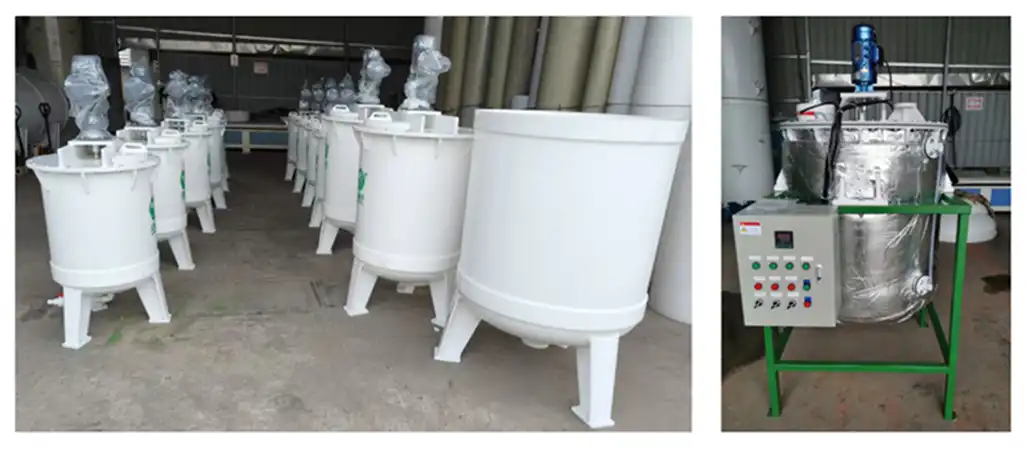
The size of a lab-scale PP reactor plays a significant role in determining the maximum agitator speed. Smaller reactors, such as those with capacities of 50L, 80L, or 100L, can generally accommodate higher agitator speeds compared to larger-scale reactors. This is due to the reduced inertia and lower fluid volume in smaller vessels. In lab-scale PP reactors, the stirring power is typically around 550W for capacities ranging from 50L to 100L, allowing for a stirring speed range of 0-434rpm. However, it's crucial to consider that as the reactor size increases, the maximum agitator speed may need to be reduced to prevent excessive turbulence, vortex formation, or damage to the reactor components.
What impact does the viscosity of the reaction mixture have on maximum agitator speed?
The viscosity of the reaction mixture is a critical factor in determining the maximum agitator speed for lab-scale PP reactors. Higher viscosity fluids require more power to achieve the same level of mixing as lower viscosity fluids. As a result, the maximum agitator speed may need to be reduced for highly viscous mixtures to prevent overloading the motor or causing excessive strain on the agitator shaft. In lab-scale PP reactors, the polypropylene construction provides excellent chemical resistance, allowing for a wide range of viscosities to be handled. However, operators must carefully consider the viscosity of their specific reaction mixture when setting the agitator speed to ensure optimal mixing without compromising the equipment's integrity.
How do heating devices affect the maximum agitator speed in Lab-Scale PP Reactors?
The choice of heating device in lab-scale PP reactors can influence the maximum agitator speed. These reactors often offer multiple heating options, including Polytetrafluoroethylene (PTFE) electric heating, borosilicate glass electric heating, titanium electric heating, or titanium coil with high-temperature circulating oil bath. Each heating method may have different heat transfer characteristics and temperature distributions within the reactor. For instance, when using a circulating oil bath, the agitator speed may need to be adjusted to ensure uniform heat distribution throughout the reaction mixture. Additionally, higher temperatures can affect fluid viscosity and potentially alter the maximum safe agitator speed. Operators must consider the interplay between heating devices and agitator speed to maintain optimal reaction conditions while ensuring the safety and efficiency of the lab-scale PP reactor.
What are the safety considerations for setting the maximum agitator speed in Lab-Scale PP Reactors?
How does material stress impact the maximum safe agitator speed?
Material stress is a crucial safety consideration when determining the maximum agitator speed for lab-scale PP reactors. The polypropylene construction of these reactors offers excellent chemical and thermal resistance, but it's essential to operate within the material's stress limits. High agitator speeds can create significant forces on the reactor walls and internal components, potentially leading to material fatigue or failure over time. To mitigate this risk, operators should consider factors such as the reactor's wall thickness, the design of the agitator blades, and the overall structural integrity of the vessel. Regular inspections and maintenance of lab-scale PP reactors are vital to identify any signs of stress or wear that may necessitate a reduction in the maximum agitator speed.
What role does vortex formation play in limiting agitator speed?
Vortex formation is a critical factor that can limit the maximum agitator speed in lab-scale PP reactors. As the agitator speed increases, it can create a vortex in the reaction mixture, which can lead to several issues. Excessive vortexing can cause air entrainment, potentially altering reaction kinetics or leading to unwanted oxidation. Additionally, deep vortexes can expose the agitator shaft or blades, reducing mixing efficiency and potentially damaging the equipment. To mitigate vortex formation, lab-scale PP reactors may be equipped with baffles or utilize specific impeller designs. Operators must carefully observe the fluid behavior at different agitator speeds and adjust accordingly to prevent excessive vortexing while maintaining optimal mixing conditions.
How do temperature fluctuations affect the safe maximum agitator speed?
Temperature fluctuations can significantly impact the safe maximum agitator speed in lab-scale PP reactors. As reactions progress, temperature changes can alter the viscosity and density of the reaction mixture, potentially requiring adjustments to the agitator speed. Higher temperatures may reduce fluid viscosity, allowing for increased agitator speeds, while lower temperatures might necessitate reduced speeds to prevent excessive stress on the equipment. Lab-scale PP reactors equipped with various heating options, such as PTFE electric heating or titanium coil with high-temperature circulating oil bath, must be carefully monitored to ensure that temperature changes do not compromise the safety of the agitation system. Implementing robust temperature control systems and establishing clear operating procedures for different temperature ranges can help maintain safe and effective agitator speeds throughout the reaction process.
How can operators optimize agitator speed in Lab-Scale PP Reactors for different applications?
What techniques can be used to determine the ideal agitator speed for specific reactions?
Determining the ideal agitator speed for specific reactions in lab-scale PP reactors involves a combination of theoretical calculations and practical experimentation. One common technique is to use dimensionless numbers such as the Reynolds number and power number to estimate the required agitator speed for adequate mixing. Another approach is to conduct scale-down studies from larger reactors, adjusting the agitator speed to maintain similar mixing characteristics. Visual observation of mixing patterns, tracer studies, and computational fluid dynamics (CFD) simulations can also provide valuable insights into optimal agitator speeds. For lab-scale PP reactors with capacities ranging from 50L to 100L and a stirring speed range of 0-434rpm, operators can systematically test different speeds within this range to identify the most effective mixing conditions for their specific reaction requirements.
How do different impeller designs affect the optimal agitator speed in Lab-Scale PP Reactors?
Impeller design plays a crucial role in determining the optimal agitator speed for lab-scale PP reactors. Different impeller types, such as pitched blade turbines, Rushton turbines, or hydrofoil impellers, have varying flow patterns and power consumption characteristics. For instance, high-efficiency impellers may achieve adequate mixing at lower speeds compared to standard designs. In lab-scale PP reactors, the choice of impeller design should consider factors such as viscosity range, solid suspension requirements, and gas dispersion needs. Operators may need to adjust the agitator speed based on the specific impeller design to achieve the desired mixing performance while staying within the reactor's operational limits of 0-434rpm. Some lab-scale PP reactors offer interchangeable impellers, allowing researchers to optimize the agitation system for different reaction types and scale-up studies.
What strategies can be employed to maintain consistent agitation across different scales of PP Reactors?
Maintaining consistent agitation across different scales of PP reactors is crucial for successful process scale-up. One strategy is to use geometric similarity, where the ratios of key dimensions (e.g., impeller diameter to tank diameter) are kept constant across scales. Another approach is to maintain constant tip speed or power per unit volume when scaling up from lab-scale PP reactors. For reactions sensitive to shear, maintaining a constant Reynolds number or mixing time might be more appropriate. In lab-scale PP reactors with capacities of 50L, 80L, or 100L, operators can experiment with different agitator speeds within the 0-434rpm range to establish correlations that can be applied to larger scales. Additionally, utilizing CFD simulations and pilot-scale testing can help predict and optimize agitation conditions for larger PP reactors while ensuring that the mixing characteristics established in the lab-scale experiments are preserved.
Conclusion
Determining the maximum agitator speed for lab-scale PP reactors is a complex process that requires careful consideration of various factors, including reactor size, fluid properties, and safety limitations. By understanding these factors and employing appropriate optimization techniques, operators can maximize the efficiency and safety of their experiments. The versatility of lab-scale PP reactors, with their range of capacities and heating options, makes them invaluable tools for research and process development across various industries. As technology advances, continued research into agitation systems will further enhance the capabilities of these essential pieces of equipment.
For more information on lab-scale PP reactors and expert guidance on optimizing your research setup, contact Xi'an Lexin Technology Co., Ltd. Our experienced team specializes in R&D and pilot-scale testing equipment for the hydrometallurgy and chemical industries. We offer customized solutions, technical support, and comprehensive after-sales service to ensure your success. Reach out to us at xalexin-tech@outlook.com for a personalized consultation and to explore how our lab-scale PP reactors can enhance your research and development efforts.
References
1. Smith, J.M., Van't Riet, K., & Middleton, J.C. (1977). Scale-up of agitated gas-liquid reactors for mass transfer. In Proceedings of the 2nd European Conference on Mixing, 51-66.
2. Tatterson, G.B. (1991). Fluid mixing and gas dispersion in agitated tanks. McGraw-Hill, New York.
3. Harnby, N., Edwards, M.F., & Nienow, A.W. (1997). Mixing in the process industries. Butterworth-Heinemann, Oxford.
4. Paul, E.L., Atiemo-Obeng, V.A., & Kresta, S.M. (2004). Handbook of industrial mixing: science and practice. John Wiley & Sons, Hoboken.
5. Bourne, J.R. (2003). Mixing and the selectivity of chemical reactions. Organic Process Research & Development, 7(4), 471-508.
6. Ascanio, G., Castro, B., & Galindo, E. (2004). Measurement of power consumption in stirred vessels—a review. Chemical Engineering Research and Design, 82(9), 1282-1290.