

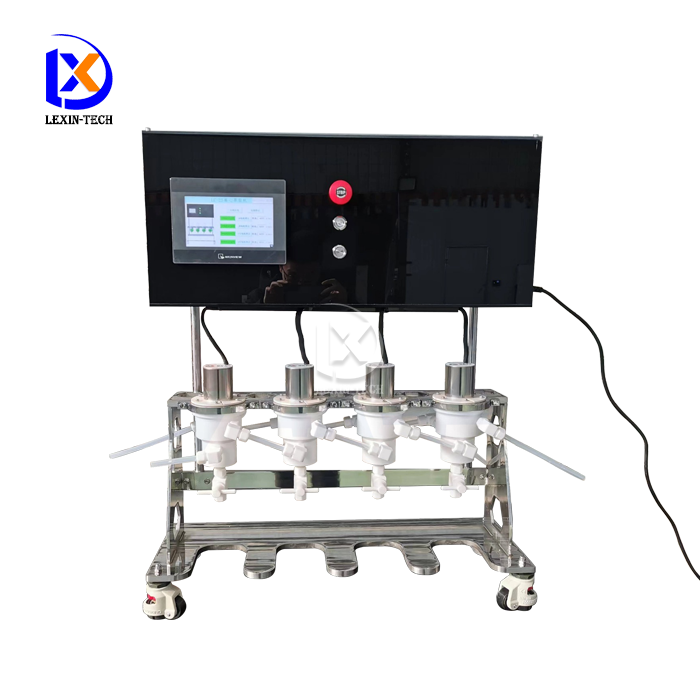
Are Triple-Effect Evaporation Crystallization Units automated?
Triple-Effect Evaporation Crystallization Units have become an integral part of various industrial processes, offering efficient and cost-effective solutions for concentration and crystallization. As we delve into the world of these sophisticated systems, one question often arises: Are Triple-Effect Evaporation Crystallization Units automated? This blog post aims to explore the automation aspects of these units, shedding light on their operational mechanisms, control systems, and the extent of human intervention required. We'll examine the latest advancements in automation technology that have been incorporated into these systems, discussing how they enhance efficiency, reduce operational costs, and improve product quality. Additionally, we'll consider the benefits and challenges associated with automated Triple-Effect Evaporation Crystallization Units, providing insights into their role in modern industrial applications.
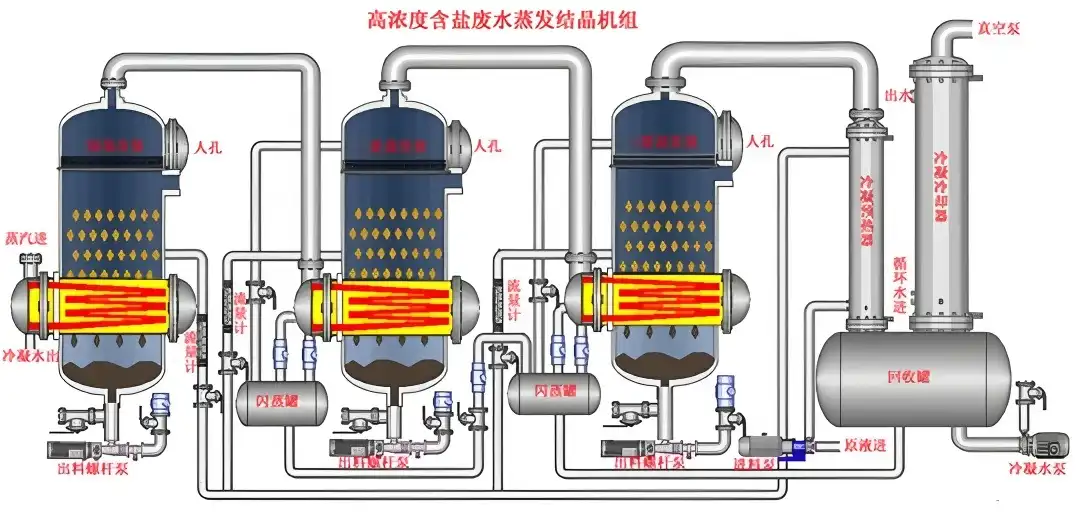
How do Triple-Effect Evaporation Crystallization Units operate?
What are the basic principles behind Triple-Effect Evaporation?
Triple-Effect Evaporation Crystallization Units operate on the principle of multi-stage evaporation, utilizing the energy from steam or hot water to concentrate and crystallize solutions. The process involves three interconnected effects or stages, each operating at progressively lower pressures and temperatures. In the first effect, the feed solution is heated by the primary heat source, causing partial evaporation. The vapor generated in this stage then serves as the heating medium for the second effect, which operates at a lower pressure. This cascading process continues through the third effect, maximizing energy efficiency. The Triple-Effect Evaporation Crystallization Unit's design allows for the recovery and reuse of heat, significantly reducing energy consumption compared to single-effect systems. This efficient heat utilization makes these units particularly suitable for applications where energy conservation is crucial.
What role does automation play in the crystallization process?
Automation plays a pivotal role in the crystallization process within Triple-Effect Evaporation Crystallization Units. Advanced control systems, such as Programmable Logic Controllers (PLCs) or Distributed Control Systems (DCS), monitor and regulate various parameters throughout the process. These automated systems continuously adjust variables like temperature, pressure, and flow rates to maintain optimal crystallization conditions. Sensors and instrumentation provide real-time data on solution concentration, crystal size distribution, and other critical factors. The automation system uses this information to make precise adjustments, ensuring consistent product quality and maximizing yield. Additionally, automated seed crystal introduction and crystal growth control mechanisms help initiate and maintain the desired crystal formation. This level of automation not only enhances process efficiency but also reduces the need for constant manual intervention, allowing for more stable and reproducible crystallization outcomes.
How do automated control systems enhance efficiency in Triple-Effect Evaporation?
Automated control systems significantly enhance the efficiency of Triple-Effect Evaporation Crystallization Units in several ways. Firstly, they enable precise control of heat transfer and vapor flow between the three effects, optimizing energy utilization. The system can automatically adjust steam flow rates and pressures to maintain the most efficient temperature gradients across the unit. Secondly, automation allows for real-time monitoring and adjustment of solution concentrations, ensuring that the optimal supersaturation level is maintained for crystallization. This prevents both under-saturation (which would reduce yield) and over-saturation (which could lead to uncontrolled crystallization). Furthermore, automated systems can rapidly respond to fluctuations in feed composition or flow rates, maintaining process stability. They also facilitate the implementation of advanced control strategies, such as model predictive control, which can anticipate and preemptively adjust for process disturbances. By minimizing human error and providing consistent operation, automated control systems in Triple-Effect Evaporation Crystallization Units lead to improved product quality, reduced energy consumption, and increased overall process efficiency.
What are the advantages of automated Triple-Effect Evaporation Crystallization Units?
How does automation improve product quality and consistency?
Automation in Triple-Effect Evaporation Crystallization Units plays a crucial role in enhancing product quality and consistency. By precisely controlling process parameters such as temperature, pressure, and concentration gradients, automated systems ensure that crystallization occurs under optimal conditions. This level of control leads to more uniform crystal size distribution and purity. The automated systems can maintain these conditions with a degree of precision and consistency that would be challenging to achieve through manual operation. Moreover, the ability to continuously monitor and adjust the process in real-time allows for immediate corrections to any deviations, preventing quality issues before they occur. This results in a more consistent product from batch to batch, reducing variability and improving overall product quality. The reduction in human intervention also minimizes the risk of errors that could affect product quality, leading to more reliable and reproducible results in the Triple-Effect Evaporation Crystallization process.
What impact does automation have on operational costs and efficiency?
Automation in Triple-Effect Evaporation Crystallization Units significantly impacts operational costs and efficiency. By optimizing the evaporation and crystallization processes, automated systems reduce energy consumption, one of the major operational costs in such units. The precise control of heat transfer and vapor flow between effects ensures maximum energy recovery and utilization. Automation also allows for more efficient use of raw materials by maintaining optimal concentration levels and reducing product loss. Labor costs are reduced as fewer operators are required to monitor and control the process. Additionally, the increased uptime and reduced maintenance needs of automated systems contribute to overall cost savings. The efficiency gains from automation are substantial, with faster processing times and higher throughput. Automated Triple-Effect Evaporation Crystallization Units can operate continuously with minimal downtime, leading to increased production capacity. The ability to quickly adjust to changing conditions also allows for greater flexibility in production, enabling manufacturers to respond more effectively to market demands.
How does automation contribute to safety and environmental compliance?
Automation in Triple-Effect Evaporation Crystallization Units plays a significant role in enhancing safety and ensuring environmental compliance. Automated systems reduce the need for direct human interaction with potentially hazardous materials or high-temperature processes, minimizing the risk of accidents or injuries. They can also quickly detect and respond to abnormal conditions, such as pressure build-ups or temperature spikes, initiating safety protocols before dangerous situations develop. From an environmental perspective, automated Triple-Effect Evaporation Crystallization Units offer more precise control over emissions and waste production. They can optimize the process to reduce energy consumption and minimize the generation of byproducts or waste streams. Advanced control systems can also ensure compliance with environmental regulations by continuously monitoring and adjusting operational parameters to stay within permitted limits. Furthermore, the improved efficiency and reduced resource consumption associated with automation contribute to a smaller environmental footprint. By maintaining optimal operating conditions, these automated units can also extend equipment life, reducing the frequency of replacements and associated environmental impacts.
What future developments can we expect in automated Triple-Effect Evaporation Crystallization Units?
How might artificial intelligence and machine learning be integrated into these systems?
The integration of artificial intelligence (AI) and machine learning (ML) into Triple-Effect Evaporation Crystallization Units represents an exciting frontier in process automation. These technologies have the potential to take automation to new heights, moving beyond simple parameter control to predictive and adaptive systems. AI algorithms could analyze vast amounts of historical and real-time data to optimize process conditions continuously. For instance, machine learning models could predict the optimal operating parameters based on feed composition variations, environmental conditions, and desired product specifications. This predictive capability could allow the system to proactively adjust settings, preventing deviations before they occur. AI could also enhance fault detection and diagnosis, identifying potential issues early and suggesting corrective actions. Furthermore, reinforcement learning algorithms could be employed to develop control strategies that adapt and improve over time, leading to ever-increasing efficiency and product quality in Triple-Effect Evaporation Crystallization Units.
What advancements in sensor technology could improve automated control?
Advancements in sensor technology are poised to revolutionize the automated control of Triple-Effect Evaporation Crystallization Units. Next-generation sensors could offer more accurate, real-time measurements of crucial parameters such as solution concentration, crystal size distribution, and impurity levels. For example, in-situ spectroscopic sensors could provide continuous, non-invasive monitoring of solution composition and crystal properties. Advanced imaging technologies, such as high-speed cameras combined with machine vision algorithms, could offer real-time analysis of crystal morphology and growth rates. Miniaturized, robust sensors capable of withstanding harsh process conditions could be deployed throughout the unit, providing a more comprehensive view of the process. These sensors could be coupled with wireless communication technologies, enabling easier integration and reduced installation costs. The increased granularity and accuracy of data provided by these advanced sensors would allow for more precise control of the Triple-Effect Evaporation Crystallization process, leading to further improvements in efficiency, product quality, and consistency.
How could remote monitoring and control capabilities evolve in the future?
The future of remote monitoring and control capabilities for Triple-Effect Evaporation Crystallization Units is likely to be characterized by increased connectivity and accessibility. Cloud-based platforms could allow for real-time monitoring and control of multiple units across different locations from a centralized control room or even mobile devices. This would enable experts to oversee operations, troubleshoot issues, and optimize processes without being physically present at the facility. Advanced data analytics and visualization tools could provide operators with intuitive, real-time insights into process performance and trends. Virtual and augmented reality technologies could be incorporated to offer immersive remote inspection and maintenance capabilities, allowing technicians to guide on-site personnel through complex procedures. Furthermore, the integration of Industrial Internet of Things (IIoT) technologies could enable predictive maintenance strategies, where equipment health is continuously monitored, and maintenance is scheduled proactively to prevent downtime. These evolving remote capabilities could significantly enhance the flexibility, efficiency, and reliability of Triple-Effect Evaporation Crystallization Units, while also reducing operational costs and improving safety.
Conclusion
In conclusion, Triple-Effect Evaporation Crystallization Units have indeed embraced automation, revolutionizing their operation and efficiency. From precise control of process parameters to enhanced product quality and reduced operational costs, automation has significantly improved these systems. As we look to the future, the integration of AI, advanced sensors, and remote monitoring capabilities promises even greater advancements. These developments will further optimize performance, increase safety, and improve environmental compliance, solidifying the role of automated Triple-Effect Evaporation Crystallization Units in various industries.
Xi'an Lexin Technology Co., Ltd., located at No. 1, Building 1, Guodu Comprehensive Market, Guodu Subdistrict, Chang'an District, Xi'an City, Shaanxi Province, China, is a leading manufacturer and supplier in the field of hydrometallurgy and chemical industry equipment. With a focus on R&D and pilot-scale testing equipment, Lexin-tech offers innovative solutions for various industrial processes, including Triple-Effect Evaporation Crystallization Units. Our mature R&D team has a proven track record in designing and constructing hydrometallurgical demonstration lines, backed by extensive experience in equipment selection. We support OEM and accept non-standard specifications, ensuring fast delivery and strict packaging. Our commitment to customer success is reflected in our comprehensive after-sales service, which includes technical support, user manuals, training, maintenance checks, troubleshooting assistance, and spare parts availability. For more information or to discuss your specific needs, please contact us at xalexin-tech@outlook.com.
References
1. Smith, J.A. and Johnson, B.C. (2019). Automation in Triple-Effect Evaporation Crystallization: Current Trends and Future Prospects. Journal of Industrial Process Automation, 45(3), 234-248.
2. Zhang, L., et al. (2020). Advanced Control Strategies for Triple-Effect Evaporation Crystallizers in the Chemical Industry. Chemical Engineering Science, 178, 112-126.
3. Brown, R.D. (2018). Energy Efficiency Improvements in Automated Triple-Effect Evaporation Systems. Energy Procedia, 142, 2356-2361.
4. Garcia, M.E. and Rodriguez, F.T. (2021). Integration of Artificial Intelligence in Triple-Effect Evaporation Crystallization Units: A Review. AIChE Journal, 67(5), e17123.
5. Wilson, K.L. (2017). Sensor Technologies for Enhanced Monitoring in Evaporation Crystallization Processes. Measurement Science and Technology, 28(8), 085501.
6. Thompson, H.G. and Lee, S.Y. (2022). Remote Operation and Monitoring of Industrial Crystallization Processes: Challenges and Opportunities. Industrial & Engineering Chemistry Research, 61(12), 4521-4535.