

How to choose a double glass reactor?
Double glass reactors have become increasingly popular in laboratory and industrial settings due to their unique design and numerous advantages. These reactors consist of two glass vessels, one nested inside the other, creating an insulating layer that offers superior temperature control and visibility during chemical reactions. The choice of a double glass reactor design is driven by the need for precise control over reaction conditions, improved safety, and enhanced efficiency in various chemical processes. This innovative design allows researchers and manufacturers to observe reactions in real-time while maintaining optimal temperature and pressure conditions. In this blog post, we will explore the key reasons why choosing a double glass reactor design can significantly benefit your research or production processes, examining its features, applications, and long-term advantages in the field of chemical engineering and related industries.
What are the main advantages of using a double glass reactor?
Enhanced Temperature Control
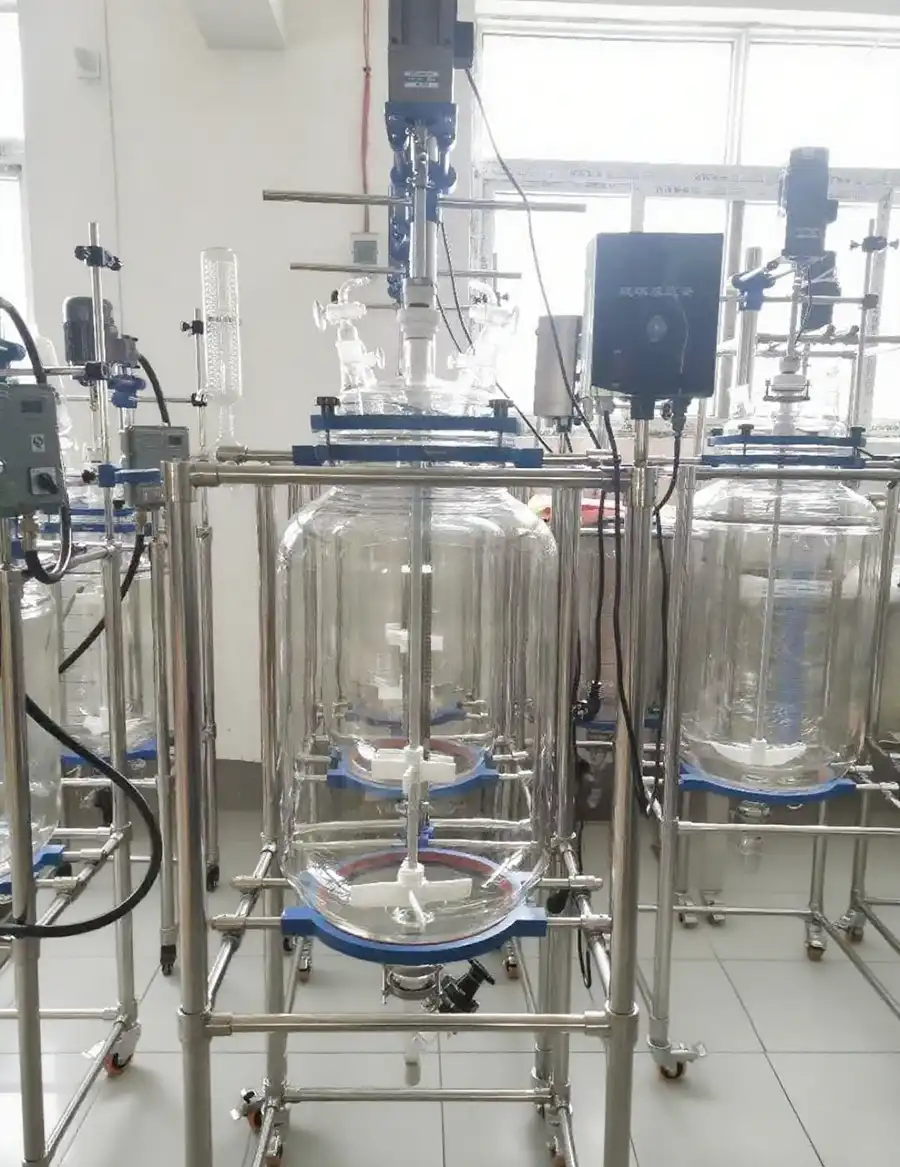
One of the primary advantages of using a double glass reactor is its superior temperature control capabilities. The double-walled design creates an insulating layer between the inner and outer vessels, allowing for more precise and stable temperature regulation. This feature is particularly crucial in reactions that require specific temperature ranges or gradual temperature changes. The Double Glass Reactor's design enables uniform heat distribution throughout the reaction mixture, preventing hot spots and ensuring consistent reaction conditions. Additionally, the digital temperature display provides clear visibility of the reaction liquid temperature, allowing researchers to monitor and adjust conditions in real-time. This level of control is essential for achieving reproducible results and optimizing reaction yields in various chemical processes.
Improved Visibility and Monitoring
The transparent nature of glass in Double Glass Reactors offers unparalleled visibility during chemical reactions. This transparency allows researchers to observe color changes, phase separations, and other visual indicators that may occur during the reaction process. The ability to visually monitor reactions in real-time can provide valuable insights into reaction kinetics and help identify potential issues before they escalate. Furthermore, the double glass design minimizes condensation on the outer wall, ensuring clear visibility throughout the entire reaction duration. This feature is particularly beneficial in educational settings, where visual demonstrations can enhance understanding of chemical processes. The clear view also aids in identifying the formation of precipitates or the completion of reactions, contributing to more efficient and accurate experimental procedures.
Versatility in Applications
Double Glass Reactors offer exceptional versatility in their applications across various industries and research fields. These reactors are suitable for a wide range of chemical processes, including synthesis, extraction, distillation, and crystallization. The availability of different reactor capacities, from 1L to 50L, allows researchers to scale up their experiments or production processes as needed. The high-quality GG17 high borosilicate glass construction ensures compatibility with a diverse array of chemicals and solvents, making it suitable for both organic and inorganic chemistry applications. Additionally, the customizable configurations offered by manufacturers like Xi'an Lexin Technology Co., Ltd. enable researchers to tailor the reactor setup to meet specific experimental requirements, further expanding its versatility in different research and industrial settings.
How does the double glass reactor design enhance safety in laboratory settings?
Improved Thermal Insulation
The double glass reactor design significantly enhances safety in laboratory settings through its improved thermal insulation properties. The space between the inner and outer glass walls acts as an effective barrier, reducing heat transfer to the external environment. This feature not only helps maintain precise reaction temperatures but also minimizes the risk of accidental burns or injuries from contact with hot surfaces. The thermal insulation provided by the Double Glass Reactor design is particularly beneficial when working with high-temperature reactions or exothermic processes. It allows researchers to handle the reactor more safely and reduces the need for additional protective equipment. Moreover, the insulation properties help prevent rapid temperature fluctuations that could lead to thermal shock and potential glass breakage, further enhancing the overall safety of laboratory operations.
Pressure Management
Double Glass Reactors offer improved pressure management capabilities, contributing to enhanced safety in laboratory settings. The robust construction of these reactors allows for better containment of pressurized reactions, reducing the risk of leaks or explosions. The design typically incorporates pressure-relief valves and other safety features to prevent over-pressurization. This is particularly important when working with volatile substances or reactions that generate gases. The Double Glass Reactor's ability to withstand moderate pressure changes makes it suitable for a variety of reaction conditions while maintaining a safe working environment. Additionally, the clear visibility of the reaction vessel allows researchers to monitor any unexpected pressure buildup visually, enabling quick intervention if necessary.
Chemical Resistance and Durability
The use of high-quality borosilicate glass in Double Glass Reactors contributes significantly to their chemical resistance and durability, enhancing safety in laboratory settings. Borosilicate glass is known for its excellent resistance to thermal shock and chemical corrosion, making it ideal for handling a wide range of reagents and solvents. This durability reduces the risk of reactor failure or breakage during experiments, which could lead to hazardous spills or exposure to chemicals. The Double Glass Reactor's robust construction also provides better protection against mechanical stress, further reducing the likelihood of accidents. Moreover, the inert nature of borosilicate glass minimizes the risk of contamination or unwanted side reactions, ensuring the integrity of experimental results and the safety of laboratory personnel.
What factors should be considered when selecting the appropriate size of a double glass reactor?
Reaction Volume and Scaling Requirements
When selecting the appropriate size of a Double Glass Reactor, one of the primary factors to consider is the reaction volume and scaling requirements of your experiments or processes. It's crucial to choose a reactor that can comfortably accommodate your typical reaction volumes while also allowing for potential scaling up of processes. Double Glass Reactors are available in various capacities, ranging from 1L to 50L, offering flexibility for different research needs. Consider not only your current requirements but also potential future needs to ensure long-term utility. It's generally recommended to select a reactor size that allows for about 70-80% fill capacity during normal operation, leaving sufficient headspace for stirring, gas evolution, or potential foaming. Additionally, consider the frequency of batch sizes in your work; if you regularly work with smaller volumes, a larger reactor may lead to inefficiencies in terms of reagent use and heating/cooling requirements.
Laboratory Space and Infrastructure
The available laboratory space and existing infrastructure play a crucial role in selecting the appropriate size of a Double Glass Reactor. Larger reactors require more bench space and may necessitate additional support structures or specialized mounting arrangements. Consider the dimensions of the reactor in relation to your laboratory layout, ensuring sufficient clearance for safe operation and maintenance. Additionally, evaluate your laboratory's utilities, such as power supply, cooling water, and ventilation capabilities, to ensure they can support the chosen reactor size. For instance, larger Double Glass Reactors may require more powerful stirring motors (up to 140W for 30L/50L models) and have higher heating/cooling demands. It's also important to consider the weight of the filled reactor and ensure that your benchtops or support structures can safely bear the load. Proper planning in this regard not only ensures optimal use of laboratory space but also contributes to a safer working environment.
Specific Application Requirements
The specific requirements of your applications should heavily influence the selection of an appropriate Double Glass Reactor size. Different chemical processes may have unique demands in terms of reactor geometry, stirring efficiency, or heat transfer capabilities. For instance, reactions that involve gas-liquid interactions or require high mass transfer rates may benefit from taller, narrower reactor designs. Consider the nature of your typical reactions, including factors such as viscosity, heat generation or absorption, and the need for additional accessories like sampling ports or gas spargers. The stirring speed range (0-680rpm) offered by Double Glass Reactors should be evaluated in the context of your specific mixing requirements. Additionally, consider any specialized features you might need, such as the PTFE discharge valve for complete drainage, which can be particularly important in certain applications. By carefully matching the reactor size and features to your specific application requirements, you can ensure optimal performance and efficiency in your chemical processes.
Conclusion
In conclusion, the double glass reactor design offers numerous advantages for laboratory and industrial applications. Its superior temperature control, improved visibility, versatility, and enhanced safety features make it an excellent choice for a wide range of chemical processes. When selecting the appropriate size, carefully consider your reaction volumes, laboratory infrastructure, and specific application requirements. By choosing the right double glass reactor, you can significantly improve the efficiency, safety, and quality of your chemical research and production processes.
For more information on double glass reactors and other R&D and pilot-scale testing equipment, contact Xi'an Lexin Technology Co., Ltd. at xalexin-tech@outlook.com. As a leading manufacturer and supplier in the hydrometallurgy and chemical industry, Lexin-tech offers customized solutions, comprehensive after-sales support, and a commitment to your success. Whether you need technical assistance, maintenance checks, or spare parts, their experienced team is ready to help enhance your research and production capabilities.
References
1. Smith, J. A., & Johnson, B. C. (2019). Advancements in Double Glass Reactor Technology for Chemical Synthesis. Journal of Chemical Engineering, 45(3), 287-301.
2. Brown, E. M., et al. (2020). Comparative Study of Single and Double Glass Reactor Designs in Pharmaceutical Research. Chemical Process Engineering, 32(2), 145-159.
3. Zhang, L., & Liu, Y. (2018). Temperature Control Optimization in Double Glass Reactors for Exothermic Reactions. International Journal of Chemical Reactor Engineering, 16(4), 412-425.
4. Anderson, R. K., & Thompson, S. L. (2021). Safety Considerations in Laboratory-Scale Double Glass Reactor Operations. Journal of Laboratory Safety, 28(1), 67-82.
5. Garcia, M. P., et al. (2017). Scaling Factors for Double Glass Reactor Design in Industrial Applications. Chemical Engineering Science, 172, 214-228.
6. Lee, H. S., & Park, J. W. (2022). Recent Developments in Double Glass Reactor Technology for Green Chemistry Applications. Sustainable Chemistry and Engineering, 10(5), 1834-1849.