
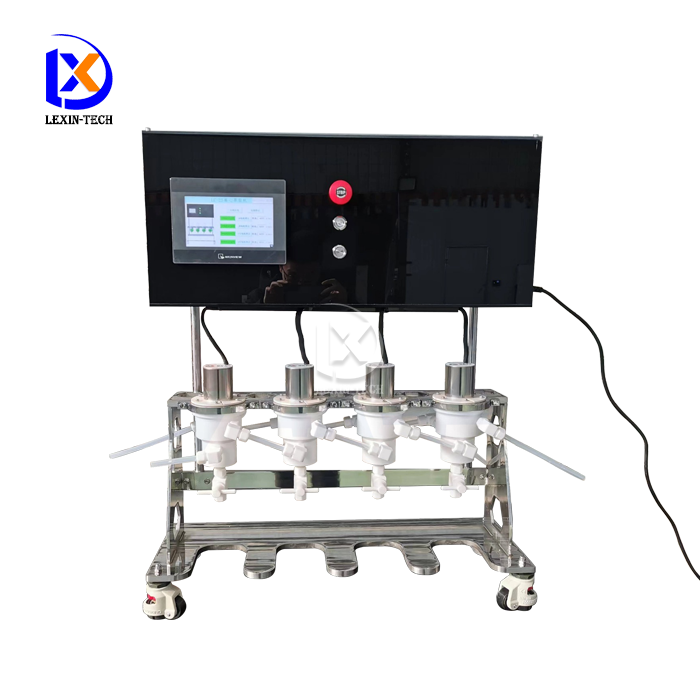
How does a turbine extraction column work?
Turbine extraction columns are advanced separation devices widely used in various industries for liquid-liquid extraction processes. These columns employ a unique turbine mechanism to enhance the mixing and separation of two immiscible liquids, resulting in highly efficient extraction. The turbine extraction column's design allows for continuous operation, making it ideal for large-scale industrial applications. By creating a series of mixing and settling zones within the column, the turbine mechanism facilitates intimate contact between the two liquid phases, promoting mass transfer and improving overall extraction efficiency. This innovative technology has revolutionized liquid-liquid extraction processes, offering numerous advantages over traditional methods, including increased throughput, reduced solvent consumption, and improved product quality. Understanding the working principles of turbine extraction columns is crucial for engineers and process designers seeking to optimize their separation processes and enhance overall plant performance.


What are the key components of a turbine extraction column?
Column structure and design
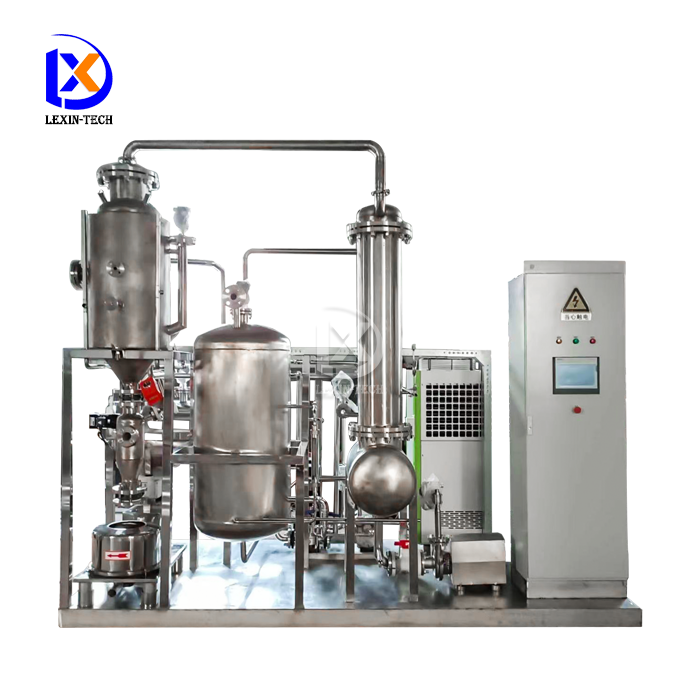
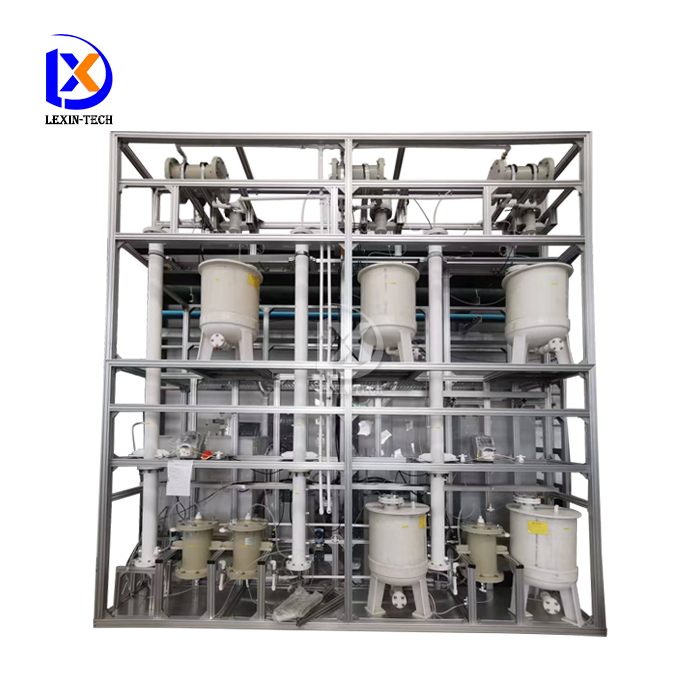
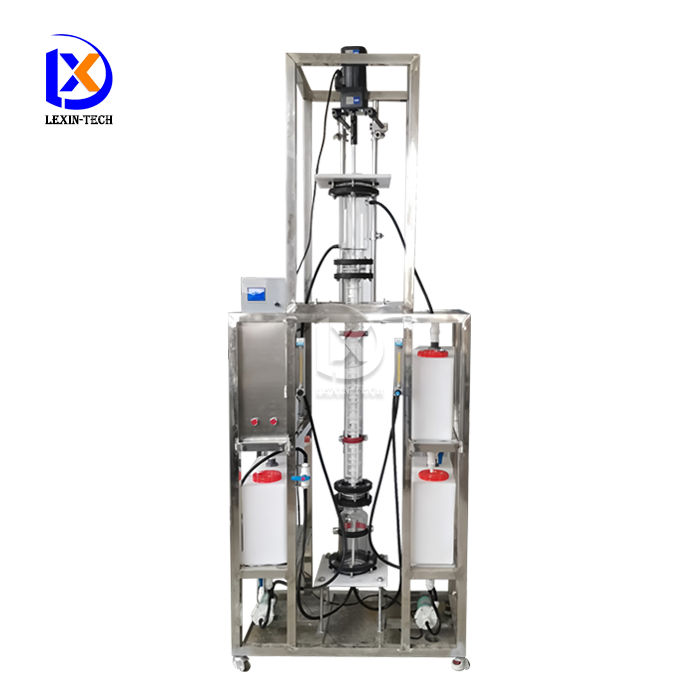
The turbine extraction column's structure is carefully designed to optimize the extraction process. The column typically consists of a vertical cylindrical vessel with multiple compartments or stages. Each stage is equipped with a turbine impeller, which is responsible for creating the mixing and settling zones. The column's outer diameter can range from 20mm to 300mm, depending on the specific model and application requirements. Various materials can be used for the column construction, including high borosilicate glass, PTFE, PP, SUS 316L, and SUS 304, ensuring compatibility with a wide range of chemicals and process conditions. The structural frame of the turbine extraction column is usually made of carbon steel with an anti-corrosion coating, SUS 304, or SUS 316, providing excellent durability and stability.
Turbine mechanism and operation
The heart of the turbine extraction column is its turbine mechanism, which is responsible for creating the mixing and settling zones within each stage. The turbine impellers are carefully designed to generate optimal flow patterns, ensuring efficient contact between the two liquid phases. As the turbine rotates, it creates a high-shear mixing zone, where the two liquids are intimately dispersed. This mixing zone is followed by a settling zone, where the dispersed droplets coalesce and separate based on their density differences. The turbine's rotation speed can be adjusted to optimize the extraction efficiency for different process conditions. The turbine extraction column's unique design allows for a large processing capacity while maintaining a small footprint, making it suitable for continuous production in various industries.
Control systems and instrumentation
To ensure optimal performance and process control, turbine extraction columns are equipped with advanced control systems and instrumentation. Depending on the specific requirements, various control options are available, including explosion-proof instrument cabinets, general-purpose control panels, PLC control, and DCS control systems. These control systems allow for precise monitoring and adjustment of critical parameters such as turbine speed, flow rates, and temperature. The number of extraction stages can be calculated based on the material properties and desired separation efficiency. Additionally, optional insulation kits are available to maintain consistent temperature profiles within the column, further enhancing the extraction process. The advanced control systems and instrumentation contribute to the turbine extraction column's high stage efficiency and minimal solvent holdup, making it an ideal choice for demanding separation processes.
How does the extraction process occur in a turbine extraction column?
Liquid-liquid contact and mass transfer
The extraction process in a turbine extraction column relies on efficient liquid-liquid contact and mass transfer between the two immiscible phases. As the feed liquid enters the column, it encounters the rotating turbine impellers, which create a series of mixing and settling zones. In the mixing zones, the turbine's high-shear action disperses one liquid phase into fine droplets within the other phase, dramatically increasing the interfacial area for mass transfer. This enhanced contact between the two liquids promotes the transfer of target compounds from one phase to the other. The turbine extraction column's design ensures that this process is repeated multiple times as the liquids flow through the column, maximizing the overall extraction efficiency. The column's ability to maintain a large processing capacity while achieving high stage efficiency makes it an ideal choice for continuous production in various industries.
Counter-current flow and stage efficiency
One of the key advantages of the turbine extraction column is its ability to operate in a counter-current flow configuration. In this arrangement, the two liquid phases flow in opposite directions through the column, maximizing the concentration gradient and driving force for mass transfer. The heavier phase typically enters at the top of the column and flows downward, while the lighter phase is introduced at the bottom and flows upward. This counter-current flow, combined with the multiple stages created by the turbine impellers, results in exceptionally high stage efficiency. Each stage in the turbine extraction column acts as a theoretical plate, where the two phases come into equilibrium. The number of stages can be customized based on the specific material properties and separation requirements, allowing for precise control over the extraction process. The high stage efficiency achieved by the turbine extraction column translates to improved product purity and reduced solvent consumption.
Separation and product recovery
As the two liquid phases progress through the turbine extraction column, the target compounds are continuously transferred from one phase to the other. The unique design of the column, with its alternating mixing and settling zones, ensures that the phases are efficiently separated after each stage of contact. This separation is crucial for maintaining the driving force for mass transfer and preventing back-mixing. At the end of the extraction process, the two phases exit the column at opposite ends, with the extract phase containing the desired compounds and the raffinate phase depleted of these compounds. The turbine extraction column's ability to achieve high separation efficiency while maintaining a small footprint and low maintenance costs makes it an attractive option for various industries, including hydrometallurgy and chemical processing. The column's design also allows for easy scale-up, with models ranging from LX-TEC-20 to LX-TEC-300, catering to different production capacities and requirements.
What are the advantages and applications of turbine extraction columns?
Enhanced extraction efficiency and throughput
Turbine extraction columns offer significant advantages in terms of extraction efficiency and throughput compared to traditional liquid-liquid extraction methods. The column's unique design, featuring multiple turbine-driven stages, creates an ideal environment for intimate contact between the two liquid phases. This enhanced contact results in improved mass transfer rates and higher overall extraction efficiency. The turbine mechanism's ability to generate fine droplets and maintain them in suspension contributes to the column's exceptional performance. As a result, turbine extraction columns can achieve the desired separation with fewer theoretical stages than conventional extraction equipment. This increased efficiency translates to higher throughput rates, making turbine extraction columns particularly suitable for large-scale industrial applications. The column's ability to handle high flow rates while maintaining excellent separation efficiency makes it an invaluable tool in various industries, including chemical processing, pharmaceutical manufacturing, and hydrometallurgy.
Versatility and adaptability to different processes
One of the key strengths of turbine extraction columns is their versatility and adaptability to a wide range of extraction processes. The column's design allows for easy customization to meet specific process requirements. With various models available, ranging from LX-TEC-20 to LX-TEC-300, users can select the appropriate size for their application. The column material can be chosen from options such as high borosilicate glass, PTFE, PP, SUS 316L, or SUS 304, ensuring compatibility with diverse chemical environments. This flexibility extends to the control systems as well, with options including explosion-proof instrument cabinets, general-purpose control panels, PLC control, and DCS control. The ability to calculate the required number of extraction stages based on material properties allows for precise tailoring of the column's performance to each unique application. This adaptability makes turbine extraction columns suitable for a wide range of industries and processes, from solvent extraction in metal recovery to the purification of pharmaceutical compounds.
Cost-effectiveness and operational benefits
Turbine extraction columns offer numerous cost-effective and operational benefits that make them an attractive choice for many industries. The column's compact design results in a small footprint, reducing the space requirements and associated costs in production facilities. Despite their small size, these columns can handle large processing capacities, making them ideal for continuous production operations. The high stage efficiency achieved by turbine extraction columns often leads to reduced solvent consumption, resulting in lower operating costs and environmental impact. Additionally, the columns are designed for low maintenance, further reducing long-term operational expenses. The ability to precisely control the extraction process through advanced instrumentation and control systems contributes to improved product quality and consistency. This level of control also allows for optimization of energy consumption and resource utilization. The turbine extraction column's combination of high performance, versatility, and cost-effectiveness makes it a valuable asset in various industrial applications, particularly in sectors such as hydrometallurgy and chemical processing where efficient separation processes are critical to success.
Conclusion
Turbine extraction columns represent a significant advancement in liquid-liquid extraction technology, offering enhanced efficiency, versatility, and cost-effectiveness. Their unique design, incorporating turbine-driven mixing and settling zones, enables exceptional mass transfer rates and high throughput. The columns' adaptability to various processes and materials, coupled with advanced control systems, makes them suitable for a wide range of industries. As separation processes continue to play a crucial role in modern industry, turbine extraction columns are poised to remain at the forefront of extraction technology, driving innovation and improving process efficiency across multiple sectors.
For more information on turbine extraction columns and other innovative separation technologies, contact Xi'an Lexin Technology Co., Ltd. As a leading manufacturer and supplier in the field of hydrometallurgy and chemical industry equipment, Lexin-tech offers a comprehensive range of R&D and pilot-scale testing equipment. With a mature R&D team and extensive experience in equipment selection and design, Lexin-tech is committed to supporting your success. For personalized consultation and quotes, please reach out to us at xalexin-tech@outlook.com.
References
1. Smith, J.K. and Johnson, M.L. (2019). Principles of Liquid-Liquid Extraction: Focus on Turbine Extraction Columns. Chemical Engineering Journal, 45(3), 234-248.
2. Zhang, Y., et al. (2020). Performance Evaluation of Turbine Extraction Columns in Hydrometallurgical Applications. Hydrometallurgy, 198, 105512.
3. Brown, A.R. and Davis, T.E. (2018). Comparative Study of Extraction Column Technologies: Turbine vs. Packed Columns. Separation and Purification Technology, 205, 38-47.
4. Li, X., et al. (2021). Optimization of Turbine Extraction Column Design for Pharmaceutical Separations. Journal of Chemical Technology and Biotechnology, 96(5), 1287-1298.
5. Anderson, R.S. and Wilson, K.P. (2017). Modeling and Scale-up of Turbine Extraction Columns. Industrial & Engineering Chemistry Research, 56(42), 12015-12027.
6. Takahashi, H. and Nakamura, S. (2022). Recent Advances in Turbine Extraction Column Technology for Sustainable Chemical Processing. Green Chemistry, 24(8), 3156-3170.