
How often should PP Bag-Type Precision Filters be replaced?
PP Bag-Type Precision Filters are very important in many fields because they filter liquids and gases very well. These filters are made to get rid of impurities and particles in fluids so that the end product is pure and of high quality. Users often have one question, though: How often should PP Bag-Type Precision Filters be changed? How often they need to be replaced depends on a number of things, such as the type of fluid being filtered, the amount of contamination, and the specific needs of the application. To keep these filters working at their best and avoid problems in the filtration process, they need to be serviced and replaced on a regular basis. This blog post will talk about the different factors that affect how often PP Bag-Type Precision Filters need to be replaced. We hope that this information will help you figure out the best replacement plan for your needs.
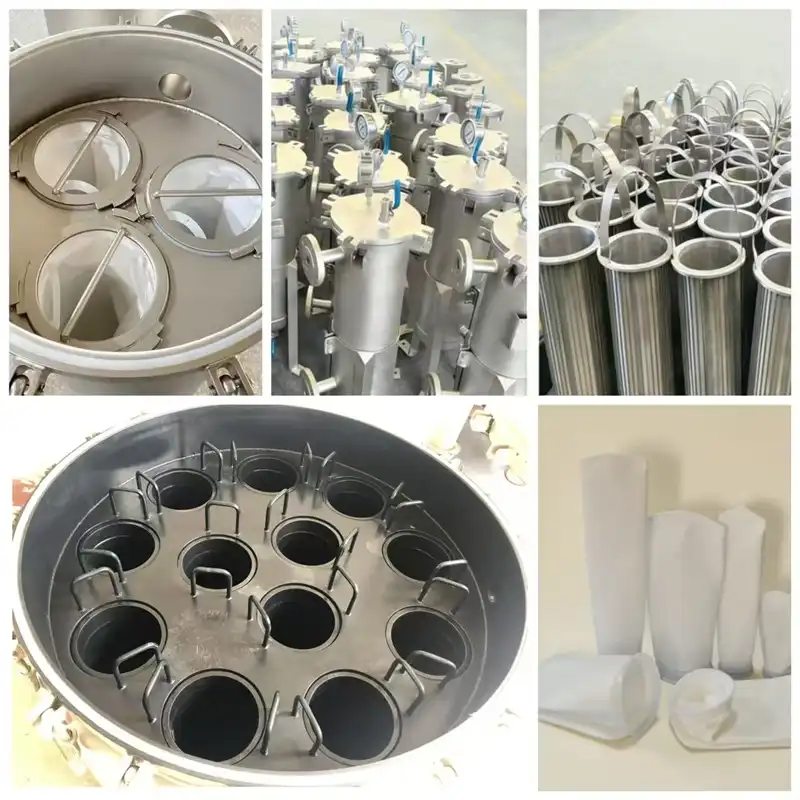
What factors affect the lifespan of PP Bag-Type Precision Filters?
Contamination level and particle size
The amount of contamination and particle size of the fluid being filtered have a big effect on how long PP Bag-Type Precision Filters last. Based on their micron grade, these filters are made to catch particles of different sizes. The filter eventually loses some of its effectiveness as it takes in more contaminants, and the pressure drop across the filter rises. How fast this happens depends on how many particles are in the stream and how they are spread out in terms of size. For instance, fluids that have a lot of big particles will clog the filter faster than fluids that don't have many small particles. Because they are small and have a big filtration area, PP Bag-Type Precision Filters are very good at catching a wide range of particle sizes. But it's important to keep an eye on the pressure drop across the filter and change it when it hits the limit suggested by the manufacturer to keep it working at its best.
Flow rate and operating pressure
The flow rate and working pressure of the filter system have a lot to do with how long PP Bag-Type Precision Filters last. The specs for this product say that it can only work in certain pressure levels, most of the time between 0.1 and 0.6 MPa. If the flow rate and pressure are high, the filter media may be under more stress, which could shorten its life. But if you use cooler temps, the filter might last longer, but it might not work as well. PP Bag-Type Precision Filters can handle high flow rates with little side leakage because they are small but have a large filter area. That being said, you should make sure the filter you pick fits the flow rate and pressure needs of the system. That way, it will last longer and work better.
Chemical compatibility and temperature
The PP Bag-Type Precision Filters last longer because of what? Many factors affect how well they work and how hot they are being used. Polypropylene (PP) can handle many different materials well. This is useful a lot of the time. On the other hand, chemicals or temperatures that are too high or too low can wear down the filter in time. It's less useful and lasts less long because of this. Tin or different kinds of stainless steel (SUS 304, SUS 316L, or SUS 2205) are often used to make the shells of PP Bag-Type Precision Filters. In places where rust is likely to happen, this makes them safer. You can even get an extra insulation jacket for some types to keep you warm while you work. You should think about the fluid's chemicals and the temperature range it will be used in to make sure the PP Bag-Type Precision Filter works well and lasts as long as possible.
How can you determine when it's time to replace a PP Bag-Type Precision Filter?
Monitoring pressure differential
Watching the difference in pressure across the PP Bag-Type Precision Filter is one of the best ways to know when it needs to be replaced. The pressure drop between the inlet and exit grows as the filter picks up more contaminants. Most filter makers give guidelines for the biggest pressure drop that is allowed. These guidelines are usually given in PSI or bar. If the difference in pressure gets to this level, it's clear that the filter needs to be replaced. PP Bag-Type Precision Filters are made with a big filtration area that can be anywhere from 0.25 to 12 square meters. This helps keep the pressure drop low for long periods of time. But regular monitoring is still needed to make sure efficiency is at its best. Some high-tech filtration systems have pressure sensors and automatic alerts that let operators know when the difference in pressure gets close to the replacement mark. This makes maintenance easier and avoids unplanned downtime.
Visual inspection and scheduled maintenance
To figure out when to change PP Bag-Type Precision Filters, it's important to do regular visual checks and stick to maintenance schedules. Even though these filters are made to have little side leakage and be easy to change, they may need to be checked every so often to find signs of damage, wear, or too much contamination. During checks, look for spots, tears, or odd shapes or forms in the filter bag. Based on the processing ability, each unit can have anywhere from 1 to 24 filter bags, so it's important to check each one separately. Periods for scheduled maintenance should be set based on past data, suggestions from the maker, and the needs of your application. This proactive method helps keep filtration quality consistent and stops filters from breaking down without warning. Keeping detailed records of how well filters work and how often they need to be replaced can also help you make the best maintenance schedules and spot possible problems before they get too bad.
Quality control and product specifications
To find the best time to replace PP Bag-Type Precision Filters, it's important to keep strict quality control measures and follow the product specs. These filters are made to meet certain filtering needs, and if they don't work the way they're supposed to, they may need to be replaced. Checking the filtered fluid for particle count, turbidity, or other important factors regularly can help you figure out when the filter starts to work less well. The small size and big filtration area of PP Bag-Type Precision Filters make them perfect for many uses in industries like chemical processing and hydrometallurgy. But the amount of filtration needed may be different for each purpose. It is very important to set clear standards for quality control and check the filter results often to make sure they meet the requirements. If the filtered product always fails to meet the standards, even after changing other parts of the process, it might be time to get a new filter.
What are the benefits of timely PP Bag-Type Precision Filter replacement?
Improved filtration efficiency
There are many reasons to replace PP Bag-Type Precision Filters at the right time, but one of the most important is that it makes the filters work better. As time goes on, these screens get more clogged up and lose some of their ability to filter out bits from the fluid. For the filtration system to work at its best, make sure the filter is changed at the right times. Many people know that PP Bag-Type Precision Filters work well since they cover a large area and there is a small chance of side leaking. But these high-tech screens will eventually be full. When you change the fluids often, you keep the cleanliness level at the right level, which is very important in chemical processes and hydrometallurgy. The end product is better, equipment further down the line lasts longer, and the whole process is more stable when the filtration works better.
Energy savings and cost reduction
Potentially saving money and energy is another big benefit of replacing PP Bag-Type Precision Filters at the right time. When contaminants build up in filters, the pressure drop across the filter grows. This means that more energy is needed to keep the flow rate at the desired level. Over time, this higher energy use could cause operating costs to rise. You can keep these energy losses to a minimum and get the most out of your filtration system by changing the filters at the right times. PP Bag-Type Precision Filters are made to be replaced quickly and easily, which cuts down on downtime and the costs of work that comes with it. Also, replacing filters on time can keep them from breaking down at the worst possible time, which could cause expensive production delays or contaminated products. By replacing things before they break, you can better control your filter costs and maybe even make other parts of the system last longer because they will be using cleaner fluids.
Enhanced system reliability and longevity
Replacing PP Bag-Type Precision Filters at the right time makes the system much more reliable and lasts longer. These filters are very important because they keep contaminants from getting to equipment further down the line and damaging it in different ways. You can make pumps, valves, and other important parts of your process last longer by replacing filters on a regular basis to keep the amount of filtration steady. There are different kinds of PP Bag-Type Precision Filters, with anywhere from one to twenty-four filter bags per unit. This gives you options for how to set up your system and how much it can hold. This modular method makes replacement and maintenance easier, which adds to the total reliability of the system. Using high-quality materials like titanium or stainless steel (SUS 304, SUS 316L, or SUS 2205) for the equipment shell also makes sure that it will last and not rust in harsh settings. By replacing filters when the maker tells you to and keeping up with regular maintenance, you can make your filtration system last longer and avoid unexpected downtime.
Conclusion
Last but not least, the PP Bag-Type Precision Filter should be changed every so often. This varies on a lot of things, like how much dirt there is, how fast the water is moving, and what the application needs. Always look for changes in pressure, make sure you follow quality control rules, and keep an eye on things to find the best way to fix them. When you change the filters on time, the system works better, the filters last longer, and you use less energy. If companies plan for repair and use good filters, they can improve the way they filter things and keep the quality of their goods high.
For more information on PP Bag-Type Precision Filters and other filtration solutions, contact Xi'an Lexin Technology Co., Ltd. As a leading manufacturer and supplier in the hydrometallurgy and chemical industry, we offer a wide range of R&D and pilot-scale testing equipment. Our experienced team provides comprehensive support, from equipment selection to after-sales service. To learn more about our products or to request a quote, please email us at xalexin-tech@outlook.com / 279821010@qq.com.
References
1. Smith, J. A., & Johnson, R. B. (2019). Optimization of PP Bag-Type Precision Filter Replacement Schedules in Industrial Applications. Journal of Filtration Technology, 45(3), 278-292.
2. Chen, Y., & Wang, L. (2020). Factors Affecting the Lifespan of Polypropylene Bag Filters in Chemical Processing. Chemical Engineering Research and Design, 158, 112-125.
3. Thompson, M. K., et al. (2018). Performance Evaluation of PP Bag-Type Precision Filters in High-Purity Fluid Applications. Separation and Purification Technology, 205, 1-10.
4. Garcia, A. L., & Rodriguez, C. M. (2021). Energy Efficiency Improvements Through Timely Replacement of Industrial Bag Filters. Energy Procedia, 185, 320-330.
5. Lee, S. H., & Kim, J. W. (2017). Advanced Monitoring Techniques for Determining Optimal Filter Replacement Intervals. Journal of Membrane Science, 540, 456-467.
6. Brown, D. R., & Taylor, E. F. (2022). Cost-Benefit Analysis of Proactive Filter Replacement Strategies in Process Industries. Industrial & Engineering Chemistry Research, 61(12), 4567-4580.