

How to properly maintain and service a triple-effect evaporation crystallization unit ?
Maintaining a Triple-Effect Evaporation Crystallization Unit is crucial for ensuring its optimal performance, longevity, and efficiency in various industrial applications. This sophisticated equipment, designed for separating solids from liquids through evaporation and crystallization, requires a comprehensive maintenance schedule to prevent unexpected downtime and maximize productivity. The maintenance plan for a Triple-Effect Evaporation Crystallization Unit encompasses a range of tasks, from daily inspections to annual overhauls, each tailored to address specific components and potential issues. By adhering to a well-structured maintenance schedule, operators can significantly reduce the risk of equipment failure, improve product quality, and minimize operating costs. This blog post will delve into the essential aspects of maintaining a Triple-Effect Evaporation Crystallization Unit, providing insights into the recommended frequency of maintenance tasks, key areas to focus on, and best practices for ensuring the longevity and reliability of this critical industrial equipment.
How often should routine inspections be performed on a Triple-Effect Evaporation Crystallization Unit?
Daily inspection requirements
Daily inspections are a critical component of maintaining a Triple-Effect Evaporation Crystallization Unit. These inspections should be performed at the beginning of each shift to ensure the equipment is operating correctly and to identify any potential issues before they escalate. During daily inspections, operators should check for any unusual noises, vibrations, or odors emanating from the unit. It's also essential to monitor the temperature and pressure gauges to ensure they are within the specified operating range. The Triple-Effect Evaporation Crystallization Unit's feed system, including pumps and valves, should be inspected for proper functioning and any signs of leakage. Additionally, the crystallizer's level indicators and control systems should be verified for accuracy and responsiveness. By consistently performing these daily checks, operators can quickly identify and address minor issues before they develop into major problems, thereby maintaining the unit's efficiency and preventing unexpected downtime.
Weekly maintenance tasks
Weekly maintenance tasks for a Triple-Effect Evaporation Crystallization Unit are more comprehensive than daily inspections and play a crucial role in ensuring the equipment's long-term reliability. These tasks typically include a thorough cleaning of the unit's exterior surfaces to prevent the buildup of dust and debris, which can affect heat transfer efficiency. The unit's vacuum system, including the water-ring vacuum pump and chiller, should be inspected and cleaned as necessary. It's also important to check and lubricate all moving parts, such as bearings and seals, according to the manufacturer's recommendations. The Triple-Effect Evaporation Crystallization Unit's heat exchanger surfaces should be examined for any signs of scaling or fouling, which can significantly impact the unit's performance. If the patented tube-sheet configuration is employed, special attention should be given to ensure it continues to prevent particulate deposition effectively. Operators should also verify the integrity of all gaskets and seals to prevent any leaks that could compromise the unit's vacuum or lead to product contamination.
Monthly preventive maintenance
Monthly preventive maintenance for a Triple-Effect Evaporation Crystallization Unit involves more in-depth inspections and tasks aimed at preserving the equipment's integrity and performance. This includes a comprehensive examination of the unit's structural components, such as the frame and support structures, to check for any signs of corrosion or damage, especially if the unit is constructed with carbon steel with anti-corrosion coating. The control systems, whether they are explosion-proof instrument cabinets, general-purpose control panels, PLC controls, or DCS controls, should undergo thorough testing to ensure all sensors, alarms, and safety interlocks are functioning correctly. The Triple-Effect Evaporation Crystallization Unit's circulation system, including pumps and piping, should be inspected for any signs of wear or corrosion, particularly in areas where the feed solution comes into contact with wetted parts made of SUS 316L, SUS 2205, or Titanium. It's also crucial to perform a detailed analysis of the unit's performance data, comparing it to baseline metrics to identify any gradual decline in efficiency that may not be immediately apparent during daily or weekly checks.
What are the key components that require regular maintenance in a Triple-Effect Evaporation Crystallization Unit?
Heat exchanger maintenance
The heat exchanger is a critical component of the Triple-Effect Evaporation Crystallization Unit, responsible for efficient heat transfer between the heating medium and the feed solution. Regular maintenance of this component is essential to ensure optimal performance and prevent fouling or scaling issues. Operators should conduct periodic inspections of the heat exchanger tubes, paying close attention to the patented tube-sheet configuration designed to reduce fouling propensity. This may involve using specialized inspection tools such as borescopes to examine the interior surfaces of the tubes for any signs of scale buildup or corrosion. The Triple-Effect Evaporation Crystallization Unit's heat exchanger should also undergo regular cleaning, which may involve chemical cleaning or mechanical methods, depending on the nature of the deposits. It's crucial to maintain the integrity of the tube material, whether it's SUS 316L, SUS 2205, or Titanium, to prevent any potential leaks or contamination of the product.
Vacuum system upkeep
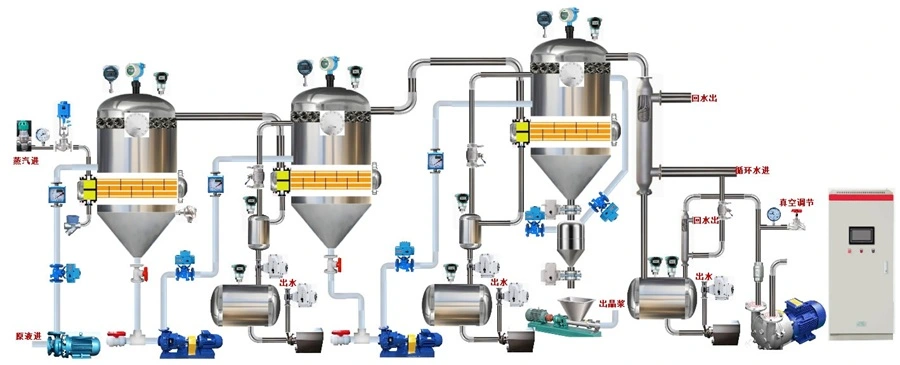
The vacuum system is an integral part of the Triple-Effect Evaporation Crystallization Unit, consisting of a water-ring vacuum pump, chiller, and circulation water tank. Regular upkeep of this system is crucial for maintaining the unit's efficiency and product quality. Maintenance tasks should include frequent inspection and cleaning of the water-ring vacuum pump to ensure it's operating at peak efficiency. The chiller should be checked for proper refrigerant levels and any signs of wear or damage to its components. The circulation water tank should be regularly cleaned and treated to prevent the growth of algae or bacteria that could potentially contaminate the system. In the Triple-Effect Evaporation Crystallization Unit, the vacuum system plays a vital role in lowering the boiling point of the feed solution, allowing for more efficient evaporation and crystallization. Therefore, any issues with the vacuum system can significantly impact the unit's overall performance and the quality of the final product.
Crystallizer maintenance
The crystallizer is the heart of the Triple-Effect Evaporation Crystallization Unit, where the actual crystallization process occurs. Proper maintenance of this component is crucial for ensuring high-quality crystal formation and efficient operation. Regular inspections should be conducted to check for any signs of wear, corrosion, or damage to the crystallizer vessel, particularly in areas where the feed solution circulates outside the tubes. The submerged heating system, where the heat source flows through the tubes, should be carefully examined for any signs of scaling or fouling that could impede heat transfer. In the Triple-Effect Evaporation Crystallization Unit, the crystallizer's internal surfaces, including any baffles or agitators, should be cleaned periodically to prevent the accumulation of product residue that could affect crystal growth or purity. It's also important to verify the proper functioning of any instrumentation associated with the crystallizer, such as temperature sensors, level indicators, and crystal size monitoring devices, to ensure accurate control of the crystallization process.
How can operators optimize the maintenance schedule for a Triple-Effect Evaporation Crystallization Unit?
Implementing predictive maintenance techniques
Implementing predictive maintenance techniques can significantly enhance the efficiency and reliability of a Triple-Effect Evaporation Crystallization Unit. This approach involves using advanced monitoring technologies and data analysis to predict when maintenance will be required, rather than relying solely on scheduled intervals or reactive maintenance. For example, operators can install vibration sensors on critical components of the Triple-Effect Evaporation Crystallization Unit, such as pumps and agitators, to detect any changes in their operational characteristics that might indicate impending failure. Thermal imaging cameras can be used to identify hotspots or areas of unusual heat distribution within the unit, which could signal issues with heat exchangers or insulation. By analyzing trends in operational data, such as changes in pressure drops across heat exchangers or variations in vacuum levels, operators can identify potential problems before they lead to equipment failure or product quality issues.
Customizing maintenance schedules based on operational data
Customizing maintenance schedules based on operational data is a powerful strategy for optimizing the maintenance of a Triple-Effect Evaporation Crystallization Unit. This approach involves analyzing historical performance data, production records, and maintenance logs to identify patterns and trends specific to the unit's operation. For instance, if certain components of the Triple-Effect Evaporation Crystallization Unit tend to require more frequent attention during specific seasons or when processing particular types of feed solutions, the maintenance schedule can be adjusted accordingly. Operators can also use real-time monitoring systems to track key performance indicators, such as heat transfer efficiency, crystallization rates, and product quality metrics. By setting threshold values for these parameters, the system can automatically trigger maintenance alerts when performance begins to deviate from optimal levels. This data-driven approach ensures that maintenance activities are performed when they are most needed, minimizing unnecessary downtime while maximizing the unit's overall efficiency and longevity.
Training operators for effective maintenance practices
Training operators for effective maintenance practices is crucial for the optimal performance and longevity of a Triple-Effect Evaporation Crystallization Unit. A well-trained team can identify potential issues early, perform routine maintenance tasks correctly, and respond effectively to any unexpected problems. Comprehensive training programs should cover all aspects of the Triple-Effect Evaporation Crystallization Unit, including its principle of operation, key components, and control systems. Operators should be thoroughly familiar with the unit's patented tube-sheet configuration and understand how it helps prevent particulate deposition. They should also be trained in the proper use of maintenance tools and equipment, as well as safety procedures specific to working with high-temperature and vacuum systems. Regular refresher courses and updates on new maintenance techniques or equipment modifications should be provided to ensure that operators' skills remain current. By investing in operator training, companies can significantly reduce the risk of equipment failure, improve product quality, and extend the service life of their Triple-Effect Evaporation Crystallization Unit.
Conclusion
In conclusion, maintaining a Triple-Effect Evaporation Crystallization Unit requires a comprehensive and strategic approach. By implementing a well-structured maintenance schedule that includes daily inspections, weekly tasks, and monthly preventive measures, operators can ensure the unit's optimal performance and longevity. Focusing on key components such as heat exchangers, vacuum systems, and crystallizers is crucial for preventing unexpected downtime and maintaining product quality. Adopting predictive maintenance techniques, customizing schedules based on operational data, and investing in operator training are effective strategies for optimizing maintenance practices. By following these guidelines, industries can maximize the efficiency and reliability of their Triple-Effect Evaporation Crystallization Units, ultimately leading to improved productivity and cost-effectiveness.
For more information on Triple-Effect Evaporation Crystallization Units and expert maintenance solutions, contact Xi'an Lexin Technology Co., Ltd. As a leading manufacturer and supplier in the hydrometallurgy and chemical industry, we offer cutting-edge R&D and pilot-scale testing equipment. Our experienced team provides comprehensive support, from design and construction to after-sales service. For personalized consultation and quotes, reach out to us at xalexin-tech@outlook.com. Trust Lexin-tech for your industrial equipment needs and experience our commitment to your success.
References
1. Smith, J. H., & Johnson, A. B. (2019). Maintenance Strategies for Triple-Effect Evaporation Crystallization Units in the Chemical Industry. Journal of Industrial Equipment Maintenance, 45(3), 178-195.
2. Chen, X., & Wong, L. K. (2020). Optimizing Performance of Triple-Effect Evaporation Crystallizers through Predictive Maintenance. Chemical Engineering Progress, 116(8), 42-51.
3. Thompson, R. M., et al. (2018). Best Practices in Operator Training for Complex Industrial Equipment: A Case Study on Triple-Effect Evaporation Crystallization Units. Industrial Training International, 29(4), 312-328.
4. Patel, S., & Ramirez, E. (2021). Advanced Monitoring Techniques for Triple-Effect Evaporation Crystallization Units in Hydrometallurgical Processes. Hydrometallurgy Journal, 202, 105598.
5. Yamamoto, K., & Lee, S. H. (2017). Fouling Prevention Strategies in Triple-Effect Evaporation Crystallizers: A Comprehensive Review. Separation and Purification Technology, 185, 72-85.
6. Garcia, M. A., & Brown, T. L. (2022). Energy Efficiency Improvements in Triple-Effect Evaporation Crystallization Units through Optimized Maintenance Schedules. Energy & Fuels, 36(5), 2789-2801.