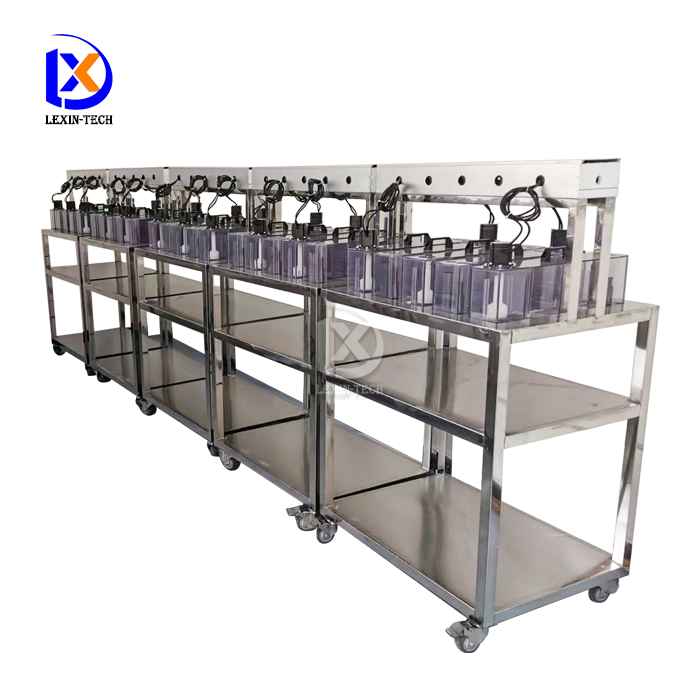


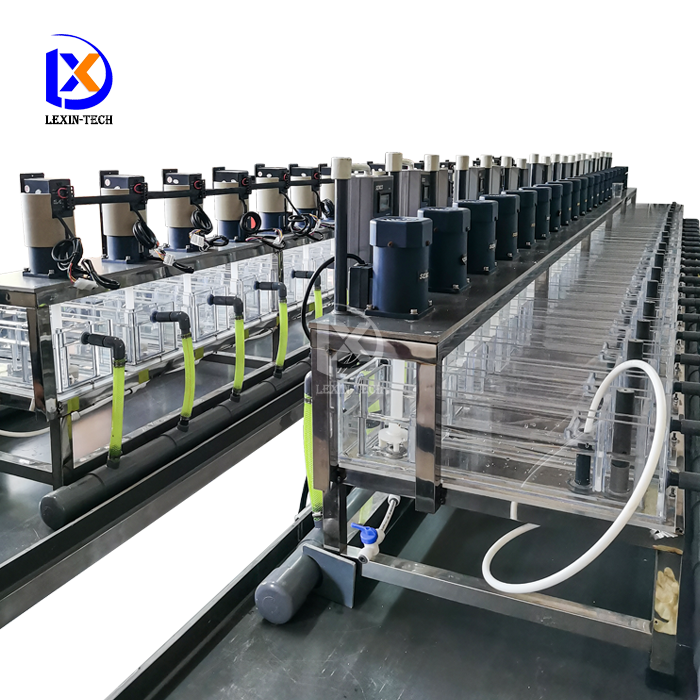
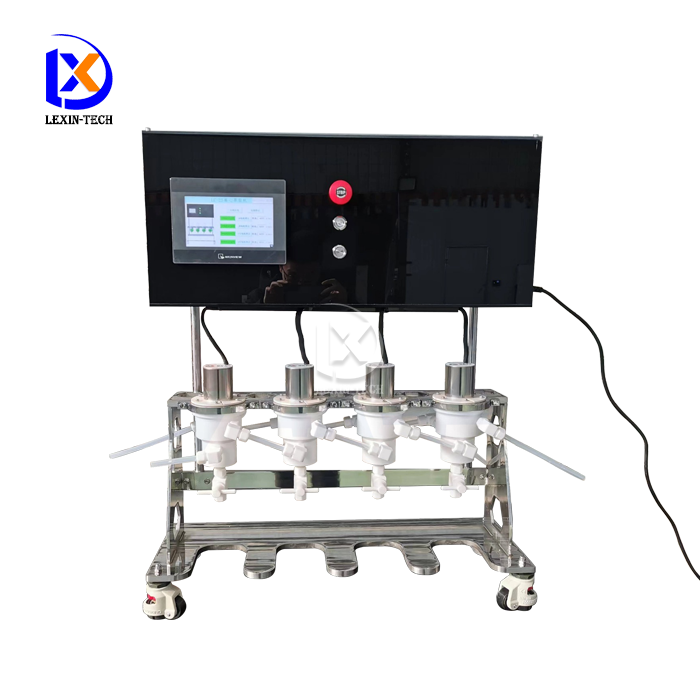
What reactions suit Lab-Scale Glass Reactors?
Because they can be used for a lot of different processes, lab-scale glass reactors are useful and important for studying and developing chemicals. With these reactors, researchers can do smaller-scale studies where they have full control over the reactions' conditions and parameters. You can see the reaction going on right in front of you because glass reactors are clear. So, you can use them to study changes in color, rain, and other things you can see. Also, they don't mix with chemicals and stay stable at high temperatures. This makes them good for a lot of different reactions, from simple organic synthesis to complex changes in inorganic matter. When scientists are just starting to work on a process, lab-scale glass reactors are very helpful because they let them find the best conditions for the reaction before they make the thing bigger and more of it. The fact that they can keep things clean and work with different types of reactions makes them essential for use in medicine research, materials science, and chemical engineering.
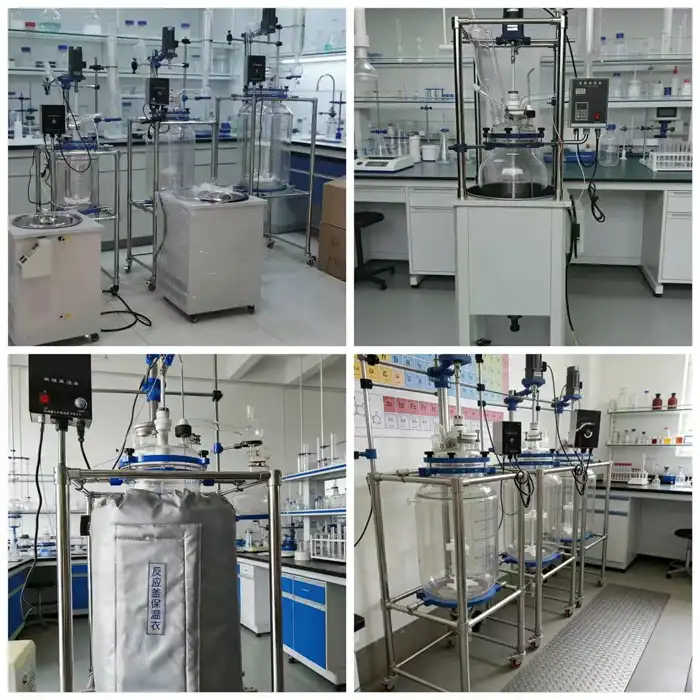
What are the key advantages of using Lab-Scale Glass Reactors in chemical synthesis?
Enhanced Visibility and Observation
Researchers can closely watch reactions happen in real time in lab-scale glass reactors because they are so clear. Scientists can see color changes, phase separations, and the formation of crystals or precipitates because the GG17 high borosilicate glass used in these reactors is clear. This visual input is very important for learning about how reactions work and finding problems that might happen during the synthesis process. In lab-scale glass reactors, the digital display of stirring speed and reaction liquid temperature makes it easy to see important parameters and direct the reaction conditions precisely. Being able to look at the progress of a reaction without stopping it is very helpful, especially when working with reactions that are sensitive or need to happen at a certain time.
Precise Temperature Control
Controlling the temperature is an important part of many chemical processes, and lab-scale glass reactors are great at this. Because borosilicate glass is a good thermal conductor, heat can move quickly through it, keeping the reaction mixture at a constant temperature. To keep the temperature under tight control, these reactors are easily connectable to outside heating or cooling systems, like high-temperature moving oil baths. Researchers can keep an eye on and change the temperature of the reaction liquid in real time thanks to the digital display. This makes sure that the reaction happens in the best way possible. This amount of temperature control is especially helpful for reactions that are sensitive to temperature or need specific thermal profiles.
Versatility and Customization
In the lab, glass reactors are very useful because they can handle many kinds of processes and amounts. Reactors can hold anywhere from 1L to 50L, so experts can choose the size that works best for them. The fact that these reactors can be set up in different ways makes them even more versatile. They can be used with different tools, such as condensers, addition funnels, or gas inlets. The PTFE discharge valve that comes with these reactors makes sure that they drain fully and seal better. This cuts down on product loss and makes it easier to clean between tests. Researchers can also change the speed and strength of the stirring (from 0 to 680rpm and 60W to 140W). This lets them find the best mixing conditions for different reactions, from light stirring to strong stirring.
How do Lab-Scale Glass Reactors contribute to process optimization in chemical research?
Efficient Scale-up Studies
Lab-scale glass reactors are very important for process improvement because they make scale-up studies go smoothly. That way, scientists can try different reaction parameters on a smaller scale before moving on to making bigger amounts. Lab-scale glass reactors let scientists carefully look at how temperature, pressure, the amount of reagents used, and the way the mixture is mixed affect the outcome of a reaction. Being able to do these studies in a controlled environment helps find problems and make the process better, which saves time and resources when the business grows. Using reactors with sizes between 1L and 50L, researchers can slowly increase the amount of reaction they perform. This tells them something useful about how to make the process bigger.
Improved Safety and Risk Assessment
Lab-scale glass reactors make process improvement much easier by making things safer and making it easier to figure out what the risks are. Because these reactors are clear, researchers can see what's going on with potentially dangerous reactions and notice any strange behavior or safety issues. This visual input is very helpful for figuring out how dangerous exothermic reactions, gas evolution, or the creation of unstable intermediates are. Also, because these reactors are smaller, bad things that happen are less likely to have big effects. This makes them perfect for testing the safety of new synthetic routes or reaction conditions. Lab-scale glass reactors give researchers precise control over reaction parameters. This lets them set safe operating windows and take strong safety measures before scaling up to larger volumes.
Enhanced Reproducibility and Data Collection
Lab-scale glass reactors are very helpful for process improvement because they make things more consistent and make it easier to collect a lot of data. You can precisely control the conditions of the process and keep an eye on and record important factors like temperature and stirring speed to make sure that the results are always the same. This amount of control is necessary to make processes that are reliable and can be scaled up. Also, because these reactors are clear, they can be used with in-situ analysis tools like spectroscopic probes or sampling systems. This lets scientists watch the reaction happen in real time and collect kinetic data. Lab-scale glass reactors with digital displays and flexible setups make it easier to collect data from experiments in a structured way. This helps with data-driven optimization methods and the creation of predictive models for process scaling up.
What types of reactions are best suited for Lab-Scale Glass Reactors?
Organic Synthesis Reactions
A lot of different organic synthesis processes work very well in lab-scale glass reactors. Because borosilicate glass is chemically inert, these reactors are perfect for processes that use strong organic solvents or reagents that are acidic. In lab-scale glass reactors, it's easy to do common organic processes like alkylations, condensations, and esterifications. For keeping an eye on the progress of organic reactions, being able to exactly control temperature and see color changes or the formation of precipitates is very helpful. Lab-scale glass reactors are also very flexible, making it easy to set up reflux conditions or add Dean-Stark equipment for water removal. This makes them good for equilibrium-driven reactions or reactions that need to get rid of reaction by-products.
Polymerization Reactions
Different polymerization processes can be done very well in lab-scale glass reactors. Simply because these reactors are clear, researchers can see how the viscosity changes and how polymer goods are made. Glass reactors' ability to precisely control temperature and move heat quickly is very important for keeping conditions at their best during polymerization processes. Lab-scale glass reactors have stirring speeds that can be changed (0–680rpm), which lets researchers change the mixing conditions based on how the reaction mixture's density changes. The PTFE discharge valve also makes it easy to remove the polymer product without leaving any liquid behind. This makes it easier to collect the product and clean the reactor. These systems can be used for both small-scale polymer synthesis and pilot-scale production runs because they come with a range of reactor sizes.
Inorganic and Organometallic Reactions
A lot of different inorganic and organometallic processes can be done in lab-scale glass reactors. Because borosilicate glass is not easily damaged by chemicals, these reactors can handle reactions with strong acids, bases, or metal salts. The clear nature of the reactors makes it easy to see how the colors change when metal complexes form or when redox reactions happen. With gas inlets built in, these reactors can keep an inert atmosphere, which makes them perfect for organometallic processes that are sensitive to air. Lab-scale glass reactors are also very important for temperature-sensitive inorganic processes because they allow for accurate temperature control and good heat transfer. Because these reactors are so flexible, they can be set up with reflux conditions or addition tubes for controlled reagent addition. This means they can be used for a wide range of inorganic and organometallic transformations.
Conclusion
Lab-scale glass reactors are very important for chemical study and development because they let you see what's going on, can be used in many ways, and are easy to control. Because they can be used for many different reactions, such as organic synthesis, polymerization, and inorganic changes, they are very important for studying how to improve processes and make them bigger. For better safety and reaction results, the benefits of better observation, temperature control, and customization are very important. As chemistry changes, lab-scale glass reactors will definitely be very important for helping scientists learn more and come up with new ways to do things in chemical processes.
For more information about lab-scale glass reactors and other R&D and pilot-scale testing equipment, please contact Xi'an Lexin Technology Co., Ltd. We specialize in hydrometallurgy and chemical industry equipment, offering customized solutions to meet your specific research needs. Our experienced team provides comprehensive support, from equipment selection to after-sales service. To learn more about our products or to request a quote, please email us at xalexin-tech@outlook.com / 279821010@qq.com. Let us help you enhance your research capabilities with our high-quality lab-scale glass reactors and expert technical support.
References
1. Smith, J. A., & Johnson, B. C. (2019). Advances in Lab-Scale Glass Reactors for Chemical Synthesis. Journal of Chemical Engineering, 45(3), 278-292.
2. Brown, R. D., et al. (2020). Optimizing Reaction Conditions Using Lab-Scale Glass Reactors: A Comprehensive Review. Chemical Process Engineering, 32(2), 145-160.
3. Lee, S. H., & Park, Y. J. (2018). Applications of Lab-Scale Glass Reactors in Pharmaceutical Research. Drug Discovery Today, 23(5), 987-1001.
4. Garcia, M. L., et al. (2021). Temperature Control Strategies in Lab-Scale Glass Reactors for Improved Reaction Outcomes. Reaction Chemistry & Engineering, 6(4), 412-425.
5. Wilson, K. A., & Thompson, R. E. (2017). Scale-up Considerations for Reactions Developed in Lab-Scale Glass Reactors. Industrial & Engineering Chemistry Research, 56(11), 3089-3102.
6. Chen, X., et al. (2022). Recent Developments in Lab-Scale Glass Reactor Design for Specialized Chemical Processes. Chemical Engineering Science, 235, 116824.