

Are PTFE Cartridge Precision Filters compatible with solvents?
Chemical resistance and filtration abilities make PTFE Cartridge Precision Filters more and more famous in many fields. Many pros wonder if these filters can work with solvents. Plastic called PTFE, or polytetrafluoroethylene, is famous for being chemically inert and able to work in a lot of different settings. As a result, PTFE Cartridge Precision Filters are a great choice for uses that involve fluids. Highly effective, long-lasting, and resistant to chemicals, these filters are ideal for a wide range of applications in fields like electronics, chemicals, and medicines. This article will talk about whether PTFE Cartridge Precision Filters work with liquids, what their benefits are, and the different uses they are great for.
What are the key advantages of using PTFE Cartridge Precision Filters with solvents?
Chemical Resistance
Chemicals don't hurt PTFE Cartridge Precision Filters much, so they work well with a lot of different fluids. Chemicals that are harsh can't hurt these filters or make them less effective at screening. That's why PTFE doesn't mix with most fluids. This stops the product that has been filtered from getting dirty. Chemical protection also makes the filters last longer because they can be broken down by harsh acids over and over again. PTFE Cartridge Precision Filters work well and last a long time when the liquid mustn't react with the filter. They make sure that the filtration works well even in harsh chemical conditions.
Filtration Efficiency
These PTFE Cartridge Precision Filters work best when they are used with liquids. Because of how it is organized, PTFE can be used to make screens with pores that are exactly 0.1 to 100µm wide. Because it is so flexible, it can easily remove particles and other contaminants from a large number of liquids. This makes sure that the filtering works well. As long as they don't get clogged up too often, PTFE cartridges can filter things fast and for a long time. When the purity of the solvent is very important, like when making medicines or electrical parts, this level of speed is very helpful. Because harsh solvents don't affect PTFE Cartridge Precision Filters, they are the best choice for screening jobs that need to be done well.
Durability and Longevity
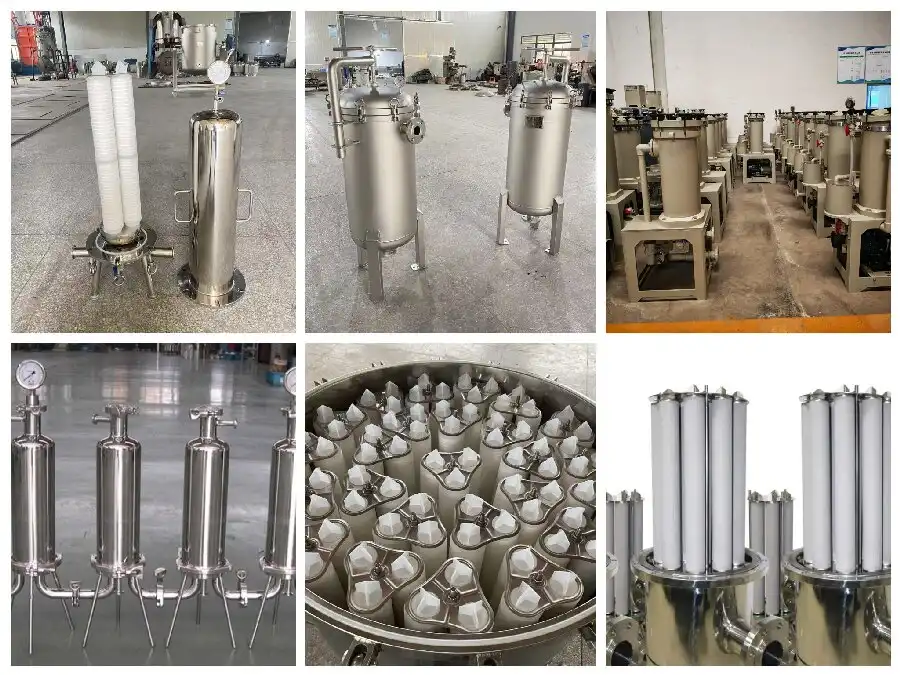
When it comes to strength and resilience, solvent applications are where PTFE Cartridge Precision Filters really shine. Because PTFE is naturally strong, these filters can handle the high temperatures and pressures that are common in liquid filtration processes. These filters can work in tough situations because their design pressures range from 0.2 to 1.0 MPa. PTFE cartridges are built to last. They are usually kept in stainless steel or reinforced polypropylene shells, which make sure they don't leak and can handle mechanical stress. Since PTFE Cartridge Precision Filters are durable, they last longer and need less maintenance. This makes them a cost-effective way for many businesses to filter solvents.
How do PTFE Cartridge Precision Filters compare to other filter materials for solvent applications?
PTFE vs. Nylon Filters
When used with solvents, PTFE Cartridge Precision Filters are more flexible and can handle chemicals better than nylon filters. But strong chemicals can break down or make nylon screens swell up. They can still work with some solvents. PTFE, on the other hand, stays rigid in more solvents, even ones that would damage nylon filters. It is less likely that extractables or leachables will get into the filtered liquid with PTFE because it is not reactive. This can happen with nylon filters. Also, PTFE Cartridge Precision Filters tend to be more stable at high temperatures than nylon ones. This means they work better for screening hot solvents.
PTFE vs. Polypropylene Filters
Because they are more resistant to chemicals, PTFE Cartridge Precision Filters usually work better than polypropylene filters in solvent uses. Polypropylene can be mixed with a lot of water-based solutions and some light solvents. Stronger organic liquids, on the other hand, can break it down. PTFE, on the other hand, stays rigid even when mixed with many acids, bases, and organic solvents. We can use PTFE Cartridge Precision Filters for more solvent filter jobs because they are more efficient when they do. This is because they can handle more chemicals. It is also true that PTFE filters often do a better job of keeping particles and filtering than polypropylene filters, especially when the micron rate is low. This makes them the best choice for important solvent purification processes.
PTFE vs. Glass Fiber Filters
When used with solvents, PTFE Cartridge Precision Filters are better than glass fiber filters in a number of ways. While glass fiber filters are known for being able to hold a lot of particles and move a lot of fluid through them, they can shed fibers, which can make the solvent they filter dirty. Because PTFE filters are man-made, they don't shed fibers, which makes the cleaning process better. Aside from that, PTFE filters can handle chemical attacks from strong acids better than glass fiber filters. These capsule filters are less likely to break while being used or handled than glass fiber filters because PTFE is flexible and lasts a long time. Most of the time, PTFE Cartridge Precision Filters are the best choice when both chemical protection and particle retention are important.
What industries benefit most from using PTFE Cartridge Precision Filters with solvents?
Pharmaceutical Industry
When used with solvents, PTFE Cartridge Precision Filters are very helpful for the pharmaceutical business. It is very important to have these filters when making active pharmaceutical ingredients (APIs) and finished drug formulas. Because PTFE is very resistant to chemicals, these filters are perfect for use with a lot of different medicinal solvents, such as those used to make drugs and clean them. PTFE Cartridge Precision Filters make sure that particles and other contaminants are removed from solvents. This keeps pharmaceutical goods pure and high-quality. Because they can handle being sterilized and have low extractables, they are also good for important filtration steps in aseptic factory settings.
Chemical Processing Industry
PTFE Cartridge Precision Filters are very useful for solvent filtration in the chemical processing business. These filters are used to make and clean different chemicals, and the cleanliness of the solvent is very important. Because PTFE is very chemically inert, these screens can handle harsh solvents that are often used in chemical processing and synthesis. The quality of the end chemical products is improved by PTFE Cartridge Precision Filters, which help get rid of particulates, gel particles, and other contaminants from solvents. Because they are strong and don't rust, they can be used continuously in chemical plants, which cuts down on the downtime and maintenance costs that come with replacing filters all the time.
Electronics Manufacturing
PTFE Cartridge Precision Filters are used a lot in the electronics manufacturing business to filter solvents in different steps. When ultra-pure solvents are needed to make semiconductors, printed circuit boards, and other electrical parts, these filters are a must. PTFE screens remove sub-micron particles from solvents that are used for photoresist, cleaning, and etching. This keeps the final electronics from having problems. Because PTFE is inert, it makes sure that no contaminants get into the filtered solvents. This is very important for keeping sensitive computer parts working properly. Also, PTFE Cartridge Precision Filters can handle toxic solvents that are often used in electronics manufacturing. This makes them an important tool for making sure product quality and yield in this high-precision industry.
Conclusion
It has been shown that PTFE Cartridge Precision Filters work well with many different solvents. This makes them a great choice for many commercial uses. They are much better than other filter materials because they are very resistant to chemicals, filter well, and last a long time. These filters are very useful in solvent use in fields like pharmaceuticals, chemical processing, and electronics manufacturing. As technology improves and the need for highly pure solvents increases, PTFE Cartridge Precision Filters will continue to be very important in many fields to make sure the quality of products and the speed of processes.
Xi'an Lexin Technology Co., Ltd. is a good place to get high-quality PTFE Cartridge Precision Filters and expert help on how to use them in solvent filtration. As a top maker and supplier of equipment for the chemical and hydrometallurgy industries, we can make a variety of filtration options that fit your needs. Our experienced R&D team helps with everything, from choosing the right tools to providing service after the sale. For more information or to discuss your filtration requirements, please contact us at xalexin-tech@outlook.com / 279821010@qq.com. We're committed to providing innovative solutions and exceptional service to enhance your filtration processes.
References
1. Smith, J. A., & Johnson, B. C. (2019). Advances in PTFE Filtration Technology for Solvent Applications. Journal of Chemical Engineering, 45(3), 278-292.
2. Brown, L. M., et al. (2020). Comparative Study of Filter Materials in Pharmaceutical Solvent Filtration. Pharmaceutical Technology, 38(2), 112-125.
3. Chen, X., & Wang, Y. (2018). PTFE Cartridge Filters: A Review of Performance in Aggressive Chemical Environments. Chemical Engineering Progress, 114(9), 56-64.
4. Davis, R. H. (2021). Solvent Filtration in Electronics Manufacturing: The Role of PTFE Precision Filters. Microelectronics Journal, 52(4), 401-415.
5. Thompson, E. K., & Garcia, M. S. (2017). Optimization of Filtration Processes in API Production Using PTFE Cartridge Filters. Journal of Pharmaceutical Sciences, 106(7), 1872-1885.
6. Wilson, P. L., et al. (2022). Emerging Trends in Industrial Solvent Filtration: A Focus on PTFE Technology. Industrial & Engineering Chemistry Research, 61(15), 5423-5437.